China's First Fully Driverless Robotaxi Licenses Bagged By Search Engine Baidu
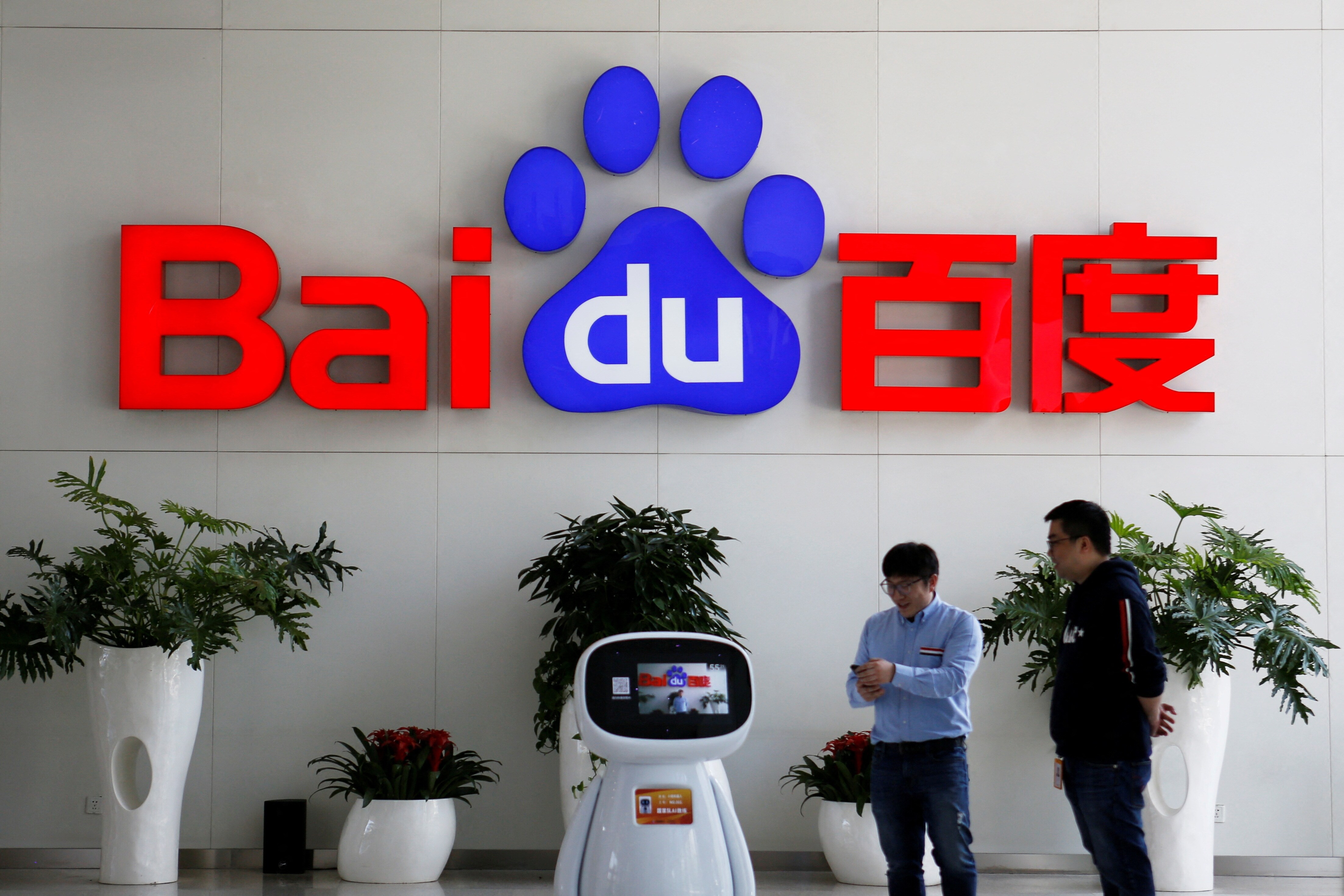
China search engine giant Baidu Inc said on Monday it has obtained permits to operate fully driverless robotaxi services on open roads from two Chinese cities, the first of their kind in the country.
The permits, awarded by the southwestern municipality of Chongqing and the central city of Wuhan, allow commercial robotaxis to offer rides to the public without human safety drivers in the car. They come into effect on Monday.
Baidu said they marked a "turning point" in China's policy-making towards autonomous driving.
"These permits have deep significance for the industry,” Wei Dong, chief safety operation officer of Baidu's Intelligent Driving Group, told Reuters in an interview. “If we think of the exploration of space, this moment is equal to landing on the moon."
At first, Baidu will deploy a batch of five fee-charging robotaxis in each city, where they will be allowed to operate in designated areas from 9 a.m. to 5 p.m. in Wuhan and 9:30 a.m. to 4:30 p.m. in Chongqing, the company said in a statement.
The service areas span 30 square km (11.58 square miles) in Chongqing's Yongchuan District and 13 sq km in the Wuhan Economic & Technological Development Zone.
In April, Baidu's Apollo and Toyota Motor Corp-backed Pony.ai said that they received permits in Beijing to deploy robotaxis without safety drivers in the driver's seat on open roads within a 60 sq km area. But the Beijing permits still require them to have a safety driver in the passenger seat. These services have started.
Baidu is also in talks with local governments in Beijing, Shanghai and Shenzhen, to secure licenses within a year to test fully-driverless and unpaid robotaxis in those cities, according to Wei.
China's efforts to fast-track autonomous vehicle trials and permits come as U.S. regulators are also pushing ahead with milestone-setting autonomous driving policies.
In January, self-driving company Cruise received a permit from the California Public Utilities Commission that allows it to offer paid and fully driverless rides from 10 p.m. to 6 a.m. in select streets in San Francisco.
Apollo Go, Baidu's robotaxi service, has operated over 1 million rides across 10 Chinese cities since its launch in 2020.
Baidu has not reported any problems with the service and has not given a breakdown for how much it has invested in the project.

-
The Curious Case of Equitas Small Finance Bank And A CEO Who Quit For Stock

PN Vasudevan believes persistent investor concerns over a perceived conflict of interest had become a governance overhang on Equitas Small Finance Bank's stock, even as the lender improved profitability and asset quality.
-
Talking Points This Week: AI Cash Burn, A Tiger Comeback And An India That Still Finds Its Own Path
India is not immune to higher oil or tighter global liquidity, yet its earnings base is broader, its domestic policy levers are still available.
-
Foreign Investors Own Half Of HDFC Bank and ICICI Bank. An LTCG Cut Could Matter Most Here
Foreign portfolio investors have US$115 billion parked in HDFC Bank, ICICI Bank. If the government cuts long-term capital gains tax, Jefferies says returning foreign money could land here first.
-
'Never Seen This Level Of Negativity': Sandeep Tandon Says The Next Rally May Be Closer Than You Think
Veteran investor Sandeep Tandon says foreign selling is easing, large-caps are due a comeback and mid-caps are crowded, while he turns positive on gold, power and pharma this Diwali.
-
Indians Stay With Family, Not In Hotels | The Reason Why
India still lacks enough clean, reliable and affordable hotels for budget-conscious travellers.
-
The Economic Imperative: Analysing The Material Driving Force Behind India-Canada Strategic Reset
This economic complementarity is further reinforced by deep institutional investment ties and talent mobility, which form the bedrock of the bilateral framework.
-
Medicine Pricing: Where Must Profit Stop?
India must confront excessive margins, hidden incentives and regulatory gaps that threaten the integrity of medicine.
-
Why Amazon And Flipkart Are Struggling To Beat Meesho In India's Smaller Cities
With 274 million users and lowest-cost logistics, Meesho is defending its value commerce crown against giants like Amazon and Flipkart.
-
High US Salaries, No Green Card Certainty: The Financial Calculation Facing Indian H-1B Families
The suspension of PERM processing at eight technology employers does not cancel existing H-1B visas. What it does is force a question many Indian families have been avoiding: is the US salary worth tying your career and family plans to one employer?
-
Swiggy vs Eternal: Food Delivery's Two Rivals Are No Longer In The Same Race
Eternal is building a private AI assistant, dark.ai. Swiggy is still working out how to make Instamart pay, with an operating loss of Rs 895 crore in the July-September quarter while Blinkit stayed profitable.










