SBI to Carry On in UK Despite Crackdown on Foreign Banks: Report
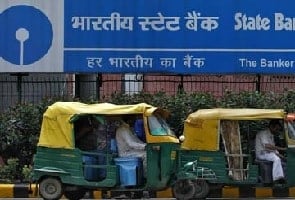
London: State Bank of India is determined to carry on retail banking operations in the UK despite a recent crackdown by the Bank of England on the operations of foreign-owned banks in the country.
SBI, which has been operating in the UK for 95 years, said it is prepared to set aside 100 million pounds in ring-fenced capital and restructure its operations if that is necessary to keep operating on the high streets.
Mrutyunjay Mahapatra, the UK head of the bank, told 'The Times' newspaper that the bank will keep serving retail customers in Britain as well as open new branches.
"Our intention is to continue to do business in the UK. We have been here for 95 years. We're too deep rooted here," he said.
The Prudential Regulation Authority (PRA) of the Bank of England recently issued an ultimatum to the British operations of foreign-owned banks taking deposits of more than 100 million pounds to restructure with their own ring-fenced capital or end retail operations.
SBI, which has over 900 million pounds of deposits in Britain, is among those affected.
Bank of Baroda, which has 10 branches in Britain, and Bank of India, with seven, could also be hit.
A consultation launched in February by PRA, responsible for supervising individual banks, concluded in September.
Under the new rules, banks from outside the European Economic Area (EEA) must offer only minimal retail services. Analysts suggest Isbank of Turkey and Overseas Chinese Banking Corporation of Singapore are also likely to be affected.
They would either have to shut down their retail banking operations in Britain or convert from branch status to full UK subsidiary - an expensive and cumbersome process.
The new rules mean it will be easier for wholesale foreign banks, which cater to other financial institutions and large corporations rather than retail customers, to open non-deposit taking branches which would not face size limits but are likely to make it very difficult for some retail bank branches to operate.
Subsidiaries are subject to more complex clearances and branches, on the other hand, are part of a home office legal entity and do not require their own capital base in the UK or a separate board.
Therefore, mostly foreign banks prefer to operate as branches because subsidiaries are more expensive to run, requiring their own pools of capital and liquidity, as well as their own boards and legal entity, and have the routine extra cost of reporting to "host country" supervisors.
The new proposals are an attempt to strike a balance between welcoming foreign finance and protecting the UK from imported banking crises.
Britain also wants to avoid having to compensate savers with deposits at a failing foreign bank as it had to with Icesave accounts run by a branch of Icelandic bank Landsbanki, which collapsed in 2008 during the global financial crisis.

-
We May Need Another Tukaram Mundhe To Fight Air Pollution | The Reason Why

Developers may install basic measures such as sprinklers and green nets, resume work, and continue violating rules when this equipment stops working.
-
Extracting Value From Battery Scrap Could Be Challenging For India | The Reason Why
A discarded lithium-ion battery still contains valuable materials such as lithium, nickel and cobalt. These can be recovered and reused. When such batteries are crushed and shredded, they produce a dark powder called black mass.
-
One El Nino, India Can Handle. Two Could Break The Granary
India's grain stocks can absorb one bad year, but a second El Nino could drain the buffer in two to three years, economists say.
-
India's Troika Of Good Luck | Joining The Dots
As Jensen Huang's exit drags Nvidia down, a cooling AI trade and resilient earnings have revived investor interest in India. A likely RBI rate hike looms.
-
Talking Points This Week: Leadership Shock At Nvidia, Earnings Strength, And The Fog Over Hormuz
The Anthropic IPO pricing and first trading day, Nvidia's upcoming earnings, and any fresh signals from Iran will set the tone for the following week.
-
Signature Play: The Classic Cocktail Is Dead. Or Is It?
Classic cocktails are disappearing from India's cocktail menus. But they're still being ordered, taught to bartenders and borrowed from. So, who's really having the last drink?
-
A New Samvat Wishlist: Inclusive Prosperity And Human Development
India has strengthened its economic foundations through infrastructure, digital access and enterprise. Its next growth chapter must deepen productivity, create better livelihoods and widen participation in prosperity.
-
Love, Sex Aur Dhokha: The Audacious Plot To Spy On Jensen Huang
A Taipei dinner, a Singapore chip buyer and a suspected Chinese asset: inside the alleged spy operation that got close to NVIDIA's Jensen Huang.
-
Ten Things I Learnt This Samvat
Patience can be a trap. Cheap stocks can stay cheap. Leverage can wipe you out. What did Samvat 2082 teach us? Niraj Shah writes on 10 lessons from the year gone by.
-
Talking Points This Week: Tech Nerves, FII Buying, And A Faraway Banking Shock
The global markets are not shining this Diwali. The exception in the large markets is, India.









