Banker To 467 Million Indians Says Loan Demand Is Bouncing Back
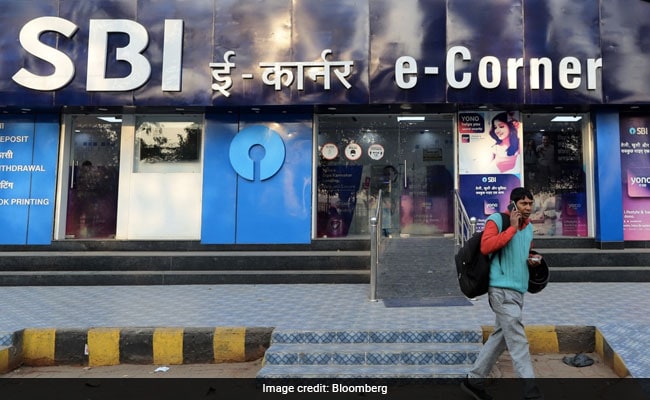
Consumer cutbacks due to raging inflation and higher borrowing costs are failing to dent investment plans at Indian businesses tapping the country's biggest lender, a sign that a recovery in Asia's third-largest economy is gathering pace.
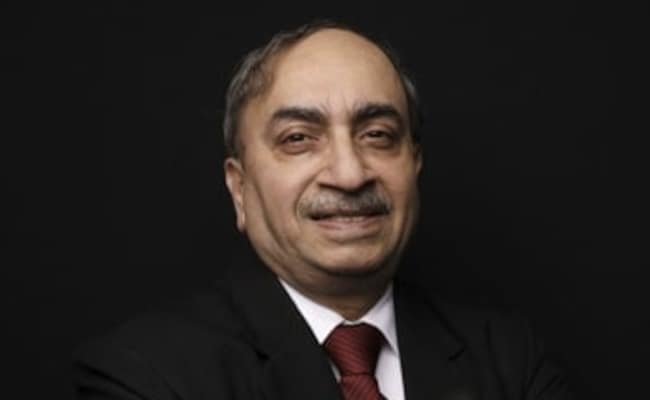
Companies are steadily drawing down from a $71 billion loan pipeline, Dinesh Kumar Khara, chairman of State Bank of India, told Bloomberg News in an interview at his Mumbai office. Loan growth at the 216-year-old lender, a banker to one out of every three Indians, is expected to be robust, underpinned by demand from businesses after two straight years of credit contraction, Khara said.
That broadly mirrors a trend where loan growth in India's 120 trillion rupees ($1.5 trillion) banking system is expanding annually at its fastest pace in three years. While part of the credit demand is to cover rising costs, the rest is going into business expansion and investments for capacity addition.
“Whether it is working capital loans or term loans, the draw downs have been rising, and the ratio of pipeline to loan book narrowed by at least six percentage points in recent months,” Khara said. “Capacity utilization at several sectors like iron and steel is full, and if we get a good monsoon too this year, things will get way better.”
The rise in business confidence and credit demand in India comes despite rising cost of funds. On Wednesday, the central bank's rate-setting panel raised the key interest rate for a second straight month to tame inflationary pressures with policymakers pledging to withdraw the pandemic-era monetary stimulus in coming months.
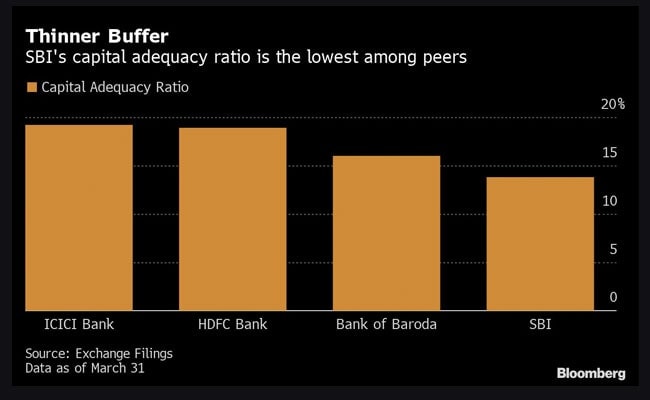
The rising demand for loans means SBI will have to shore up its capital adequacy ratio, since it is hovering at less than two percentage points over the minimum regulatory requirement. The bank's overall capital buffer of 13.8% is the lowest among the top lenders in the country.
Funding Growth
SBI will be aiming to sell bonds to augment its capital base, Khara said. The lender sold so-called Tier 1 bonds, which can be fully written down in a crisis, in December at the lowest coupon among Indian banks after the country started implementing the stringent Basel III capital rules in 2013.
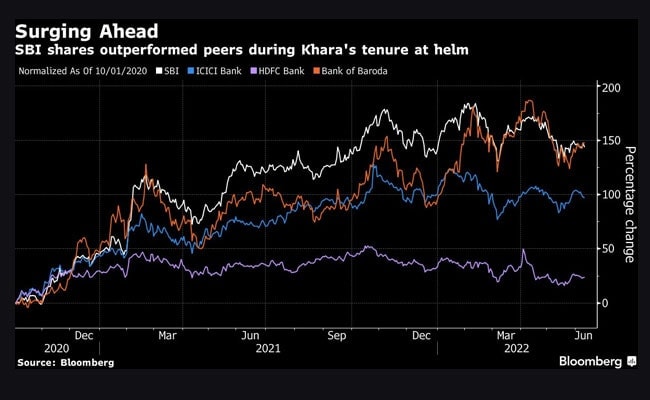
With Khara at the helm over the last 21 months, SBI shares have surged about 150%, making it the best performer on the 10-member BSE Bankex index for the period. The 61-year-old banker, the son of a Reserve Bank of India official, started working at the lender in 1984 and made his way to up become chairman in October 2020.
A challenge for Khara is the drop in investment profits at the lender as rallying yields erode prices of debt holdings. SBI held government securities -- including federal and state securities -- worth about 7 trillion rupees as of March 31, exchange filings show.
The higher returns on certain debt securities, including those of state governments, will soften the blow to the bank's treasury earning, Khara said. As a portion of the overall assets, the debt securities holdings will also decrease as the credit growth outpace deposits.
Pushing Digital
Khara, who took to banking straight after college, considers the thrust on digital initiatives by the lender as his major achievement. The pace at which the bank's 467 million customers are adopting its mobile banking app -- Yono or You Only Need One -- is several times higher than the pace at which they embraced digital banking years back, he said.
However, the lender has no plans for acquisitions to build its digital banking prowess, the banker who oversaw the mergers of 10 banks into SBI, said. It also shelved earlier discussions to carve out its digital app and instead ramped up investments into it.
“The plan is to grow in a profitable way. We have been on an upward move in most operational metrics in recent years, which we hope to sustain,” Khara said.
(This story has not been edited by NDTV staff and is auto-generated from a syndicated feed.)

-
AI Bias In Investing Cannot Be Eliminated, But It Can Be Governed

Framing is a particularly important example as identical financial information presented in terms of gains rather than losses can lead an LLM to reach a different assessment.
-
Joining The Dots | Dark Skies, Steady Diya: Why Hope Holds This Diwali
With war, a weak rupee and foreign outflows weighing on sentiment, policymakers at the NDTV World Summit and market veterans at NDTV Profit Ignite: Diwali Edition offered the same advice: stay invested and filter out the noise.
-
The Curious Case of Equitas Small Finance Bank And A CEO Who Quit For Stock
PN Vasudevan believes persistent investor concerns over a perceived conflict of interest had become a governance overhang on Equitas Small Finance Bank's stock, even as the lender improved profitability and asset quality.
-
Talking Points This Week: AI Cash Burn, A Tiger Comeback And An India That Still Finds Its Own Path
India is not immune to higher oil or tighter global liquidity, yet its earnings base is broader, its domestic policy levers are still available.
-
Foreign Investors Own Half Of HDFC Bank and ICICI Bank. An LTCG Cut Could Matter Most Here
Foreign portfolio investors have US$115 billion parked in HDFC Bank, ICICI Bank. If the government cuts long-term capital gains tax, Jefferies says returning foreign money could land here first.
-
'Never Seen This Level Of Negativity': Sandeep Tandon Says The Next Rally May Be Closer Than You Think
Veteran investor Sandeep Tandon says foreign selling is easing, large-caps are due a comeback and mid-caps are crowded, while he turns positive on gold, power and pharma this Diwali.
-
Indians Stay With Family, Not In Hotels | The Reason Why
India still lacks enough clean, reliable and affordable hotels for budget-conscious travellers.
-
The Economic Imperative: Analysing The Material Driving Force Behind India-Canada Strategic Reset
This economic complementarity is further reinforced by deep institutional investment ties and talent mobility, which form the bedrock of the bilateral framework.
-
Medicine Pricing: Where Must Profit Stop?
India must confront excessive margins, hidden incentives and regulatory gaps that threaten the integrity of medicine.
-
Why Amazon And Flipkart Are Struggling To Beat Meesho In India's Smaller Cities
With 274 million users and lowest-cost logistics, Meesho is defending its value commerce crown against giants like Amazon and Flipkart.










