SBI Sought Issuance Of 147 Look Out Circulars In Last Five Months: Report
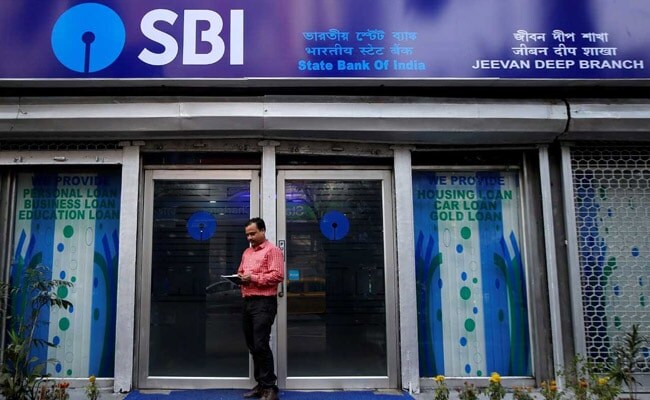
The country's largest public sector bank, State Bank of India, sought issuance of 147 Look Out Circulars (LoC) in the last five months in connection with bank fraud cases, an RTI response from the bank said. Data shows that the bank started seeking LoC from the Bureau of Immigration from April this year. Between April and August, it issued request seeking LoC against 147 individuals to prevent them from leaving the country, the bank said in response to a Right to Information query filed by Pune-based activist Vihar Durve said.
On October 12, 2018, the Home Ministry included chairman, chief executive officers and managing directors of public sector banks in the list of individuals who can seek issuance of Look Out Circulars against offenders to prevent their escape from the country, it said.
According to data provided in Parliament in December last year, about 49 economic offenders have escaped to different countries and the government is making attempts to bring them back.
Fugitive liquor baron Vijay Mallya, diamantaire Mehul Choksi and his nephew Nirav Modi, industrialists Nitin and Chetan Sandesara are among 58 economic offenders probed by the CBI, Enforcement Directorate and other agencies who have escaped abroad, it says.
Although top officials of public sector bank were empowered last year to seek issuance of LoC against individuals, relevant guidelines were framed by the Indian Banks' Association in March this year, the Association told Mr Durve.
The guidelines were considered necessary after public sector banks approached the Association seeking legal protection and immunity available to police and the CBI while issuing the LoCs, it said.
Mr Durve had approached the Finance Ministry seeking to know details about the request for issuance of LoC received from various authorities between 2017 and 2019, action taken on them among other things.
The Finance Ministry transferred the application to the Home Ministry and public sector banks to furnish the information.
The Home Ministry then transferred the application to the Bureau of Immigration (BOI), which works under the Intelligence Bureau. The BOI sought refuge from disclosure under the Section 24 of the RTI Act which exempts it from the ambit of the transparency law.
However, State Bank of India in its response to Mr Durve said it has sought issuance of 147 Look Out Circulars while Union Bank of India replied the information was not in its domain.
UCO Bank said it does not issue Look Out Circulars while Punjab and Sindh Bank said their MD and CEO were authorized to issue the LoCs but "there is no such data" available.
Bank of Baroda said the information does not pertain to it and Canara Bank said no requests for LoCs were made by it in the period.
In FY19, the banking sector reported 6,801 frauds involving Rs 71,542.93 crore as against 5,916 cases involving Rs 41,167.04 crore reported in 2017-18, the Reserve Bank of India has said in its latest report.
Among bank groups, PSBs, which have the largest market share in terms of lending, accounted for the majority of frauds reported in 2018-19. It was followed by private sector banks and foreign banks.
In the reporting year, state-run banks reported 3,766 cases of frauds worth Rs 64,509.43 crore. The report said that the average lag between the date of occurrence of frauds and its detection by banks was 22 months.
The average lag for large frauds, i.e. Rs 100 crore and above, amounting to Rs 52,200 crore reported during 2018-19, was 55 months," it said.
Cheating and forgery were the major component, followed by misappropriation and criminal breach of trust. Fraud cases involving an amount of less than Rs 1 lakh (i.e., small-value frauds) were only 0.1 per cent of the total amount involved in 2018-19, the report showed.

-
Indians Are Travelling, But Not Every Journey Is A Holiday | The Week In Whys

Pilgrims, patients and working women are the real travellers, and the system hasn't quite caught up with them.
-
Getting To Work Costs Women More | The Reason Why
It is not just about women paying more than men. It is about women paying much more in cities than in villages.
-
AI Bias In Investing Cannot Be Eliminated, But It Can Be Governed
Framing is a particularly important example as identical financial information presented in terms of gains rather than losses can lead an LLM to reach a different assessment.
-
Joining The Dots | Dark Skies, Steady Diya: Why Hope Holds This Diwali
With war, a weak rupee and foreign outflows weighing on sentiment, policymakers at the NDTV World Summit and market veterans at NDTV Profit Ignite: Diwali Edition offered the same advice: stay invested and filter out the noise.
-
The Curious Case of Equitas Small Finance Bank And A CEO Who Quit For Stock
PN Vasudevan believes persistent investor concerns over a perceived conflict of interest had become a governance overhang on Equitas Small Finance Bank's stock, even as the lender improved profitability and asset quality.
-
Talking Points This Week: AI Cash Burn, A Tiger Comeback And An India That Still Finds Its Own Path
India is not immune to higher oil or tighter global liquidity, yet its earnings base is broader, its domestic policy levers are still available.
-
Foreign Investors Own Half Of HDFC Bank and ICICI Bank. An LTCG Cut Could Matter Most Here
Foreign portfolio investors have US$115 billion parked in HDFC Bank, ICICI Bank. If the government cuts long-term capital gains tax, Jefferies says returning foreign money could land here first.
-
'Never Seen This Level Of Negativity': Sandeep Tandon Says The Next Rally May Be Closer Than You Think
Veteran investor Sandeep Tandon says foreign selling is easing, large-caps are due a comeback and mid-caps are crowded, while he turns positive on gold, power and pharma this Diwali.
-
Indians Stay With Family, Not In Hotels | The Reason Why
India still lacks enough clean, reliable and affordable hotels for budget-conscious travellers.
-
The Economic Imperative: Analysing The Material Driving Force Behind India-Canada Strategic Reset
This economic complementarity is further reinforced by deep institutional investment ties and talent mobility, which form the bedrock of the bilateral framework.










