SBI Drops The Most In Seven Years After Board Nod To Explore Investment In Yes Bank
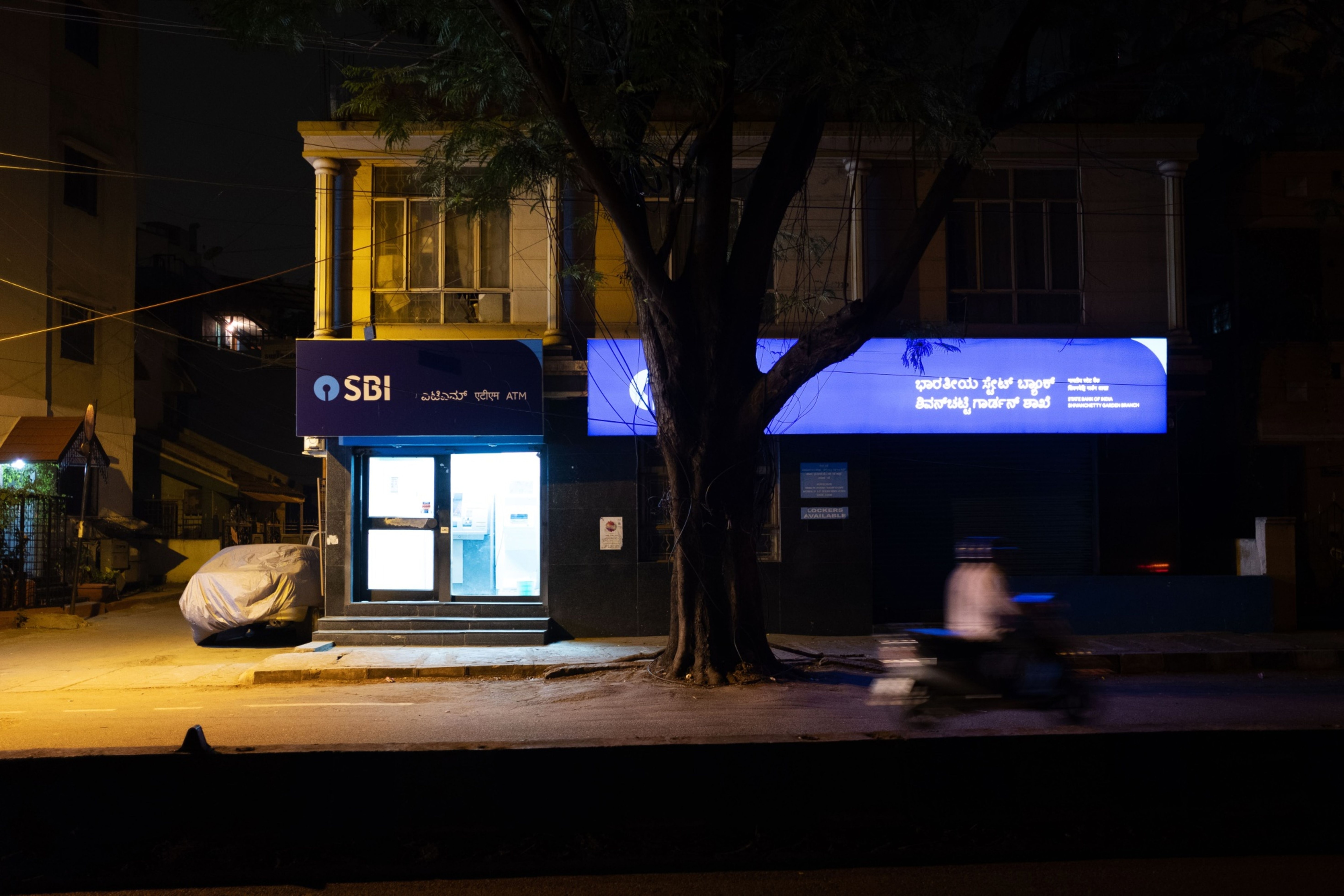
Shares of State Bank of India Ltd. fell nearly 12 percent—the most since Oct. 05 2012—after the government-owned lender's board gave in-principle approval to explore investment opportunity in Yes Bank Ltd., according to a statement filed with stock exchanges.
The statement is in response to a Bloomberg report, on Thursday morning, that the government had approved a plan for SBI to lead a consortium that will buy a stake to rescue the capital-starved Yes Bank.
While at that time SBI did not comment as its board was in a meeting, in a late-night filing it said
- No negotiations regarding a consortium have taken place.
- Yes Bank was discussed at today's board meeting.
- In-principle approval has been given by the board to explore investment opportunity in Yes Bank.
Just hours before SBI's stock exchange filing the government imposed a month-long moratorium on Yes Bank and Reserve Bank of India superseded its board, appointing an administrator to run it during the moratorium period.
Yes Bank's depositors will be able to withdraw only up to Rs 50,000 during the period of moratorium, and while the bank will be able to pay employee salaries and rent, many of its other activities will be hit.
Explaining the moratorium RBI said the financial position of Yes Bank has undergone a steady decline due to inability of the bank to raise capital to address potential loan losses and resultant downgrades. That, it said, triggered invocation of bond covenants by investors and withdrawal of deposits.
The central bank and regulator intends to draw up a scheme for reconstruction or amalgamation of the bank before the moratorium period ends.
In terms of the provisions of the Banking Regulation Act, the Reserve Bank will explore and draw up a scheme in the next few days for the bank's reconstruction or amalgamation and with the approval of the Central Government, put the same in place well before the period of moratorium of thirty days ends so that the depositors are not put to hardship for a long period of time.RBI Statement - March 5, 2020
Rescue Repercussions
Any solution to recapitalise Yes bank and return it to health will likely involve SBI as the day's events indicate. It could be either a fund infusion via purchase of equity or equity-like instruments that help shore up the bank's capital, or an amalgamation with a stronger bank.
A stake purchase is better than consolidation, said an earlier Macquarie Research report, citing uncertainty around the private lender's liabilities franchise (deposits). “We are unsure of Yes Bank's quality of liabilities franchise which perhaps could have further got affected due to the current solvency issues. Consolidation would have brought about a lot of integration challenges as well as legal challenges as we believe SBI Act needs to be amended for SBI to acquire a private sector bank.”
The note also points to potential deterioration in Yes Bank's loan book, and hence indicates a purchase price of next to nil.
Yes Bank has a net-worth of ~Rs 250 billion. Its below investment grade book (BB&Below) is at ~Rs 300 billion and BBB book is at~Rs 500 billion. If we assume substantial proportion of BB&below book is wiped off and say 10-15% of BBB book is to be written off, it implies the current networth of the bank is zero (after factoring in 25% tax benefits). So ideally and theoretically speaking, SBI and other PSU banks need to buy the bank at Rs 1.Macquarie Research Report - March 5, 2020
A JP Morgan research report concurred. “We believe forced bailout investors will likely want the bank to be acquired at near zero value to account for risks associated with the stress book and likely loss of deposits (Q3 financials have still not been disclosed),” the report said.
Both reports pointed to the moral hazard of such a move and its implications for SBI.
“Implications for SBI being called for “national service” we believe are incrementally negative for its valuations as it sets a precedent for nationalization of any future private losses,” said the JP Morgan note.
The Macquarie report made a similar point but also pointed out that “unfortunately, the cost of not bailing out YES Bank for the economy and banking system is far higher than bailing out and hence under the current circumstances this looks to be the only option as investor interest in the stock is very low”.
On Thursday, shares of Yes Bank jumped as much as 26 percent after the Bloomberg report, to Rs 36.80 on the National Stock Exchange. On the other hand, shares of SBI fell as much as 5.36 percent to Rs 270, but later recovered to close 1 percent higher at Rs 288.50. The Yes Bank moratorium and SBI's board decision were intimated much after trading hours.

-
The Economic Imperative: Analysing The Material Driving Force Behind India-Canada Strategic Reset

This economic complementarity is further reinforced by deep institutional investment ties and talent mobility, which form the bedrock of the bilateral framework.
-
Medicine Pricing: Where Must Profit Stop?
India must confront excessive margins, hidden incentives and regulatory gaps that threaten the integrity of medicine.
-
Why Amazon And Flipkart Are Struggling To Beat Meesho In India's Smaller Cities
With 274 million users and lowest-cost logistics, Meesho is defending its value commerce crown against giants like Amazon and Flipkart.
-
High US Salaries, No Green Card Certainty: The Financial Calculation Facing Indian H-1B Families
The suspension of PERM processing at eight technology employers does not cancel existing H-1B visas. What it does is force a question many Indian families have been avoiding: is the US salary worth tying your career and family plans to one employer?
-
Swiggy vs Eternal: Food Delivery's Two Rivals Are No Longer In The Same Race
Eternal is building a private AI assistant, dark.ai. Swiggy is still working out how to make Instamart pay, with an operating loss of Rs 895 crore in the July-September quarter while Blinkit stayed profitable.
-
Where You Live Shapes How You Get To Work | The Reason Why
Two-wheelers are the most popular way to get to work in India, accounting for nearly 43% of workplace commutes.
-
Unhedged Position: Can India See An Indonesia-Style Time Correction?
The Nifty is trading below levels it first clocked in 2024. Is there, then, as I have suggested in the headline, potential that the current time correction drags on painfully for the next three-five, even ten years?
-
Navigating Friction And Energy Realities: An Analysis Of Marco Rubio's October Visit To India
Occurring at a critical juncture marked by stalled trade negotiations and escalating geopolitical pressures over global energy supplies, the visit offers a profound window into modern US-India relations.
-
India Exports Capital. Why Not Export Trusteeship?
The big question, then, is whether India can build an institution that global borrowers, investors, banks, and lawyers can trust, even without an Indian connection.
-
France's Economy & Politics Are In Crisis | The Reason Why
Let's look at how the French economy and politics evolved under Nicolas Sarkozy, Franois Hollande and Emmanuel Macron.










