SBI Chief Rajnish Kumar Sees Bad Loan Provision Falling After 2 Quarters
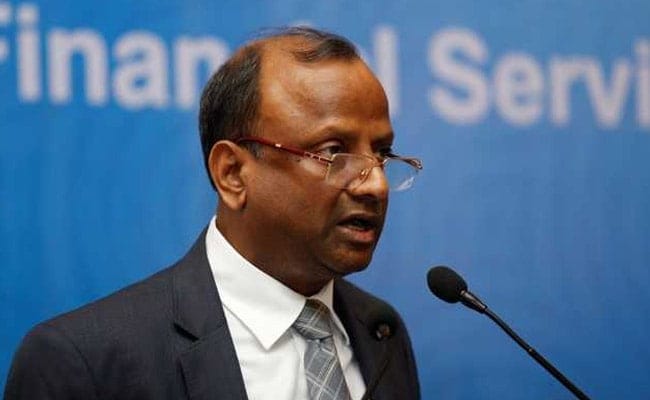
Nusa Dua, Indonesia: State Bank of India, the country's largest lender, sees its provision for bad loans remaining high for at least the next two quarters, after which it will start softening as it steps up efforts to improve asset quality, its chairman said on Friday. The state-run lender is also seeing a slowdown in "accretion" of new bad loans, Rajnish Kumar told Reuters on the sidelines of the International Monetary Fund (IMF) meeting at the Indonesian resort island of Bali.
India's banks have been plagued by a surge in non-performing loans which hit a record $150 billion at the end of March. Twenty-one lenders led by SBI, in which the Indian government owns a majority stake, accounted for 86 per cent of the pile.
"Whatever is the provision coverage...that will still remain elevated for at least two quarters and after that it should start tapering off, the requirement to do more coverage," Kumar said. "Overall, NPAs (non-performing loans) are under control."
SBI, which accounts for about a fifth of India's banking assets, saw its provisions for bad loans rising 7.5 per cent in the June quarter from a year earlier, pulling it to its third straight quarter of losses.
The lender is one of the top shareholders in India's ailing shadow banking firm Infrastructure Leasing & Financial Services (IL&FS), which has been taken over by the government on worries about the impact of its collapse on the financial markets.
"There are some projects where they have disputed claims. They really need to determine very quickly, which I'm sure the new board will be doing, how much money is recoverable and if there's any gap then how do we address that gap."

-
Signature Play: The Classic Cocktail Is Dead. Or Is It?

Classic cocktails are disappearing from India's cocktail menus. But they're still being ordered, taught to bartenders and borrowed from. So, who's really having the last drink?
-
A New Samvat Wishlist: Inclusive Prosperity And Human Development
India has strengthened its economic foundations through infrastructure, digital access and enterprise. Its next growth chapter must deepen productivity, create better livelihoods and widen participation in prosperity.
-
Love, Sex Aur Dhokha: The Audacious Plot To Spy On Jensen Huang
A Taipei dinner, a Singapore chip buyer and a suspected Chinese asset: inside the alleged spy operation that got close to NVIDIA's Jensen Huang.
-
Ten Things I Learnt This Samvat
Patience can be a trap. Cheap stocks can stay cheap. Leverage can wipe you out. What did Samvat 2082 teach us? Niraj Shah writes on 10 lessons from the year gone by.
-
Talking Points This Week: Tech Nerves, FII Buying, And A Faraway Banking Shock
The global markets are not shining this Diwali. The exception in the large markets is, India.
-
Midterm Rally Lasted A Day. The Hard Reality Of A Divided US May Last Two Years | Opinion
Between a contested AI boom, a debt ceiling that arrives in 2027 and a president with every incentive to act alone, the next two years may prove more volatile than the first day's rally suggests.
-
Blue Wave Will Derail the AI Trade but Won't Dismantle the AI Era | Unhedged Position
The Democrats' sweep of the US Congress will see politics collide with economic forces both over the long and short term.
-
It's Time To Take The GST Council's Bet On Trust Global
Payment records can prove India's services exports, and clear, proportionate rules can bring foreign digital sellers into the tax net.
-
Opinion | India at 38: From Innovation Overperformer to Innovation Powerhouse
India now has 453 VC-backed deep science startups, 18 of them late-stage, after 117 percent growth since 2020. Laurus Labs, at USD 9.3 billion, is the most valuable deep science company in any middle-income economy outside China.









