Saudi Aramco Ties Up For 50% Stake In $44 Billion-Maharashtra Refinery
New Delhi: Saudi Aramco on Wednesday signed an initial deal with a consortium of Indian refiners to build a $44 billion refinery and petrochemical project on India's west coast, as the kingdom moves to secure buyers for its crude in a market awash with oil.
Top executives of Aramco and India's Ratnagiri Refinery & Petrochemicals - a joint venture of Indian Oil Corp, Hindustan Petroleum Corp and Bharat Petroleum Corp - signed a memorandum of understanding to take equal stakes in the project in Maharashtra.
The project includes a 1.2-million-barrels-per-day (bpd) refinery integrated with petrochemical facilities with a total capacity of 18 million tonnes per year, the officials said on the sidelines of the International Energy Forum.
Aramco, the world's biggest oil producer, is expanding its footprint globally by signing new downstream deals and boosting the capacity of its existing plants ahead of an initial public offering that is expected later this or next year.
Days earlier, state oil giant Aramco sealed refining and petrochemicals deals worth about $20 billion in France and the United States.
The plant will be one of the largest refining and petrochemical complexes in the world, built to meet fast-growing fuel and petrochemicals demand in India and elsewhere.
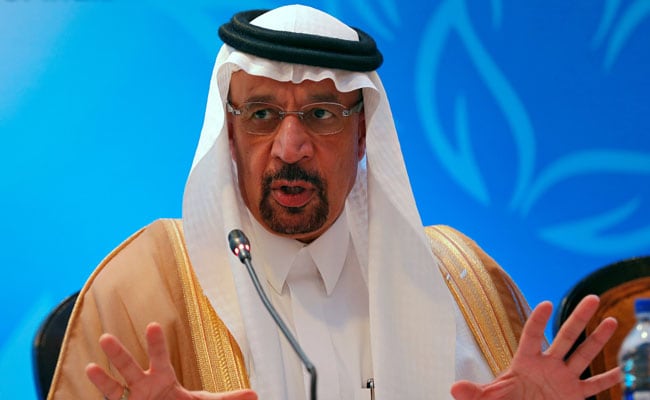
"Large as this project may be, it does not by itself satisfy our desire to invest in India ... We see India as a priority for investments and for our crude supplies," Saudi Energy Minister Khalid al-Falih said.
"We're very much interested in retail ... We want to be consumer-facing," he said.
Saudi Aramco will supply at least 50 percent of the crude to be processed at the planned refinery, he said.
Aramco may introduce at a later stage a strategic partner to share its 50 percent stake, Falih said.
"We have somebody in mind and we will announce in due course," Aramco Chief Executive Amir Nasser said, without elaborating.
Saudi petrochemical company SABIC is also keen to invest in a cracker and other facilities in India, Falih said.
Aramco, like other major producers, wants to tap rising demand growth and invest in the world's third-biggest oil consumer. Last year it opened an office in New Delhi.
India outlined plans in February to expand its refining capacity by 77 percent to about 8.8 million bpd by 2030.
The signing confirmed a Reuters story that ran after representatives of Aramco had met with their Indian counterparts on Tuesday.
During a visit to New Delhi in February, Falih had said Saudi Arabia would sign oil supply deals as part of any agreements to buy stakes in Indian refineries, a strategy it has adopted to expand its market share in Asia and fend off rivals.
Last year, Saudi Arabia pledged billions of dollars of investments in refinery projects in Indonesia and Malaysia that came with long-term crude oil supply deals.
The company is further strengthening its refining role in China, one of its biggest oil customers. Aramco has a refinery joint venture with Sinopec and Exxon Mobil, and is building a 300,000-bpd refinery with Norinco.
"Because of our significant supplies to the Chinese market we are looking at additions," Nasser said, adding his company hopes to close a deal with CNPC this year to buy a stake in a 260,000-bpd refinery in Yunnan.
Saudi Arabia is competing with Iraq to be India's top oil supplier. Iraq displaced Saudi Arabia for the first time on an annual basis in 2017, data compiled by Reuters showed.
Nasser said he was not worried by rising supplies from regional rivals to India.
(Except for the headline, this story has not been edited by NDTV staff and is published from a syndicated feed.)

-
Getting To Work Costs Women More | The Reason Why

It is not just about women paying more than men. It is about women paying much more in cities than in villages.
-
AI Bias In Investing Cannot Be Eliminated, But It Can Be Governed
Framing is a particularly important example as identical financial information presented in terms of gains rather than losses can lead an LLM to reach a different assessment.
-
Joining The Dots | Dark Skies, Steady Diya: Why Hope Holds This Diwali
With war, a weak rupee and foreign outflows weighing on sentiment, policymakers at the NDTV World Summit and market veterans at NDTV Profit Ignite: Diwali Edition offered the same advice: stay invested and filter out the noise.
-
The Curious Case of Equitas Small Finance Bank And A CEO Who Quit For Stock
PN Vasudevan believes persistent investor concerns over a perceived conflict of interest had become a governance overhang on Equitas Small Finance Bank's stock, even as the lender improved profitability and asset quality.
-
Talking Points This Week: AI Cash Burn, A Tiger Comeback And An India That Still Finds Its Own Path
India is not immune to higher oil or tighter global liquidity, yet its earnings base is broader, its domestic policy levers are still available.
-
Foreign Investors Own Half Of HDFC Bank and ICICI Bank. An LTCG Cut Could Matter Most Here
Foreign portfolio investors have US$115 billion parked in HDFC Bank, ICICI Bank. If the government cuts long-term capital gains tax, Jefferies says returning foreign money could land here first.
-
'Never Seen This Level Of Negativity': Sandeep Tandon Says The Next Rally May Be Closer Than You Think
Veteran investor Sandeep Tandon says foreign selling is easing, large-caps are due a comeback and mid-caps are crowded, while he turns positive on gold, power and pharma this Diwali.
-
Indians Stay With Family, Not In Hotels | The Reason Why
India still lacks enough clean, reliable and affordable hotels for budget-conscious travellers.
-
The Economic Imperative: Analysing The Material Driving Force Behind India-Canada Strategic Reset
This economic complementarity is further reinforced by deep institutional investment ties and talent mobility, which form the bedrock of the bilateral framework.
-
Medicine Pricing: Where Must Profit Stop?
India must confront excessive margins, hidden incentives and regulatory gaps that threaten the integrity of medicine.










