'Same Risk, Same Regulation' For Stablecoins, Say Global Regulators
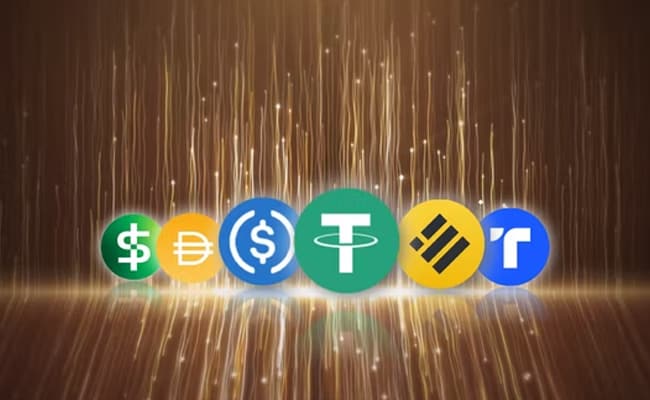
Major stablecoins must comply with the same safeguards as traditional forms of payments, global regulators said on Wednesday, tightening controls over a battered crypto sector.
Stablecoins are cryptocurrencies designed to have a stable value relative to traditional currencies, or to a commodity, to avoid the volatility that makes bitcoin and other digital tokens impractical for most commerce.
IOSCO, a global body for securities regulators, and a committee at the Bank for International Settlements (BIS), a forum for central banks, said on Wednesday they had formally adopted proposals put out to public consultation last October.
The new guidance shows when existing payment sector rules should apply to large stablecoins, marking a major step forward in applying "same risk, same regulation", they said.
"We expect the same level of robustness and strength in these aspects in systemically important stablecoin arrangements," Ashley Alder, chair of IOSCO and CEO of Hong Kong's securities regulator, said in a statement.
The guidance covers managing risks, governance and transparency standards.
"Recent developments in the cryptoasset market have again brought urgency for authorities to address the potential risks posed by cryptoassets, including stablecoins more broadly," said Jon Cunliffe, chair of the BIS committee and deputy governor of the Bank of England.
TerraUSD stablecoin collapsed earlier this year, while crypto lender Voyager Digital filed for bankruptcy this month.
Bitcoin, the largest cryptocurrency, has slumped some 70% since its November record of $69,000.
Global regulators are set to go further in October when the Financial Stability Board, a global regulatory body which includes IOSCO, proposes "robust" rules for cryptocurrencies more generally.
Global watchdogs are playing catch up with the European Union which this month approved a groundbreaking law to regulate cryptomarkets, including stablecoins.
Britain is due to propose rules to regulate systemically important stablecoins this month as part of a draft law on reforming financial services and markets.

-
Extracting Value From Battery Scrap Could Be Challenging For India | The Reason Why

A discarded lithium-ion battery still contains valuable materials such as lithium, nickel and cobalt. These can be recovered and reused. When such batteries are crushed and shredded, they produce a dark powder called black mass.
-
One El Nino, India Can Handle. Two Could Break The Granary
India's grain stocks can absorb one bad year, but a second El Nino could drain the buffer in two to three years, economists say.
-
India's Troika Of Good Luck | Joining The Dots
As Jensen Huang's exit drags Nvidia down, a cooling AI trade and resilient earnings have revived investor interest in India. A likely RBI rate hike looms.
-
Talking Points This Week: Leadership Shock At Nvidia, Earnings Strength, And The Fog Over Hormuz
The Anthropic IPO pricing and first trading day, Nvidia's upcoming earnings, and any fresh signals from Iran will set the tone for the following week.
-
Signature Play: The Classic Cocktail Is Dead. Or Is It?
Classic cocktails are disappearing from India's cocktail menus. But they're still being ordered, taught to bartenders and borrowed from. So, who's really having the last drink?
-
A New Samvat Wishlist: Inclusive Prosperity And Human Development
India has strengthened its economic foundations through infrastructure, digital access and enterprise. Its next growth chapter must deepen productivity, create better livelihoods and widen participation in prosperity.
-
Love, Sex Aur Dhokha: The Audacious Plot To Spy On Jensen Huang
A Taipei dinner, a Singapore chip buyer and a suspected Chinese asset: inside the alleged spy operation that got close to NVIDIA's Jensen Huang.
-
Ten Things I Learnt This Samvat
Patience can be a trap. Cheap stocks can stay cheap. Leverage can wipe you out. What did Samvat 2082 teach us? Niraj Shah writes on 10 lessons from the year gone by.
-
Talking Points This Week: Tech Nerves, FII Buying, And A Faraway Banking Shock
The global markets are not shining this Diwali. The exception in the large markets is, India.
-
Midterm Rally Lasted A Day. The Hard Reality Of A Divided US May Last Two Years | Opinion
Between a contested AI boom, a debt ceiling that arrives in 2027 and a president with every incentive to act alone, the next two years may prove more volatile than the first day's rally suggests.









