Sam Bankman-Fried's FTX, Senior Staff, Parents Bought Bahamas Property Worth $300 Million
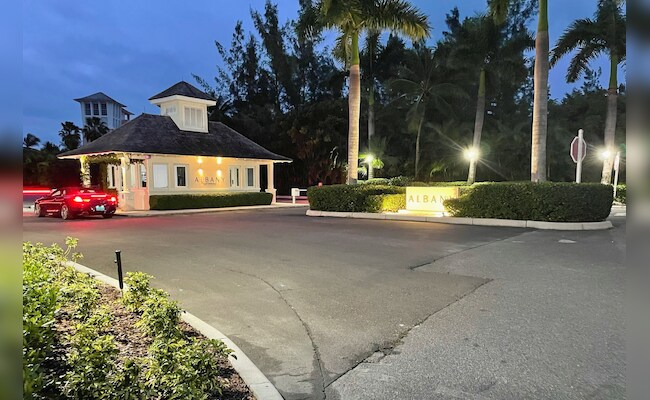
Sam Bankman-Fried's FTX, his parents and senior executives of the failed cryptocurrency exchange bought at least 19 properties worth nearly $121 million in the Bahamas over the past two years, official property records show.
Separately, attorneys for FTX said on Tuesday that one of the company's units spent $300 million in the Bahamas buying homes and vacation properties for its senior staff, and that FTX was run as a "personal fiefdom" of Bankman-Fried. No further details were given.
Most of FTX's purchases registered in the documents seen by Reuters were luxury beachfront homes, including seven condominiums in an expensive resort community called Albany, costing almost $72 million. The deeds show these properties, bought by a unit of FTX, were to be used as "residence for key personnel" of the company. Reuters could not determine who lived in the apartments.
The documents for another home with beach access in Old Fort Bay -- a gated community that was once home to a British colonial fort built in the 1700s to protect against pirates -- show Bankman-Fried's parents, Stanford University law professors Joseph Bankman and Barbara Fried, as signatories. The property, one of the documents dated June 15 said, is for use as a "vacation home."
When asked by Reuters why the couple decided to buy a vacation home in the Bahamas and how it was paid for -- whether in cash, with a mortgage or by a third party such as FTX -- a spokesman for the professors said only that Bankman and Fried had been trying to return the property to FTX.
"Since before the bankruptcy proceedings, Mr. Bankman and Ms. Fried have been seeking to return the deed to the company and are awaiting further instructions," the spokesperson said, declining to elaborate.
While it is known that FTX and its employees bought real estate in the Bahamas, where it established its headquarters in September last year, the property records seen by Reuters show for the first time the scale of their buying spree and the intended use of some of the real estate.
FTX, which filed for bankruptcy earlier this month after a rush of customer withdrawals, did not respond to a request for comment. Bankman-Fried did not respond to requests for comment.
Bankman-Fried has told Reuters he lived in a house with nine other colleagues. For his employees, he said FTX provided free meals and an "in-house Uber-like" service around the island.
The collapse of FTX, one of the world's largest crypto currency exchanges, has left an estimated 1 million creditors facing losses totalling billions of dollars. Reuters has reported Bankman-Fried secretly used $10 billion in customer funds to prop up his trading business, and that at least $1 billion of those deposits had vanished.
In a U.S. court filing with the District of Delaware bankruptcy court earlier this month, John Ray, FTX's new chief executive, said he understood that corporate funds of the FTX Group were used to "purchase homes and other personal items for employees and advisors."
Reuters could not determine the source of funds that FTX and its executives used to buy these properties.
PROPERTY PURCHASES
Reuters searched property records at the Bahamas Registrar General's Department for FTX, Bankman-Fried, his parents and some of the company's key executives.
FTX Property Holdings Ltd, an FTX unit, bought 15 properties worth nearly $100 million in 2021 and 2022.
Its most expensive purchase was a $30 million penthouse at the Albany, a resort where Tiger Woods hosts a golf tournament every year. The property records for the penthouse, dated March 17, were signed by Ryan Salame, the president of FTX Property, and showed it was intended as "residence for key personnel."
Salame did not respond to a request for comment.
Other high-end real estate purchases include three condominiums at One Cable Beach, a beachfront residence in New Providence. Records showed the condominiums cost between $950,000 and $2 million and were bought by Nishad Singh, the former head of engineering at FTX, Gary Wang, an FTX co-founder, and Bankman-Fried for residential use.
Singh and Wang did not respond to requests for comment.
Two of FTX Property's real estate holdings were marked for commercial use - an $8.55 million cluster of houses that served as FTX's headquarters, and a 4.95-acre plot of land on the coastline overlooking cyan waters that was also meant to be developed into office space for the crypto exchange.
The FTX headquarters is now unoccupied, with furniture pushed against some windows. Its signage has been removed. The plot of land, which cost $4.5 million, also lies empty.
A security guard said employees did not return to the headquarters after leaving earlier this month.
(Except for the headline, this story has not been edited by NDTV staff and is published from a syndicated feed.)

-
The Curious Case of Equitas Small Finance Bank And A CEO Who Quit For Stock

PN Vasudevan believes persistent investor concerns over a perceived conflict of interest had become a governance overhang on Equitas Small Finance Bank's stock, even as the lender improved profitability and asset quality.
-
Talking Points This Week: AI Cash Burn, A Tiger Comeback And An India That Still Finds Its Own Path
India is not immune to higher oil or tighter global liquidity, yet its earnings base is broader, its domestic policy levers are still available.
-
Foreign Investors Own Half Of HDFC Bank and ICICI Bank. An LTCG Cut Could Matter Most Here
Foreign portfolio investors have US$115 billion parked in HDFC Bank, ICICI Bank. If the government cuts long-term capital gains tax, Jefferies says returning foreign money could land here first.
-
'Never Seen This Level Of Negativity': Sandeep Tandon Says The Next Rally May Be Closer Than You Think
Veteran investor Sandeep Tandon says foreign selling is easing, large-caps are due a comeback and mid-caps are crowded, while he turns positive on gold, power and pharma this Diwali.
-
Indians Stay With Family, Not In Hotels | The Reason Why
India still lacks enough clean, reliable and affordable hotels for budget-conscious travellers.
-
The Economic Imperative: Analysing The Material Driving Force Behind India-Canada Strategic Reset
This economic complementarity is further reinforced by deep institutional investment ties and talent mobility, which form the bedrock of the bilateral framework.
-
Medicine Pricing: Where Must Profit Stop?
India must confront excessive margins, hidden incentives and regulatory gaps that threaten the integrity of medicine.
-
Why Amazon And Flipkart Are Struggling To Beat Meesho In India's Smaller Cities
With 274 million users and lowest-cost logistics, Meesho is defending its value commerce crown against giants like Amazon and Flipkart.
-
High US Salaries, No Green Card Certainty: The Financial Calculation Facing Indian H-1B Families
The suspension of PERM processing at eight technology employers does not cancel existing H-1B visas. What it does is force a question many Indian families have been avoiding: is the US salary worth tying your career and family plans to one employer?
-
Swiggy vs Eternal: Food Delivery's Two Rivals Are No Longer In The Same Race
Eternal is building a private AI assistant, dark.ai. Swiggy is still working out how to make Instamart pay, with an operating loss of Rs 895 crore in the July-September quarter while Blinkit stayed profitable.










