SAIL Loss Declines To Rs 730 Crore In September Quarter
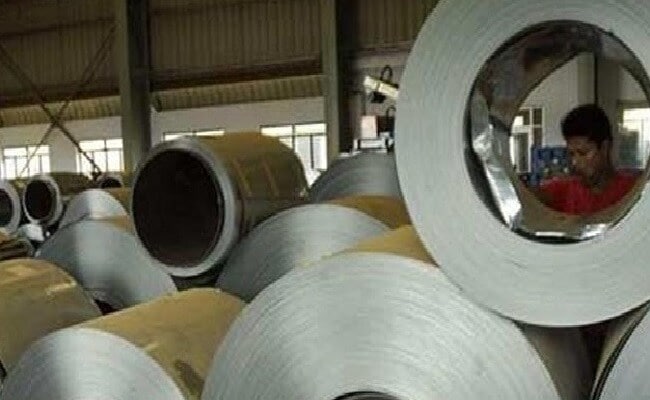
New Delhi: SAIL, India's largest steelmaker, on Thursday reported a decline in standalone net loss at Rs 730.72 crore for the quarter ended September 30, helped by a strong marketing push and cost optimisation measures.
The state-run firm had posted a net loss of Rs 1,108.55 crore for the corresponding period a year ago, it said in a filing to the BSE.
Total standalone income of the 'Maharatna' firm rose 21 per cent to Rs 12,577.90 crore in the July-September quarter this fiscal year from Rs 10,378.91 crore in the corresponding quarter of 2015-16.
Total expenses were higher at Rs 13,132.04 crore during the period under review, compared to Rs 11,836.11 crore in the corresponding period last year.
"Despite the unabated rise in coal prices, we are working on a holistic strategy to remain competitive by reducing our cost, faster ramping up of new facilities and aggressive marketing," SAIL chairman P K Singh said.
In tandem with India's impressive economic growth among large economies, the domestic steel consumption is growing at a faster pace which, coupled with growth oriented policies of the government, will see further improvements in future, he added.
In these difficult market conditions, SAIL management's suitably tailored marketing strategies, customer and market centric approach and the concerted efforts to ramp up production from the modernised facilities resulted in sales growth across all product categories, the steelmaker said.
Also in keeping with its focus to increase global footprint, SAIL's exports more than doubled in the first half this fiscal year, it added.
"SAIL recorded the best ever sales of 3.6 Million Tonnes (MT) in the second quarter of the current financial year which is 32 per cent higher over corresponding period last year (CPLY)," it said.
In the second quarter, the firm also recorded the highest-ever Q2 saleable steel production at 3.492 MT, with a growth of 31 per cent over CPLY, it added.
In the first half of financial year 2016-17, SAIL registered a growth in sales by 18 per cent, saleable steel production by 20 per cent and improvement in market share by 12.7 per cent, the company said.
"Despite an improved physical performance and positive EBIDTA factors like high global coal prices, higher interest and depreciation charges on account of capitalisation of new assets affected the bottom line," it added.

-
The Curious Case of Equitas Small Finance Bank And A CEO Who Quit For Stock

PN Vasudevan believes persistent investor concerns over a perceived conflict of interest had become a governance overhang on Equitas Small Finance Bank's stock, even as the lender improved profitability and asset quality.
-
Talking Points This Week: AI Cash Burn, A Tiger Comeback And An India That Still Finds Its Own Path
India is not immune to higher oil or tighter global liquidity, yet its earnings base is broader, its domestic policy levers are still available.
-
Foreign Investors Own Half Of HDFC Bank and ICICI Bank. An LTCG Cut Could Matter Most Here
Foreign portfolio investors have US$115 billion parked in HDFC Bank, ICICI Bank. If the government cuts long-term capital gains tax, Jefferies says returning foreign money could land here first.
-
'Never Seen This Level Of Negativity': Sandeep Tandon Says The Next Rally May Be Closer Than You Think
Veteran investor Sandeep Tandon says foreign selling is easing, large-caps are due a comeback and mid-caps are crowded, while he turns positive on gold, power and pharma this Diwali.
-
Indians Stay With Family, Not In Hotels | The Reason Why
India still lacks enough clean, reliable and affordable hotels for budget-conscious travellers.
-
Why Prashant Jain's 3P Investment Managers Bought 2.5% Stake In This Healthcare Firm
After slowing acquisitions, Entero now has the opportunity to extract greater value from the network. The key, however, will be execution.
-
Taxing A Promise: The Unsettled Story Of GST On Corporate Guarantees
These concerns are particularly relevant for businesses in the infrastructure, real estate, power and EPC sectors, where guarantees run for several years over the duration of the project and involve substantial amounts.
-
Who Will Care When Women Work? That Is The Wrong Question
The debate on women and work becomes strangely patronising when even our most enlightened elites assume that care is a woman's natural duty.
-
AI Disruption Is Exponential, Businesses Need A Margin Of Safety: HDFC AMC's Navneet Munot
According to Munot, one of the biggest challenges in assessing AI's impact is that the pace of change is exponential rather than linear.
-
The AI Race Is Bigger Than AI Models | The Week In Whys
The AI race and the humanoid race may look like two different technology stories. But underneath, they are increasingly about the same thing: who controls the ecosystem needed to build the technology.