Safeguard Duty Proposal May Increase Solar Tariffs From Record Lows
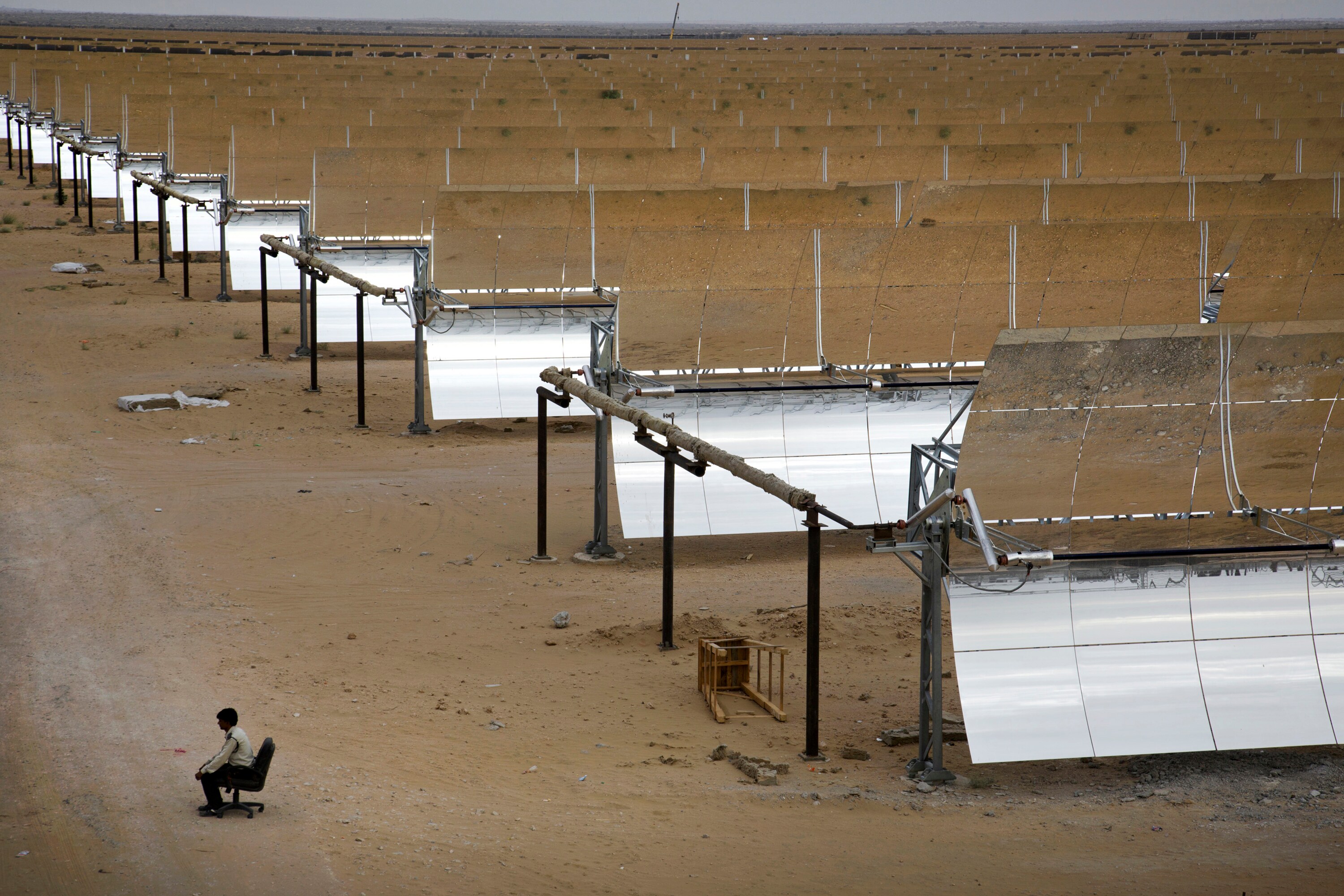
Solar project costs and tariffs in India may rise from record lows if the government accepts a proposal to impose up to 25 percent safeguard duty on photovoltaic panels imported from China and Malaysia for two years.
Girishkumar Kadam, vice-president and sector head of corporate ratings at ICRA Ltd., told BloombergQuint the proposed levy would increase capital costs for solar power projects by 15 percent and to maintain returns, developers may have to hike tariffs by 30-35 paise per unit. A statement from rating agency Crisil echoed his views, “The duty could raise capital costs for solar projects based on imported modules by nearly 15-20 percent (at current prices).”
Cheaper imports from China—that energy consultant Bridge To India said caters to nearly 85 percent of India's solar panel requirements—had helped power producers quote record low tariffs in auctions. Solar modules imported from China now cost 28-29 cents per watt, down from 35-36 cents per watt a little over four weeks ago, according to Kadam. Panels account for over half of a solar power project's cost and a safeguard duty may affect 11-12 gigawatts of projects that are under construction.
The amendment to bidding norms approved in April 2018 allowing pass-through of changes in taxation, duties and cess would allow developers to pass through tariff hikes to the off-takers. Timely approval by the regulators and pass-through of the tariff increase to the off-takers remains critical from their cash flow perspectiveGirishkumar Kadam, Vice-President & Sector Head of Corporate Ratings, ICRA
The recommendation follows an application by the Indian Solar Manufacturers' Association in November 2017, which said the domestic industry sustained heavy losses due to a surge in solar cell imports.
The Directorate General of Trade Remedies recommended the safeguard duty even as solar tariffs remained at record lows in India's largest federal auction of 3 gigawatts of projects. A 25 percent safeguard duty has been recommended on imported solar cells and modules for the first year. The duty will be lowered to 20 percent in the first six months of the second year and 15 percent in the next six.
Crisil said solar project developers would now use the ‘change in law' clause in their contracts to pass on the rise in costs to electricity distribution companies or electricity regulatory commissions. “That can cause a temporary rise in working capital requirements or delay commissioning.”
An analysis by Crisil shows that to maintain current returns, the minimum bid tariffs for solar power projects based on imported modules would need to rise to Rs 2.9-3.2 per unit for a duty rate of 25 percent in the first year of imposition, compared with the Rs 2.44–2.80 per unit bid tariffs seen over the past few quarters.
Duty rates at 20 percent and 15 percent applicable in the second year would need slightly lower tariffs of Rs 2.8-3.1 per unit for the same levels of equity internal rate of return.
‘Duty To Hit Windfall Profits'
Puneet Jaggi, director of Ahmedabad-based Gensol Group, which specialises in the design, engineering, operation and maintenance services for solar projects, doesn't expect a drastic impact on costs. Although the 25 percent safeguard duty seems a tad extreme at first glance, the fall in prices of Chinese solar modules will offset the impact, he told BloombergQuint
In fact, developers' returns won't change as their landed cost would remain constant. Most of them have a pass-through clause for safeguard duty in their power purchase agreements.Puneet Jaggi, Director of Ahmedabad-based Gensol Group
Jaggi said the duty will, however, impact profits. “Without the safeguard duty, we (project developers) used to get 5-8 percent windfall profit depending upon the type of project. That won't be the case once it's imposed. It's quite significant.”

-
Gold Is Rs 22,000 Cheaper Than A Month Ago. Should You Buy Amid The Wedding Season?

Gold's potential slide to $3,500 could save around Rs 4,700 per 10 grams, but a soft inflation print could just as easily push prices back up. One way to split the risk is to buy in parts, some now and the rest after the Fed's Dec. 9 decision.
-
AI Agents Are Gaining Power. Who Governs Them?
Artificial intelligence agents promise to transform productivity by moving machines from assisting decisions to executing them. But as organisations delegate greater authority to these AI-agents, they must first establish who controls that authority and who remains accountable when things go wrong.
-
Why Swapping Your Old Gold Can Trigger A Rs 5 Lakh Tax Bill, And How You Can Avoid It Legally
Swapping old gold for new is taxed as a sale and a fresh purchase. Getting your own gold remade can cut most of that bill, though it has its own costs.
-
The AI Trade is Done. The Real Opportunity for Investors Starts in 2027 | Unhedged Position
As pureplay AI stocks plunge and circular, capex-led financing unwinds, 2027 is set to be a year of reckoning for AI companies. Yet the bust clears the way for a better opportunity for investors in 2027 -- shifting the spotlight from AI builders to the companies using AI.
-
Leadership As Mission: Why The Age Of AI Demands More Human Leadership
Debjani Ghosh examines how AI is changing leadership, arguing that its success must be measured by its impact on people and the accountability of those guiding its use.
-
We May Need Another Tukaram Mundhe To Fight Air Pollution | The Reason Why
Developers may install basic measures such as sprinklers and green nets, resume work, and continue violating rules when this equipment stops working.
-
Extracting Value From Battery Scrap Could Be Challenging For India | The Reason Why
A discarded lithium-ion battery still contains valuable materials such as lithium, nickel and cobalt. These can be recovered and reused. When such batteries are crushed and shredded, they produce a dark powder called black mass.
-
One El Nino, India Can Handle. Two Could Break The Granary
India's grain stocks can absorb one bad year, but a second El Nino could drain the buffer in two to three years, economists say.
-
India's Troika Of Good Luck | Joining The Dots
As Jensen Huang's exit drags Nvidia down, a cooling AI trade and resilient earnings have revived investor interest in India. A likely RBI rate hike looms.
-
Talking Points This Week: Leadership Shock At Nvidia, Earnings Strength, And The Fog Over Hormuz
The Anthropic IPO pricing and first trading day, Nvidia's upcoming earnings, and any fresh signals from Iran will set the tone for the following week.









