Safeguard Duty On Solar Equipment May Hit India’s 100 GW Target: Industry
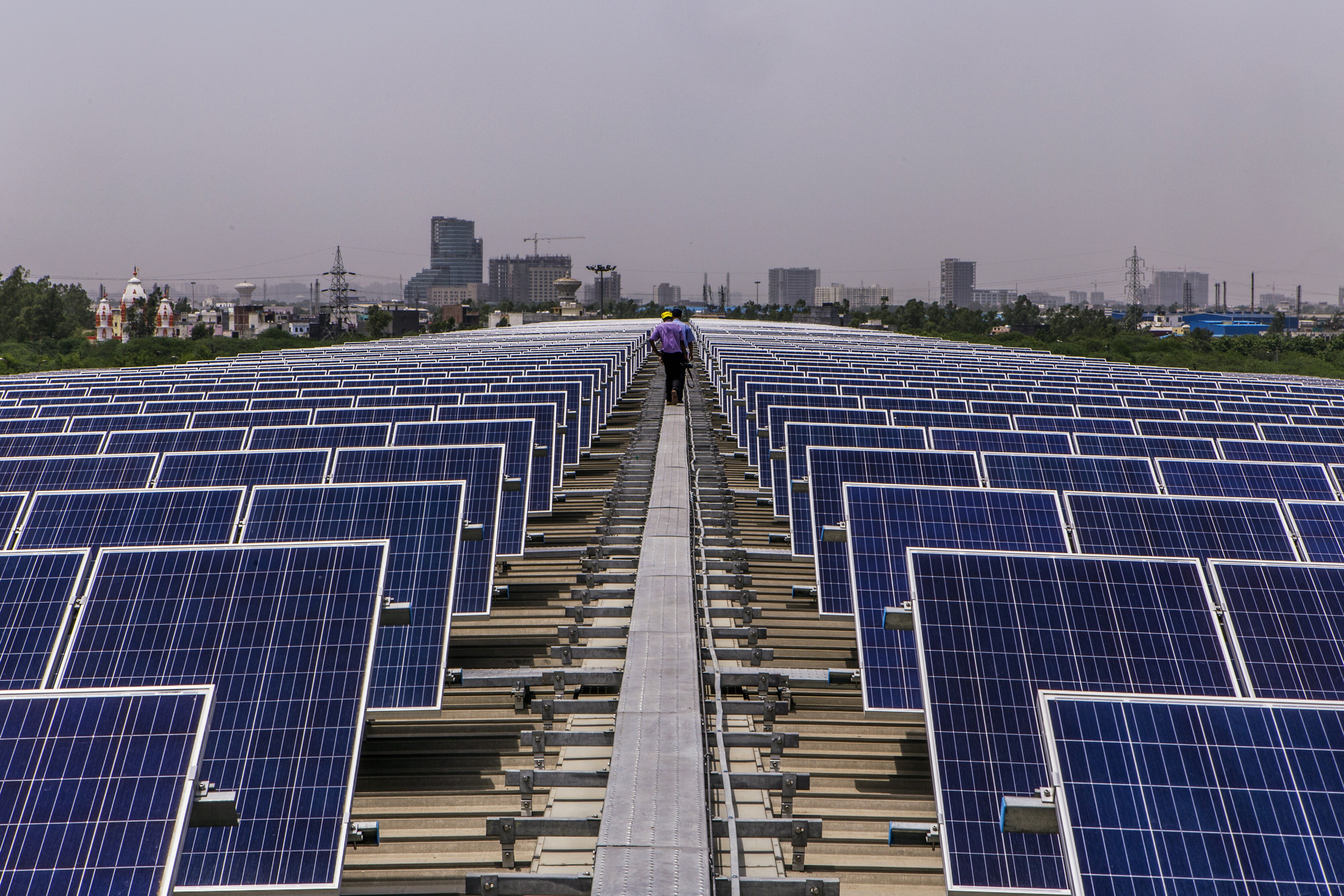
Solar power developers have expressed concerns that safeguard duty on solar equipment may jeopardize India's target of installing 100 GW capacity by 2022 as it would directly affect 25 GW volume under various stages of implementation and hit thousands of jobs in the segment.
The Directorate General of Trade Remedies, a recently-created umbrella authority for trade matters, is scheduled to hold a public hearing in the national capital on Tuesday with regard to imposition of 70 percent safeguard duty on imported solar equipment.
This has led to confusion among the industry players since the Standing Committee on Safeguards under the Finance Ministry had last month decided that no such duty was required.
"Viability of more than 25,000 MW of projects along with thousands of jobs associated with construction of this capacity are on stake until there is a complete clarity and an outcome of safeguard duty investigation," an industry source said.
"Currently, around 8-9 GW solar energy capacity is under construction at various stages and double of this capacity is also tendered out for allocation. Industry is blank on the treatment of these projects with ongoing investigation of safeguard duty," the source added.
The industry is worried as the process of pass through (of the cost of duty on tariff) is very uncertain, long and complex and does not provide any assurances of protecting these projects from becoming non-performing assets, if the duty is imposed.
Industry experts are of the view that availability of solar power at competitive rates (below Rs 3 per unit) will not sustain long as the project cost expected to be increased by almost 40 percent with existing recommendations of DG safeguard for imposing the duty on the import of solar modules.
Giving an instance about uncertainty of pass-through process, the industry sources said that not a single party is granted relief on solar tariffs on account of the Goods and Services Tax implications despite the provisions laid out in contracts. Off-takers are opposing the impact on cost and legal process to continue for uncertain period. Similarly, they said that no off-taker is going to bear this impact of duty under the pass-through mechanism and projects are likely to be failed if not protected through complete exemptions from safeguard duty if bids are submitted before the decision on safeguard. In the recent past, distribution companies have reportedly even cancelled the bids for some technical reasons where actually the tariffs discovered were just above Rs 3 per unit through competitive bid process.
According to industry estimates with current average tariffs of Rs 2.75 per unit, these rates are likely to be hit by 35 to 40 percent (increase to Rs 3.85 per Kwh) if the duty is imposed. The high tariff of above Rs 3 per unit would not attract any discoms to come forward and sign power purchase agreements.
The industry source said, "The imposition of safeguard will be counter productive as any increase in the solar tariffs on account of trade measures will never be absorbed by state discoms, which are the ultimate producers of solar energy. Dependency of importing the raw material from China and lack of technological upgradation would keep India's manufacturing uncompetitive compared to other Asian giants in solar manufacturing."
The industry body Solar Power Developers Association has also filed their concerns with all authorities, including the Ministry of New and Renewable Energy, DGTR, the Ministry of Commerce and even the Prime Minister's Office, pleading to take a rational decision in the interest of National Solar Mission and India's commitments in COP 21 for achieving 40 percent renewable in energy mix by 2030.
"The new solar manufacturing policy formulated by Ministry of New and Renewable Energy have all the ingredients to surely drive the Indian solar manufacturers to reach the required scale and be technologically advanced to cater the local requirements and also be globally competitive for export as well," the SPDA added.

-
Gold Is Rs 22,000 Cheaper Than A Month Ago. Should You Buy Amid The Wedding Season?

Gold's potential slide to $3,500 could save around Rs 4,700 per 10 grams, but a soft inflation print could just as easily push prices back up. One way to split the risk is to buy in parts, some now and the rest after the Fed's Dec. 9 decision.
-
AI Agents Are Gaining Power. Who Governs Them?
Artificial intelligence agents promise to transform productivity by moving machines from assisting decisions to executing them. But as organisations delegate greater authority to these AI-agents, they must first establish who controls that authority and who remains accountable when things go wrong.
-
Why Swapping Your Old Gold Can Trigger A Rs 5 Lakh Tax Bill, And How You Can Avoid It Legally
Swapping old gold for new is taxed as a sale and a fresh purchase. Getting your own gold remade can cut most of that bill, though it has its own costs.
-
The AI Trade is Done. The Real Opportunity for Investors Starts in 2027 | Unhedged Position
As pureplay AI stocks plunge and circular, capex-led financing unwinds, 2027 is set to be a year of reckoning for AI companies. Yet the bust clears the way for a better opportunity for investors in 2027 -- shifting the spotlight from AI builders to the companies using AI.
-
Leadership As Mission: Why The Age Of AI Demands More Human Leadership
Debjani Ghosh examines how AI is changing leadership, arguing that its success must be measured by its impact on people and the accountability of those guiding its use.
-
We May Need Another Tukaram Mundhe To Fight Air Pollution | The Reason Why
Developers may install basic measures such as sprinklers and green nets, resume work, and continue violating rules when this equipment stops working.
-
Extracting Value From Battery Scrap Could Be Challenging For India | The Reason Why
A discarded lithium-ion battery still contains valuable materials such as lithium, nickel and cobalt. These can be recovered and reused. When such batteries are crushed and shredded, they produce a dark powder called black mass.
-
One El Nino, India Can Handle. Two Could Break The Granary
India's grain stocks can absorb one bad year, but a second El Nino could drain the buffer in two to three years, economists say.
-
India's Troika Of Good Luck | Joining The Dots
As Jensen Huang's exit drags Nvidia down, a cooling AI trade and resilient earnings have revived investor interest in India. A likely RBI rate hike looms.
-
Talking Points This Week: Leadership Shock At Nvidia, Earnings Strength, And The Fog Over Hormuz
The Anthropic IPO pricing and first trading day, Nvidia's upcoming earnings, and any fresh signals from Iran will set the tone for the following week.









