Rupee Falls To18-Month Low To Settle At 75.88 Against Dollar On Inflation Concerns
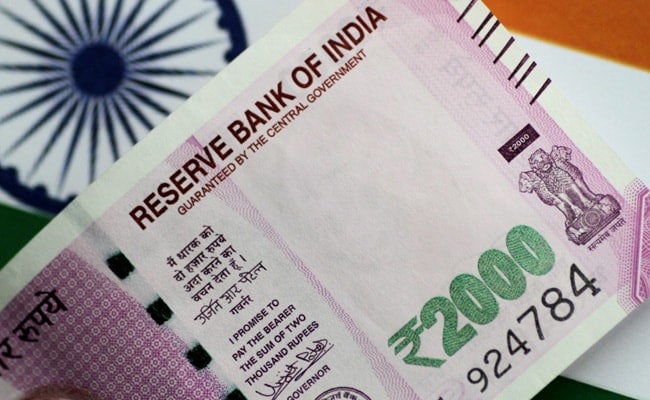
The rupee declined by 10 paise to settle at an 18-month low of 75.88 against the US dollar due to persistent foreign fund outflows and concerns over inflation. At the interbank foreign exchange market, the local unit opened at 75.94 against the dollar and registered an intra day high of Rs 75.83. It witnessed a low of 75.95 against the dollar. In an early trade session today, the domestic unit dropped 17 paise to 75.95 against the greenback. The rupee closed at 75.88 against the dollar - a level not seen since June 22, 2020.
In the previous session, the local unit had settled at 75.78 against the greenback. Muted domestic equities and the dollar demand from corporates also weighed on the local unit, according to analysts. Meanwhile, the dollar index, which gauges the greenback's strength against a basket of six currencies, was trading 0.01 per cent down at 96.30.
“The rupee has fallen to its lowest level since June 2020, which makes it an 18-month low against the US dollar. The fall is largely driven by the fear of the rapid spread of the Omnicron variant. This post the UK PM's warning of a 'tidal wave' of new cases, and WHO stating it as a high global risk.
There is a broad weakness across Asian markets ahead of the US Fed's meeting that may announce an accelerated pace of liquidity tightening. A tapering by US Fed will lead to an outflow of fund flows from emerging markets. The inflation in the US has risen to a multi-decade high, posing a risk for the Fed to act sooner than expected.
The weakness in the rupee is despite record RBI reserves of around $640 billion. The central bank has added over $60 billion in forex reserves in FY22. The latest retail inflation data in India hit a three-month high.
Central banks' action on rate, liquidity, and the resolve to aid recovery in growth rate will guide global equities and currencies,'' said Mr. Nish Bhatt, Founder & CEO, Millwood Kane International.
On the domestic macroeconomic front, the wholesale price-based inflation surged to more than a decade high of 14.23 per cent in November, mainly due to hardening of prices of mineral oils, basic metals, crude petroleum and natural gas.
The dollar stayed near one-week highs today versus a basket of major currencies, as data showing factory gate inflation at 11-year highs confirmed market expectations of a faster taper pace at this week's Federal Reserve meeting. The November US headline producer prices came in at 9.6 per cent, up from 8.6 per cent in October and 1.9 per cent in January, the highest level since the series started in 2010.
British Prime Minister Boris Johnson on Monday confirmed the UK's first death from the Omicron variant of coronavirus, probably the first known fatality from the highly transmissible variant of COVID-19 in the world.
On the domestic equity market front, the BSE Sensex ended 166.33 points or 0.29 per cent lower at 58,117.09 while the broader NSE Nifty fell 43.35 points or 0.25 per cent to 17,324.90.
"Key indices lingered in negative territory for major part of the trading session in a range-bound session as anxious traders are waiting for the outcome of the US Fed meeting even as nervousness continued over rising cases of Omicron in several countries.
Technically, the market has completed one leg of correction and is currently trading near the important retracement support level. After a sharp correction on intraday charts, the Nifty has formed a higher bottom formation indicating high chances of a pullback rally from current levels. For day traders, today's day low or 17220 would be the key support level,'' said Mr Shrikant Chouhan, Head of Equity Research (Retail), Kotak Securities Limited.
According to the exchange data, the foreign institutional investors remained net sellers in the capital market on December 13, as they offloaded shares worth Rs 2,743.44 crore. Brent crude futures, the global oil benchmark, advanced 0.35 per cent to $74.13 per barrel.

-
'Never Seen This Level Of Negativity': Sandeep Tandon Says The Next Rally May Be Closer Than You Think

Veteran investor Sandeep Tandon says foreign selling is easing, large-caps are due a comeback and mid-caps are crowded, while he turns positive on gold, power and pharma this Diwali.
-
Indians Stay With Family, Not In Hotels | The Reason Why
India still lacks enough clean, reliable and affordable hotels for budget-conscious travellers.
-
The Economic Imperative: Analysing The Material Driving Force Behind India-Canada Strategic Reset
This economic complementarity is further reinforced by deep institutional investment ties and talent mobility, which form the bedrock of the bilateral framework.
-
Medicine Pricing: Where Must Profit Stop?
India must confront excessive margins, hidden incentives and regulatory gaps that threaten the integrity of medicine.
-
Why Amazon And Flipkart Are Struggling To Beat Meesho In India's Smaller Cities
With 274 million users and lowest-cost logistics, Meesho is defending its value commerce crown against giants like Amazon and Flipkart.
-
High US Salaries, No Green Card Certainty: The Financial Calculation Facing Indian H-1B Families
The suspension of PERM processing at eight technology employers does not cancel existing H-1B visas. What it does is force a question many Indian families have been avoiding: is the US salary worth tying your career and family plans to one employer?
-
Swiggy vs Eternal: Food Delivery's Two Rivals Are No Longer In The Same Race
Eternal is building a private AI assistant, dark.ai. Swiggy is still working out how to make Instamart pay, with an operating loss of Rs 895 crore in the July-September quarter while Blinkit stayed profitable.
-
Where You Live Shapes How You Get To Work | The Reason Why
Two-wheelers are the most popular way to get to work in India, accounting for nearly 43% of workplace commutes.
-
Unhedged Position: Can India See An Indonesia-Style Time Correction?
The Nifty is trading below levels it first clocked in 2024. Is there, then, as I have suggested in the headline, potential that the current time correction drags on painfully for the next three-five, even ten years?
-
Navigating Friction And Energy Realities: An Analysis Of Marco Rubio's October Visit To India
Occurring at a critical juncture marked by stalled trade negotiations and escalating geopolitical pressures over global energy supplies, the visit offers a profound window into modern US-India relations.










