Government May Dip Into Record Forex Reserves To Fight Coronavirus
Indian policy makers pledged to use their record $481 billion foreign-currency arsenal to stem a market rout that threatens to spill into an already-decelerating economy.
The Reserve Bank of India wants to keep the rupee stable, and will continue using long-term repurchase operations and other liquidity tools, an official said. Prime Minister Narendra Modi's government is mulling higher spending to shield India from the coronavirus outbreak, according to people with knowledge of the matter.
The pledge comes after local markets plunged in line with global peers, forcing countries from Germany to Brazil to announce extraordinary measures to stem the rout. While talks are on for coordinated action from emerging markets, India chose to move preemptively, one official said, asking not to be identified citing rules.
Authorities estimate the virus will shave off about 30 basis points from India's growth target. Growth was pegged at between 6-6.5 per cent in the year starting April 1, prior to the outbreak. Officials are also considering cutting retail pump prices of gasoline and diesel to match the fall in crude oil prices instead of raising duties to bolster revenues, they said.
The Reserve Bank's $2 billion dollar-swap announced Thursday is only the first of its kind, the official said. The official, however, ruled out any action on interest rates outside of the next April 3 decision.
"The language of the communication is probably intended to signal that the RBI has enough forex reserves and a range of instruments to mitigate unwarranted market volatility," said Saugata Bhattacharya, chief economist at Axis Bank Ltd.
Indian markets will react to the comments when they reopen Friday. By the end of Thursday:
- Indian stocks had tumbled into a bear market to join equity benchmarks from Australia to Japan and Italy
- The rupee, Asia's worst-performing currency this month, fell to within 0.5 per cent of its all-time low
- The NSE Volatility Index surged to a level last seen in 2009 as fear rattled the $1.8 trillion market
- Foreigners have pulled $2.2 billion from Indian equities this month, the most since August. They unloaded Rs 7,090 crore ($956 million) of sovereign debt on Wednesday
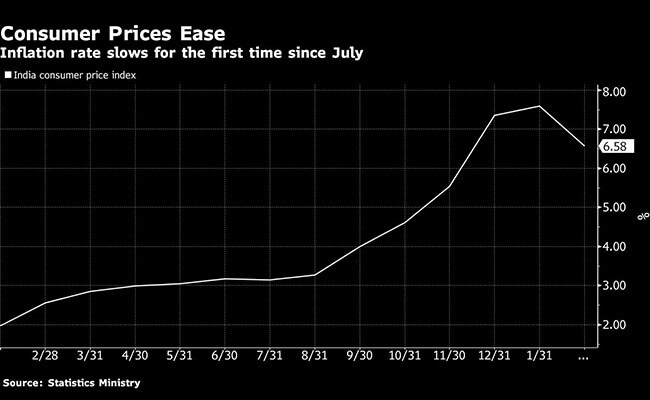
Investors will also assess data published late Thursday, which showed India's current account deficit narrowed in October-December to the smallest since June 2016, while inflation eased for the first time since July. The country's biggest bank, government-controlled State Bank of India, on Thursday also approved a $980 million bailout of the country's fourth-largest private bank that had been threatening financial stability.
Countries around the world are taking measures to mitigate strains on their economies and financial systems as the World Health Organization declared the coronavirus outbreak a pandemic. The US suspended travel from Europe but stopped short of offering a detailed rescue package, even as Australia and the UK unveiled stimulus measures.
A spokesman at PM Modi's office wasn't immediately available, while the central bank's spokesman declined to comment.
The government will suspend most visas starting Friday in a bid to contain the epidemic as India currently has 73 confirmed cases. The number of worldwide cases topped 124,000 and deaths exceeded 4,600.

-
Leadership As Mission: Why The Age Of AI Demands More Human Leadership

Debjani Ghosh examines how AI is changing leadership, arguing that its success must be measured by its impact on people and the accountability of those guiding its use.
-
We May Need Another Tukaram Mundhe To Fight Air Pollution | The Reason Why
Developers may install basic measures such as sprinklers and green nets, resume work, and continue violating rules when this equipment stops working.
-
Extracting Value From Battery Scrap Could Be Challenging For India | The Reason Why
A discarded lithium-ion battery still contains valuable materials such as lithium, nickel and cobalt. These can be recovered and reused. When such batteries are crushed and shredded, they produce a dark powder called black mass.
-
One El Nino, India Can Handle. Two Could Break The Granary
India's grain stocks can absorb one bad year, but a second El Nino could drain the buffer in two to three years, economists say.
-
India's Troika Of Good Luck | Joining The Dots
As Jensen Huang's exit drags Nvidia down, a cooling AI trade and resilient earnings have revived investor interest in India. A likely RBI rate hike looms.
-
Talking Points This Week: Leadership Shock At Nvidia, Earnings Strength, And The Fog Over Hormuz
The Anthropic IPO pricing and first trading day, Nvidia's upcoming earnings, and any fresh signals from Iran will set the tone for the following week.
-
Signature Play: The Classic Cocktail Is Dead. Or Is It?
Classic cocktails are disappearing from India's cocktail menus. But they're still being ordered, taught to bartenders and borrowed from. So, who's really having the last drink?
-
A New Samvat Wishlist: Inclusive Prosperity And Human Development
India has strengthened its economic foundations through infrastructure, digital access and enterprise. Its next growth chapter must deepen productivity, create better livelihoods and widen participation in prosperity.
-
Love, Sex Aur Dhokha: The Audacious Plot To Spy On Jensen Huang
A Taipei dinner, a Singapore chip buyer and a suspected Chinese asset: inside the alleged spy operation that got close to NVIDIA's Jensen Huang.
-
Ten Things I Learnt This Samvat
Patience can be a trap. Cheap stocks can stay cheap. Leverage can wipe you out. What did Samvat 2082 teach us? Niraj Shah writes on 10 lessons from the year gone by.









