As World Markets Shiver, Virus Can Push Rupee To 77/Dollar Soon: Analysts
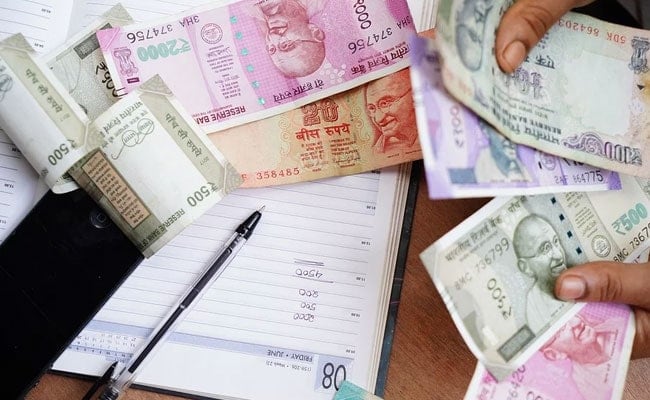
As the coronavirus (COVID-19) pandemic continues to haunt the global financial markets, the rupee remains under pressure after breaching the 75 as well as 76 levels against the US dollar in the past few sessions. On Monday, the rupee depreciated past the 76 mark against the US currency for the first time ever and settled at 76.16 for the day - within two days of hitting 75 for the very first time. But how far is the 77 mark against the greenback? Analysts say the rupee could soon breach the 77 mark to register a new record low against the US dollar.
On Monday, while equity market benchmarks S&P BSE Sensex and NSE Nifty 50 suffered day worst single-day loss in history (in absolute terms) amid a global selloff, the rupee plunged more than 1 per cent against the American currency.
On the same day, dozens of cities and at least 75 districts across the country went into a lockdown to tackle the spread of coronavirus, shutting down businesses and disrupting daily life.
The rupee had taken 17 months to breach the 75 mark after hitting 74 against the greenback for the first time. In other words, the October 2018 low of 74.48 was not breached until Thursday, March 19.
The financial markets around the globe are in a turmoil for the past few weeks as investors assess the strength of policy measures taken to shield the world economy from the rapidly-spreading coronavirus pandemic.
"The rupee is now the Rs 76/$ stage and the next testing point will be 77, which is expected soon. The reason for this is more on the global side with the dollar strengthening and other currencies weakening," credit ratings agency CARE said in a note. "The dollar-euro relation has moved in favour of the former at $ 1.07/euro which is casting shadow on other currencies."
On Monday, the Reserve Bank of India (RBI) brought forward its open market purchase of bonds worth up to Rs 15,000 crore and announced a fresh round of fund infusion via variable rate repos. The central bank said it will now buy four bonds worth Rs 15,000 crore maturing between 2022 and 2028 on March 26, instead of the original auction date of March 30, citing liquidity and financial conditions.
Separately, the RBI said it will conduct 16-day variable rate repo auctions for Rs 1 lakh crore in two equal tranches on Monday and Tuesday, to ensure sufficient liquidity in the backdrop of the global market conditions on account of the COVID-19 disease.
"Sale of dollars directly by the RBI can help but only temporarily for a day or two before it will be back to a volatile market," said CARE Ratings.
Acknowledging the RBI's efforts to protect the money markets, many analysts believe that the central bank still needs to do more to ensure sufficient liquidity.
"The concerns around India's ability to deal with the crisis, the exodus from domestic stocks and bonds have accelerated and that is weighing on the rupee," said Abhishek Goenka, founder and CEO of forex advisory firm IFA Global. "The RBI has done the right thing by ensuring adequate liquidity through open market operations and sell-buy swaps but more needs to be done."
"The liquidity in rupee has been thin due to reduced participation and amid thin liquidity we can witness exaggerated swings towards 77 levels in the next 15 days," Mr Goenka added.
Some also say any news on the number of COVID-19 cases will be monitored closely in the days to come.
"The number of infected cases in India is on the rising march and one of the biggest triggers for the rupee as well as Indian equities to cool off will be stabilisation in the number of people being diagnosed (with COVID-19)," said Amit Pabari, managing director at forex advisory firm CR Forex Advisors.
On Tuesday, the rupee ended at the strongest level of the session at 75.94, up 26 paise compared to the previous close, amid gains in domestic equity markets. At this level, it is down 6.42 per cent so far this year (year-to-date). The markets remained shut on Wednesday on account of the Gudhi Padwa holiday.

-
Getting To Work Costs Women More | The Reason Why

It is not just about women paying more than men. It is about women paying much more in cities than in villages.
-
AI Bias In Investing Cannot Be Eliminated, But It Can Be Governed
Framing is a particularly important example as identical financial information presented in terms of gains rather than losses can lead an LLM to reach a different assessment.
-
Joining The Dots | Dark Skies, Steady Diya: Why Hope Holds This Diwali
With war, a weak rupee and foreign outflows weighing on sentiment, policymakers at the NDTV World Summit and market veterans at NDTV Profit Ignite: Diwali Edition offered the same advice: stay invested and filter out the noise.
-
The Curious Case of Equitas Small Finance Bank And A CEO Who Quit For Stock
PN Vasudevan believes persistent investor concerns over a perceived conflict of interest had become a governance overhang on Equitas Small Finance Bank's stock, even as the lender improved profitability and asset quality.
-
Talking Points This Week: AI Cash Burn, A Tiger Comeback And An India That Still Finds Its Own Path
India is not immune to higher oil or tighter global liquidity, yet its earnings base is broader, its domestic policy levers are still available.
-
Foreign Investors Own Half Of HDFC Bank and ICICI Bank. An LTCG Cut Could Matter Most Here
Foreign portfolio investors have US$115 billion parked in HDFC Bank, ICICI Bank. If the government cuts long-term capital gains tax, Jefferies says returning foreign money could land here first.
-
'Never Seen This Level Of Negativity': Sandeep Tandon Says The Next Rally May Be Closer Than You Think
Veteran investor Sandeep Tandon says foreign selling is easing, large-caps are due a comeback and mid-caps are crowded, while he turns positive on gold, power and pharma this Diwali.
-
Indians Stay With Family, Not In Hotels | The Reason Why
India still lacks enough clean, reliable and affordable hotels for budget-conscious travellers.
-
The Economic Imperative: Analysing The Material Driving Force Behind India-Canada Strategic Reset
This economic complementarity is further reinforced by deep institutional investment ties and talent mobility, which form the bedrock of the bilateral framework.
-
Medicine Pricing: Where Must Profit Stop?
India must confront excessive margins, hidden incentives and regulatory gaps that threaten the integrity of medicine.










