Rupee To Weaken To 71.50 Against Dollar In A Year: Poll
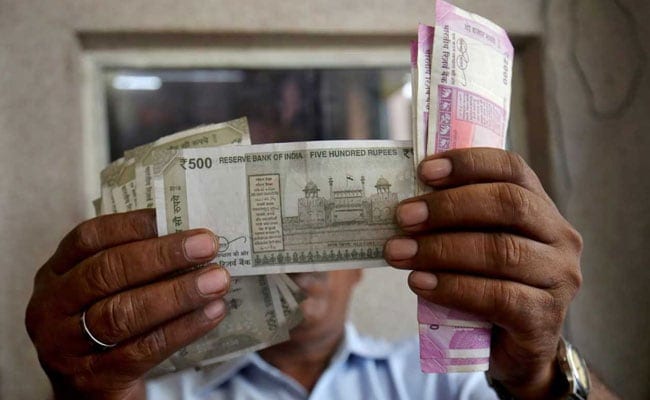
The battered rupee will take another bruising this year, despite a recent revival, weighed down by uncertainty around general elections in May and an expected economic slowdown, a Reuters poll found.
While the currency recovered nearly 6 per cent after touching a record low of 74.485 per dollar on October 11, the January 2-8 poll of more than 65 analysts showed the rupee will weaken again.
However, fewer than 20 per cent of contributors in the latest poll expected the rupee to breach that all-time low in the next 12 months, compared to nearly 50 per cent in a November survey and about one-third in December.
After falling about 9 per cent in 2018 - its biggest decline since Prime Minister Narendra Modi took office in 2014 - the currency was forecast to weaken 1.9 per cent to 71.50 per dollar in a year, from about 70.20 on Tuesday.
Two-thirds of those who gave a year-ahead forecast predicted the currency to be weaker - trading at more than 70 per dollar, with the most pessimistic call at 80. The others either had it around where it is now or a touch stronger.
"Overall there's nothing to be greatly optimistic about the rupee. There are lots of uncertainties, both on economic and political fronts lingering as we enter into 2019," said Prakash Sakpal, Asia economist at ING, adding that elections and political uncertainty pose "the biggest risk".
"Things could go either way. We might see the BJP (Bharatiya Janata Party) retaining its power by a very thin margin. On the other extreme, there could be a coalition. This would obviously not be viewed by the international community positively, which of course is going to be bad for the currency," Mr Sakpal said.
A deep selloff in emerging market currencies last year was triggered by a resurgent dollar and the US-China trade war, making the rupee the worst-performing major Asian currency in 2018.
In recent weeks, the dollar has lost momentum on economic growth worries in the US and a dialing back of rate hike expectations, benefiting emerging market currencies - with the MSCI emerging market currency index rising to levels last seen in late July.
But growth conditions in most emerging economies aren't much to write home about either, potentially limiting the upside for those currencies.
The rupee's path this year will largely be determined by the results of elections in May, oil price moves and the Reserve Bank of India's policy.
With foreign outflows from Asian equities the biggest in at least seven years in 2018, the US-China trade war and a widening fiscal deficit at a time of slowing economic growth globally, the rupee is not likely to rise.
The government is expected to miss its deficit target of 3.3 per cent of gross domestic product this fiscal year as data showed the April-November deficit was already 115 per cent of the budgeted target.
That poses a big threat to economic expansion. the country's annual economic growth fell to a worse-than-expected 7.1 per cent in the July-September quarter.
"Slowdown will become a trend this year, especially as external demand will remain on a weakening path, whereas without much downside in oil prices, imports will remain elevated, so we should see a bigger hit to GDP growth from continued widening in the trade deficit this year," added ING's Mr Sakpal.
But not everyone was convinced about a weaker rupee, as expectations of fewer Federal Reserve rate hikes are likely to restrain the dollar from making further gains.
"We see the retreat in global oil prices and a pause in the Federal Reserve hiking cycle outweighing domestic concerns," said Rini Sen, FX strategist at ANZ. "This will see the rupee regain lost momentum, but much of this reversal is expected to come post the general elections in mid-2019."

-
Signature Play: The Classic Cocktail Is Dead. Or Is It?

Classic cocktails are disappearing from India's cocktail menus. But they're still being ordered, taught to bartenders and borrowed from. So, who's really having the last drink?
-
A New Samvat Wishlist: Inclusive Prosperity And Human Development
India has strengthened its economic foundations through infrastructure, digital access and enterprise. Its next growth chapter must deepen productivity, create better livelihoods and widen participation in prosperity.
-
Love, Sex Aur Dhokha: The Audacious Plot To Spy On Jensen Huang
A Taipei dinner, a Singapore chip buyer and a suspected Chinese asset: inside the alleged spy operation that got close to NVIDIA's Jensen Huang.
-
Ten Things I Learnt This Samvat
Patience can be a trap. Cheap stocks can stay cheap. Leverage can wipe you out. What did Samvat 2082 teach us? Niraj Shah writes on 10 lessons from the year gone by.
-
Talking Points This Week: Tech Nerves, FII Buying, And A Faraway Banking Shock
The global markets are not shining this Diwali. The exception in the large markets is, India.
-
Midterm Rally Lasted A Day. The Hard Reality Of A Divided US May Last Two Years | Opinion
Between a contested AI boom, a debt ceiling that arrives in 2027 and a president with every incentive to act alone, the next two years may prove more volatile than the first day's rally suggests.
-
Blue Wave Will Derail the AI Trade but Won't Dismantle the AI Era | Unhedged Position
The Democrats' sweep of the US Congress will see politics collide with economic forces both over the long and short term.
-
It's Time To Take The GST Council's Bet On Trust Global
Payment records can prove India's services exports, and clear, proportionate rules can bring foreign digital sellers into the tax net.
-
Opinion | India at 38: From Innovation Overperformer to Innovation Powerhouse
India now has 453 VC-backed deep science startups, 18 of them late-stage, after 117 percent growth since 2020. Laurus Labs, at USD 9.3 billion, is the most valuable deep science company in any middle-income economy outside China.









