Rupee Falls 12 Paise To 82.88 Per Dollar On Global Economic Growth Worries
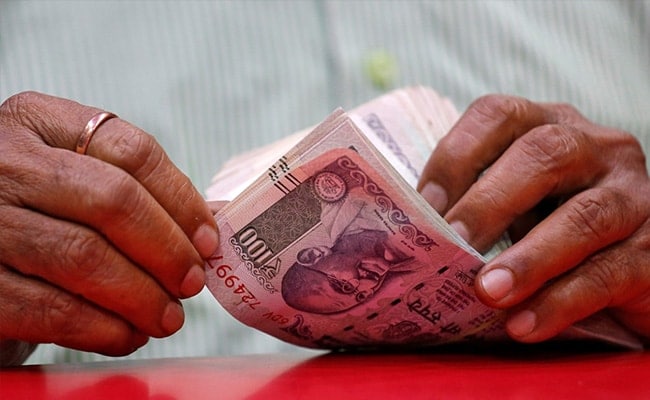
The rupee held steady on Friday after falling in early trade following a deep sell-off in the previous session, even as the threat of higher for longer interest rates prevails amid growing global recession concerns.
Bloomberg showed the rupee was last changing hands at 82.8750 per dollar, compared to its previous close of 82.7625 on Thursday.
PTI reported that the domestic currency dropped 9 paise to provisionally close at 82.85 against the US dollar.
However, receding crude oil prices capped the rupee's loss, forex traders told PTI.
Traders were also accurately hesitant to bet on the rupee falling below 83 per dollar in anticipation of an intervention from the Reserve Bank of India (RBI).
"The rupee opened at 82.85 per dollar and remained in a small range of 82.75 to 82.88. Supplies were low while oil continued to buy dollars; the RBI supplied $ at 82.85 to calm the market," said Anil Kumar Bhansali, Head of Treasury at Finrex Treasury Advisors.
"The trading range for next week is likely to be 82 to 83.50 per dollar, with risks tilted against the domestic currency as we head into the holiday season when inflows will be lower, and dollar buying continues," he added.
The US Federal Reserve, the European Central Bank, and the Bank of England all issued warnings of upcoming rate hikes, despite the possibility of an impending recession, which negatively impacted investor sentiment toward risk assets.
Investors are concerned about longer-term growth due to the likelihood of rising near-term rates since there are increasing indications that a global downturn is intensifying.
The dollar, though, has had a turbulent week, putting it on course to lose by 0.5 per cent overall.
Ten-year Treasuries rallied a bit on Thursday before steadying in Asia. Still, currency movements were more significant on Friday, with the dollar's recent decline stopped by its largest increase in two months.
"This time it wasn't US bond yields driving the move; instead it was just a feeling that if Fed policy remains tighter for longer...it could be tough going for risk assets," Strategists at ANZ bank noted.
"The Fed may not be hiking as fast, but it still has the highest policy rate in the G10 and will be one of the few central banks to take policy (rates) past 5 per cent."

-
AI Bias In Investing Cannot Be Eliminated, But It Can Be Governed

Framing is a particularly important example as identical financial information presented in terms of gains rather than losses can lead an LLM to reach a different assessment.
-
Joining The Dots | Dark Skies, Steady Diya: Why Hope Holds This Diwali
With war, a weak rupee and foreign outflows weighing on sentiment, policymakers at the NDTV World Summit and market veterans at NDTV Profit Ignite: Diwali Edition offered the same advice: stay invested and filter out the noise.
-
The Curious Case of Equitas Small Finance Bank And A CEO Who Quit For Stock
PN Vasudevan believes persistent investor concerns over a perceived conflict of interest had become a governance overhang on Equitas Small Finance Bank's stock, even as the lender improved profitability and asset quality.
-
Talking Points This Week: AI Cash Burn, A Tiger Comeback And An India That Still Finds Its Own Path
India is not immune to higher oil or tighter global liquidity, yet its earnings base is broader, its domestic policy levers are still available.
-
Foreign Investors Own Half Of HDFC Bank and ICICI Bank. An LTCG Cut Could Matter Most Here
Foreign portfolio investors have US$115 billion parked in HDFC Bank, ICICI Bank. If the government cuts long-term capital gains tax, Jefferies says returning foreign money could land here first.
-
'Never Seen This Level Of Negativity': Sandeep Tandon Says The Next Rally May Be Closer Than You Think
Veteran investor Sandeep Tandon says foreign selling is easing, large-caps are due a comeback and mid-caps are crowded, while he turns positive on gold, power and pharma this Diwali.
-
Indians Stay With Family, Not In Hotels | The Reason Why
India still lacks enough clean, reliable and affordable hotels for budget-conscious travellers.
-
The Economic Imperative: Analysing The Material Driving Force Behind India-Canada Strategic Reset
This economic complementarity is further reinforced by deep institutional investment ties and talent mobility, which form the bedrock of the bilateral framework.
-
Medicine Pricing: Where Must Profit Stop?
India must confront excessive margins, hidden incentives and regulatory gaps that threaten the integrity of medicine.
-
Why Amazon And Flipkart Are Struggling To Beat Meesho In India's Smaller Cities
With 274 million users and lowest-cost logistics, Meesho is defending its value commerce crown against giants like Amazon and Flipkart.










