Rupee Takes A Breather A Day After Lifetime Low Of 77.44
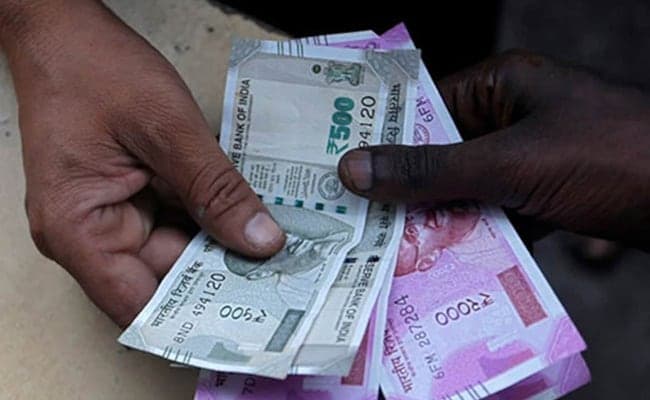
The rupee took a breather on Tuesday, with the currency gaining slightly to 77.25 against the dollar in early trades after its meltdown to close at a life-low of 77.44 in the previous session.
Bloomberg on Tuesday quoted the Indian currency at 77.25, a gain of about 20 paise against the dollar, after hitting a new all-time low of 77.52 during the previous session.
On the NSE, the front-end futures contract showed the rupee priced at around 77.28 against the dollar after opening at about 77.34.
PTI reported the rupee opened sharply strong at 77.27 against the dollar, and gained more strength to quote 77.24 in early trade, registering a rise of 20 paise from the last close. It was moving in the range of 77.22 to 77.29.
In the previous session, the rupee had slumped 54 paise to close at an all-time low of 77.44 against the US dollar.
Forex traders said receding global crude prices boosted investor sentiment, and a weak American currency against its global rivals also helped the rupee.
The International benchmark, brent crude, was down nearly $1.5 to last trade around $104.5 per barrel after sinking 6 per cent in the previous session as coronavirus lockdowns in China, the top oil importer, fed worries about energy demand.
Indian equity benchmarks too traded higher in opening deals on Tuesday led by gains in automobile and consumer goods stocks.
However, rising concerns over higher interest rates and weakness in global economic growth kept the appreciation bias in check, they added.
Indeed, while the rupee reversed and recouped some losses, the bias and wider market moves point to more downside for the currency.
The recent turmoil was spread across global financial markets, with a relentless sell-off in risk assets - such as world equities and bitcoin - deepening, driven by higher interest rates and their impact on economic growth worries. At the same time, the dollar held near 20-year highs.
Investors have shunned risk and sought safe-haven assets, as reflected by global equities in a sea of red.
Indeed, Asian shares tumbled to their lowest in nearly two years on Tuesday, with MSCI's broadest index of Asia-Pacific shares outside Japan down 0.8 per cent, falling for a seventh straight session and down 17 per cent so far this year.
It wasn't very different on Wall Street.
Reuters reported that expectations of a hawkish Federal Reserve are dimming Wall Street's outlook for stocks, with some investors now bracing for a potential bear market in the benchmark S&P 500 index.
After falling 2.5 per cent Monday, the S&P 500 was recently around 16 per cent below its high reached on January 3 as it struggled through the worst four-month start to a year since 1939. The Nasdaq Composite index reached bear market territory in March and is down nearly 26 per cent.
Futures markets are pricing in a near 80 per cent chance of a 75 basis-point Fed hike in June - underscoring the risks of higher and faster interest rates on economic growth.
"The idea of a benign and gentle tightening cycle has evaporated," ANZ analysts told Reuters.
"The reality is that the Fed cannot control the supply side of the economy in the short-run, so as long as key indicators like the labour force participation rate stay low and Chinese exports slow, the risk to inflation, and therefore interest rates, lies to the upside," ANZ said.

-
Getting To Work Costs Women More | The Reason Why

It is not just about women paying more than men. It is about women paying much more in cities than in villages.
-
AI Bias In Investing Cannot Be Eliminated, But It Can Be Governed
Framing is a particularly important example as identical financial information presented in terms of gains rather than losses can lead an LLM to reach a different assessment.
-
Joining The Dots | Dark Skies, Steady Diya: Why Hope Holds This Diwali
With war, a weak rupee and foreign outflows weighing on sentiment, policymakers at the NDTV World Summit and market veterans at NDTV Profit Ignite: Diwali Edition offered the same advice: stay invested and filter out the noise.
-
The Curious Case of Equitas Small Finance Bank And A CEO Who Quit For Stock
PN Vasudevan believes persistent investor concerns over a perceived conflict of interest had become a governance overhang on Equitas Small Finance Bank's stock, even as the lender improved profitability and asset quality.
-
Talking Points This Week: AI Cash Burn, A Tiger Comeback And An India That Still Finds Its Own Path
India is not immune to higher oil or tighter global liquidity, yet its earnings base is broader, its domestic policy levers are still available.
-
Foreign Investors Own Half Of HDFC Bank and ICICI Bank. An LTCG Cut Could Matter Most Here
Foreign portfolio investors have US$115 billion parked in HDFC Bank, ICICI Bank. If the government cuts long-term capital gains tax, Jefferies says returning foreign money could land here first.
-
'Never Seen This Level Of Negativity': Sandeep Tandon Says The Next Rally May Be Closer Than You Think
Veteran investor Sandeep Tandon says foreign selling is easing, large-caps are due a comeback and mid-caps are crowded, while he turns positive on gold, power and pharma this Diwali.
-
Indians Stay With Family, Not In Hotels | The Reason Why
India still lacks enough clean, reliable and affordable hotels for budget-conscious travellers.
-
The Economic Imperative: Analysing The Material Driving Force Behind India-Canada Strategic Reset
This economic complementarity is further reinforced by deep institutional investment ties and talent mobility, which form the bedrock of the bilateral framework.
-
Medicine Pricing: Where Must Profit Stop?
India must confront excessive margins, hidden incentives and regulatory gaps that threaten the integrity of medicine.










