Rupee Rises 19 Paise To 82.28 Against US Dollar
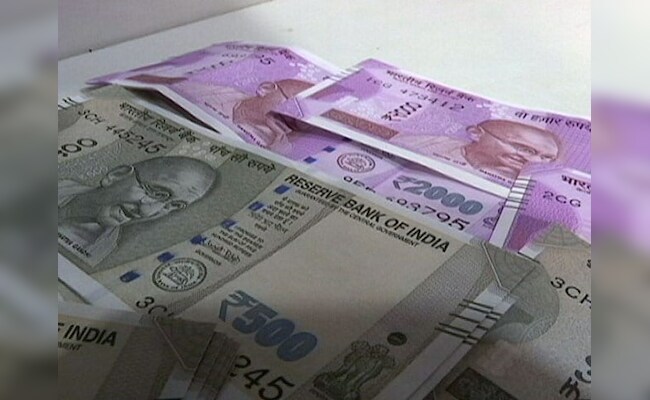
The rupee appreciated 19 paise to 82.28 against the US dollar in early trade on Thursday in line with its Asian peers and a slide in crude oil prices.
Forex traders said muted domestic equities and foreign fund outflows weighed on the local unit and restricted the appreciation bias.
At the interbank foreign exchange, the domestic unit opened at 82.34 against the dollar, then gained further ground to touch 82.28, registering a rise of 19 paise over its previous close.
On Wednesday, the rupee pared initial losses and settled marginally higher at 82.47 against the US dollar.
Meanwhile, the dollar index, which gauges the greenback's strength against a basket of six currencies, rose 0.18 per cent to 105.28.
Brent crude futures, the global oil benchmark, advanced 0.95 per cent to USD 77.90 per barrel.
In the domestic equity market, the 30-share BSE Sensex was trading 35.72 points or 0.06 per cent higher at 62,446.40. The broader NSE Nifty rose 13.15 points or 0.07 per cent to 18,573.65.
Foreign Institutional Investors (FIIs) were net sellers in the capital markets on Wednesday as they offloaded shares worth Rs 1,241.87 crore, according to exchange data.
"Dollar has weakened across the board. DXY has dropped to 105.30 from highs around 105.89 seen on Thursday. Asian currencies are trading stronger against the Dollar," IFA Global Research Academy said in a research note.
RBI MPC on Wednesday hiked repo rate by 35bps to 6.25 per cent.
"The governor said further calibrated tightening would be required to break the persistence of core inflation, anchor inflation expectations and prevent second round effects. This statement was seen as being hawkish and has caused markets to price in a possibility of another 25bps hike in the next policy," the note added.
(Except for the headline, this story has not been edited by NDTV staff and is published from a syndicated feed.)

-
One El Nino, India Can Handle. Two Could Break The Granary

India's grain stocks can absorb one bad year, but a second El Nino could drain the buffer in two to three years, economists say.
-
India's Troika Of Good Luck | Joining The Dots
As Jensen Huang's exit drags Nvidia down, a cooling AI trade and resilient earnings have revived investor interest in India. A likely RBI rate hike looms.
-
Talking Points This Week: Leadership Shock At Nvidia, Earnings Strength, And The Fog Over Hormuz
The Anthropic IPO pricing and first trading day, Nvidia's upcoming earnings, and any fresh signals from Iran will set the tone for the following week.
-
Signature Play: The Classic Cocktail Is Dead. Or Is It?
Classic cocktails are disappearing from India's cocktail menus. But they're still being ordered, taught to bartenders and borrowed from. So, who's really having the last drink?
-
A New Samvat Wishlist: Inclusive Prosperity And Human Development
India has strengthened its economic foundations through infrastructure, digital access and enterprise. Its next growth chapter must deepen productivity, create better livelihoods and widen participation in prosperity.
-
Love, Sex Aur Dhokha: The Audacious Plot To Spy On Jensen Huang
A Taipei dinner, a Singapore chip buyer and a suspected Chinese asset: inside the alleged spy operation that got close to NVIDIA's Jensen Huang.
-
Ten Things I Learnt This Samvat
Patience can be a trap. Cheap stocks can stay cheap. Leverage can wipe you out. What did Samvat 2082 teach us? Niraj Shah writes on 10 lessons from the year gone by.
-
Talking Points This Week: Tech Nerves, FII Buying, And A Faraway Banking Shock
The global markets are not shining this Diwali. The exception in the large markets is, India.
-
Midterm Rally Lasted A Day. The Hard Reality Of A Divided US May Last Two Years | Opinion
Between a contested AI boom, a debt ceiling that arrives in 2027 and a president with every incentive to act alone, the next two years may prove more volatile than the first day's rally suggests.
-
Blue Wave Will Derail the AI Trade but Won't Dismantle the AI Era | Unhedged Position
The Democrats' sweep of the US Congress will see politics collide with economic forces both over the long and short term.









