Rupee Reverses And Weakens To 79.64 On Oil Surge Despite Dollar Crash
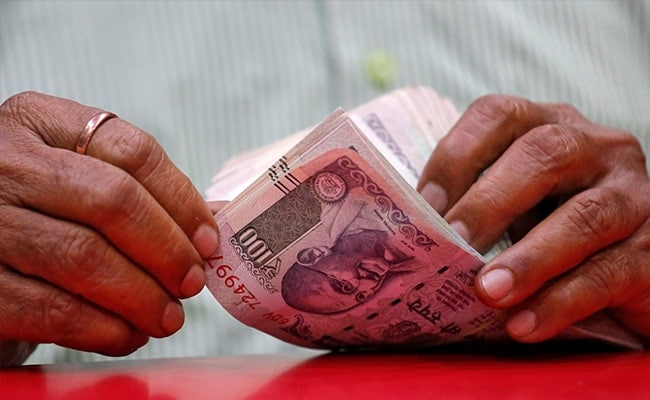
The rupee reversed early gains to end on a weak note as oil prices surged over 1 per cent, even as the dollar struggled a day after its biggest fall in five months.
Bloomberg showed the rupee was last changing hands at 79.6362 per dollar, after opening strong at 79.2225, from its previous close of 79.5188.
PTI reported that the rupee fell 36 paise to close provisionally at 79.61 against the US dollar.
At the interbank foreign exchange market, the rupee opened at 79.22 and saw an intra-day high of 79.22 and a low of 79.69 against the American currency, but finally ended at 79.61, down 36 paise over its previous close of 79.25, according to PTI.
Forex traders said the rupee is likely to trade on a mixed note in the near term. Recovery in domestic markets from lower levels and FII inflows may support the local unit.
The focus shifts to key domestic macroeconomic data points like index of industrial production (IIP), consumer price index (CPI) and trade balance numbers due on Friday for further cues.
Globally, as traders reined in bets on an aggressive interest rate hike from the Federal Reserve after softer-than-expected US inflation data, the dollar index remained on the back foot, slipping 0.2 per cent to 105.010, after recording its biggest daily fall in five months, of 1 per cent, the previous day.
But a surge in crude oil prices by over 1 per cent, hurt the rupee's allure.
India imports over 80 per cent of its oil needs and rise in crude prices weigh on the domestic currency.
While crude has languished below $100 a barrel in search of direction, oil prices rose by over 1 per cent on Thursday after the International Energy Agency raised its oil demand growth forecast for this year as soaring gas prices drive some consumers to switch back to oil.
“USDINR spot closed 11 paise higher at 79.63, thanks to demand for dollars from oil marketing companies and importers. There may have been some RBI intervention at lower levels to build reserves. Overall bias remains of a range between 79.00 and 80.00 levels on spot,” said Anindya Banerjee, Vice President for Currency and Interest Rate Derivatives at Kotak Securities.
But the euro and Japanese yen gained after the US inflation data sent the dollar tumbling.
"We think a Fed doing battle with higher core inflation will keep the dollar supported on dips - especially against the euro and yen," ING said in a note.
"Yesterday's data gave hope that inflation has peaked and the Fed will need to raise rates less sharply to keep inflation under control," currency analysts at Commerzbank said in a note.
Traders pared bets the Fed would raise rates by 75 basis points for a third straight time at its September policy meeting, and now see a half-point increase as the more likely option.
Fed policymakers sought to temper any expectations of significantly looser policy, with Neal Kashkari telling a conference on Wednesday that the central bank was "far, far away from declaring victory" on inflation.
"While yesterday's data clearly reduces the risk of further aggressive Fed action (+75bps) and therefore helps curtail US dollar demand, we equally see it as unlikely that this data alone will prompt much further US dollar selling from here," currency analysts at MUFG said in a note.
The dollar index remained on the back foot, slipping 0.2 per cent to 105.010, after recording its biggest daily fall in five months, of 1 per cent, the previous day.
"Rising real yields, due to the Fed's commitment to fighting inflation, have been an enormous problem for valuations in 2022, so any dovishness is seen as positive by the stock market, particularly for the highest valued companies," said Oliver Blackbourn, multi-asset portfolio manager at Janus Henderson Investors.
"However, the potentially more dovish outlook undermined a key support for the U.S. dollar."
US policymakers left no doubt they would continue to tighten monetary policy until price pressures were fully broken.
San Francisco Fed President Mary Daly, in an interview with the Financial Times, warned it is far too early for the U.S. central bank to declare victory in its fight against inflation and a half-percentage point rate rise in September was her baseline.
Yields on U.S. Treasuries were slightly weaker at 2.7662 per cent.

-
One El Nino, India Can Handle. Two Could Break The Granary

India's grain stocks can absorb one bad year, but a second El Nino could drain the buffer in two to three years, economists say.
-
India's Troika Of Good Luck | Joining The Dots
As Jensen Huang's exit drags Nvidia down, a cooling AI trade and resilient earnings have revived investor interest in India. A likely RBI rate hike looms.
-
Talking Points This Week: Leadership Shock At Nvidia, Earnings Strength, And The Fog Over Hormuz
The Anthropic IPO pricing and first trading day, Nvidia's upcoming earnings, and any fresh signals from Iran will set the tone for the following week.
-
Signature Play: The Classic Cocktail Is Dead. Or Is It?
Classic cocktails are disappearing from India's cocktail menus. But they're still being ordered, taught to bartenders and borrowed from. So, who's really having the last drink?
-
A New Samvat Wishlist: Inclusive Prosperity And Human Development
India has strengthened its economic foundations through infrastructure, digital access and enterprise. Its next growth chapter must deepen productivity, create better livelihoods and widen participation in prosperity.
-
Love, Sex Aur Dhokha: The Audacious Plot To Spy On Jensen Huang
A Taipei dinner, a Singapore chip buyer and a suspected Chinese asset: inside the alleged spy operation that got close to NVIDIA's Jensen Huang.
-
Ten Things I Learnt This Samvat
Patience can be a trap. Cheap stocks can stay cheap. Leverage can wipe you out. What did Samvat 2082 teach us? Niraj Shah writes on 10 lessons from the year gone by.
-
Talking Points This Week: Tech Nerves, FII Buying, And A Faraway Banking Shock
The global markets are not shining this Diwali. The exception in the large markets is, India.
-
Midterm Rally Lasted A Day. The Hard Reality Of A Divided US May Last Two Years | Opinion
Between a contested AI boom, a debt ceiling that arrives in 2027 and a president with every incentive to act alone, the next two years may prove more volatile than the first day's rally suggests.
-
Blue Wave Will Derail the AI Trade but Won't Dismantle the AI Era | Unhedged Position
The Democrats' sweep of the US Congress will see politics collide with economic forces both over the long and short term.









