Rupee Ends At Its Weakest; Record Low Close For Five Straight Sessions
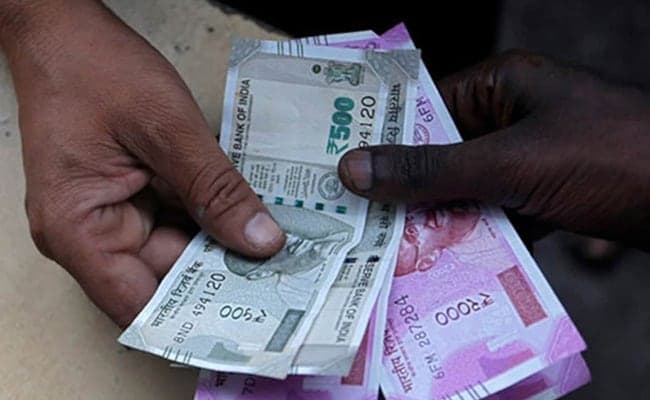
The rupee plunged to close at 78.85 per dollar on Tuesday, its weakest ever, and marks the fifth straight session of record low closes.
Surging oil costs fueled concerns about long-term inflation and pushed the rupee to a new record intraday low and lifetime weak close against the dollar, following weak equities tracking Wall Street's poor performance overnight and the recovery in oil prices after last week's collapse.
PTI reported that the currency fell 48 paise to close, provisionally, at a new record low of 78.85, while Bloomberg quoted the rupee at 78.7863 per dollar.
The rupee depreciated against the dollar at the interbank foreign currency market, starting at 78.53 per dollar and ending at 78.83, down 46 paise from Monday's 78.34 close.
Bloomberg quoted the rupee's intra-day weak at 78.8675, while PTI reported that currency fell as low as 78.8550 against the dollar, during the session today.
But traders said the Indian central bank's dollar sales helped keep losses in check.
India imports more than two-thirds of its oil requirements. Increased import inflation damages the rupee while worsening the country's trade and current account deficits (CAD).
As supply concerns grew due to the political unrest in Libya and Ecuador, oil prices jumped for a third day. It was doubtful that major exporters Saudi Arabia and the United Arab Emirates would be able to significantly boost production.
Although the Reserve Bank of India sold dollars through state-run banks to slow the swift depreciation of the rupee, dealers said that the system's demand for dollars was far stronger.
"The Indian rupee touched an all-time low against the US dollar amid weak domestic equities and a surge in crude oil prices. Sustained selling by foreign investors also put downside pressure on the currency," Anuj Choudhary - Research Analyst at Sharekhan by BNP Paribas, told PTI.
The rupee is expected to trade on a negative note on risk aversion in domestic markets and continued selling pressure from foreign institutional investors (FIIs). Elevated oil prices may also weigh on the domestic currency, he said.
Although the dollar index, a gauge of the performance of the dollar versus a basket of six different currencies, was trading slightly lower on the day, the rupee struggled to breakthrough.
The markets are reevaluating their anticipation of rate hikes trajectory of the US Federal Reserve. The US consumer sentiment data, which is anticipated to decrease from the prior month, may potentially provide some guidance for traders.
"Markets may also take cues from Fed Chair Jerome Powell's speech at the ECB forum later this week. Rupee may trade in the range of 78-79.50 in near-term," Sharekhan's Mr Choudhary added.
What has not helped the currency is the persistent selling of Indian asset by foreign investors.
Indeed, according to stock exchange data, foreign institutional investors sold shares worth Rs 1,278.42 crore on Monday, making them net sellers in the capital market.
Analysts claim that the widening LIBOR-OIS spread is an indicator of the strain on global dollar funding, and that the RBI's significant forwards market involvement has exacerbated the shortage of greenback.
Due to the RBI selling forward dollars rather than introducing rupee liquidity into the system, the one-year onshore forward dollar premiums have decreased below 3 per cent.
"Dislocation in forward rates, falling FX cover, persistently high commodity prices, limited exchange rate pass-through to inflation and elevated INR valuations may call for the RBI to re-orient its FX intervention strategy," Madhavi Arora, an economist at Emkay Global, told Reuters.
"Allowing INR to weaken over time gently is the right strategy, giving CAD space to improve," she added.
India's foreign exchange reserves dropped to their lowest level in more than a year, and for the third week in a row, dropping about $6 billion to approximately $591 billion in the week that ended on June 17. This is due to the rupee continuously reaching all-time lows.
The spike in the dollar across the board, with emerging market currencies taking a heavier hit, is what is principally responsible for the drop in the nation's import cover.
The most recent performance of the rupee and the RBI's active participation in the spot and futures FX markets to protect the young currency indicate increasing depletion of the country's import war chest.

-
Why Swapping Your Old Gold Can Trigger A Rs 5 Lakh Tax Bill, And How You Can Avoid It Legally

Swapping old gold for new is taxed as a sale and a fresh purchase. Getting your own gold remade can cut most of that bill, though it has its own costs.
-
The AI Trade is Done. The Real Opportunity for Investors Starts in 2027 | Unhedged Position
As pureplay AI stocks plunge and circular, capex-led financing unwinds, 2027 is set to be a year of reckoning for AI companies. Yet the bust clears the way for a better opportunity for investors in 2027 -- shifting the spotlight from AI builders to the companies using AI.
-
Leadership As Mission: Why The Age Of AI Demands More Human Leadership
Debjani Ghosh examines how AI is changing leadership, arguing that its success must be measured by its impact on people and the accountability of those guiding its use.
-
We May Need Another Tukaram Mundhe To Fight Air Pollution | The Reason Why
Developers may install basic measures such as sprinklers and green nets, resume work, and continue violating rules when this equipment stops working.
-
Extracting Value From Battery Scrap Could Be Challenging For India | The Reason Why
A discarded lithium-ion battery still contains valuable materials such as lithium, nickel and cobalt. These can be recovered and reused. When such batteries are crushed and shredded, they produce a dark powder called black mass.
-
One El Nino, India Can Handle. Two Could Break The Granary
India's grain stocks can absorb one bad year, but a second El Nino could drain the buffer in two to three years, economists say.
-
India's Troika Of Good Luck | Joining The Dots
As Jensen Huang's exit drags Nvidia down, a cooling AI trade and resilient earnings have revived investor interest in India. A likely RBI rate hike looms.
-
Talking Points This Week: Leadership Shock At Nvidia, Earnings Strength, And The Fog Over Hormuz
The Anthropic IPO pricing and first trading day, Nvidia's upcoming earnings, and any fresh signals from Iran will set the tone for the following week.
-
Signature Play: The Classic Cocktail Is Dead. Or Is It?
Classic cocktails are disappearing from India's cocktail menus. But they're still being ordered, taught to bartenders and borrowed from. So, who's really having the last drink?
-
A New Samvat Wishlist: Inclusive Prosperity And Human Development
India has strengthened its economic foundations through infrastructure, digital access and enterprise. Its next growth chapter must deepen productivity, create better livelihoods and widen participation in prosperity.









