Rupee Outlook Stable, But Russia-Ukraine Risks Can Derail The Currency
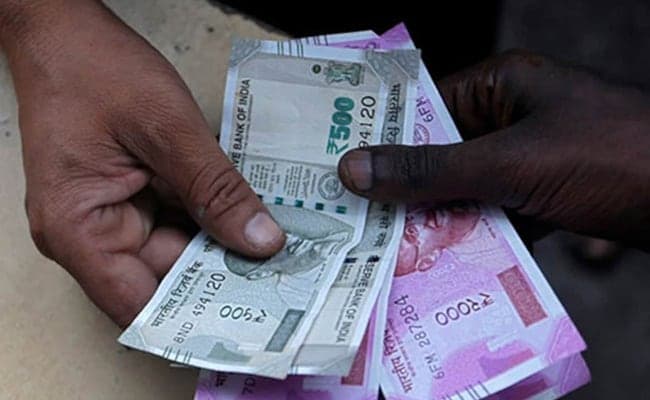
The outlook for the Indian rupee remains stable, despite expectations the U.S. Federal Reserve will raise rates at a faster pace this year, even as the Reserve Bank of India tries to maintain an accommodative stand in the face of rising inflation and nascent economic recovery.
But the Russia-Ukraine border conflict could derail the Indian rupee's stable outlook.Investors braced for a rough trading day on Tuesday and the week ahead after global markets were rattled on growing fears of conflict over Ukraine, with the latest escalation likely to hurt further.
Tracking global stock markets, Indian equity bourses plunged sharply on Tuesday, while oil prices rose to a fresh seven-year high.
“The slide in equities and higher oil prices can add pressure on the Indian rupee. The rupee is expected to open near 74.68, and trade weaker between 74.60 and 75.10 during the day,” said Amit Pabari, Managing Director at CR Forex Advisors.
“Since last week, the Indian rupee was up by nearly 1.40 per cent, being the second most appreciated currency amongst the emerging markets. The upcoming LIC IPO opens up expectations of huge inflows which could add to further appreciation in the rupee,” he added.
The Indian currency has remained reasonably resilient through this year, trading in a tight range, despite the risks from being in the midst of a third wave of the COVID-19 pandemic, higher inflation, and the expected rate hikes by major central banks.
While tighter monetary policy by major central banks presents dilemmas for central banks in developing economies, India has low foreign-currency-denominated debt and ample foreign exchange (FX) reserves, giving the Reserve Bank of India flexibility in case of market shocks.
Inflation is currently surging worldwide due to the pandemic-led supply chain disruptions, higher commodity prices, and a rebound in global demand. This has led to a more hawkish approach by some major central banks.
“On the one hand, maintaining interest rates at current levels will lead to depreciation of the domestic currency in case other central banks continue to tighten. Depreciation of the local currency is disadvantageous for the domestic economy because it can result in imported inflation - which increases domestic inflation,” said Wouter van Eijkelenburg, an economist at Rabobank.
“On the other hand, there is the option of tightening monetary policy, i.e., increasing interest rates to maintain interest rate differentials, prevent depreciation of the local currency and prevent inflation from rising too quickly. However, raising interest rates too early might derail the fragile domestic economic recovery,” he added.
The U.S. The Federal Reserve is expected to take rates higher this year; simultaneously, and the RBI is expected to stay on the sidelines, for now, to boost the economic recovery despite higher inflation readings in recent months.
“Developing economies become less attractive to investors if interest rate differentials narrow. One of the downside risks is that this can trigger a decrease in capital flows towards developing economies, which in turn causes their currencies to depreciate,” noted Mr Eijkelenburg at Rabobank.
While the rupee remains on a better footing than its emerging market peers, analysts noted the Reserve Bank of India would step in to stem any market shocks and keep the currency stable.
“On the negative side, the rupee could be affected by the strong dollar due to the hawkish Fed and the fundamentally higher oil prices. To avoid any sharp impact of inflows on the rupee, RBI has stepped up by announcing a dollar sell/buy swap near the LIC IPO date to absorb inflows and to protect from any wild moves in the USDINR pair,” said CR Forex Advisors' Mr. Padari.
“The risk is more tilted towards the downside for the rupee, considering the uncertainty is likely to support the dollar. Overall, we expect limited appreciation in the rupee and expect the currency to move towards 74.80 and 75.30 levels,” he added.

-
AI Bias In Investing Cannot Be Eliminated, But It Can Be Governed

Framing is a particularly important example as identical financial information presented in terms of gains rather than losses can lead an LLM to reach a different assessment.
-
Joining The Dots | Dark Skies, Steady Diya: Why Hope Holds This Diwali
With war, a weak rupee and foreign outflows weighing on sentiment, policymakers at the NDTV World Summit and market veterans at NDTV Profit Ignite: Diwali Edition offered the same advice: stay invested and filter out the noise.
-
The Curious Case of Equitas Small Finance Bank And A CEO Who Quit For Stock
PN Vasudevan believes persistent investor concerns over a perceived conflict of interest had become a governance overhang on Equitas Small Finance Bank's stock, even as the lender improved profitability and asset quality.
-
Talking Points This Week: AI Cash Burn, A Tiger Comeback And An India That Still Finds Its Own Path
India is not immune to higher oil or tighter global liquidity, yet its earnings base is broader, its domestic policy levers are still available.
-
Foreign Investors Own Half Of HDFC Bank and ICICI Bank. An LTCG Cut Could Matter Most Here
Foreign portfolio investors have US$115 billion parked in HDFC Bank, ICICI Bank. If the government cuts long-term capital gains tax, Jefferies says returning foreign money could land here first.
-
'Never Seen This Level Of Negativity': Sandeep Tandon Says The Next Rally May Be Closer Than You Think
Veteran investor Sandeep Tandon says foreign selling is easing, large-caps are due a comeback and mid-caps are crowded, while he turns positive on gold, power and pharma this Diwali.
-
Indians Stay With Family, Not In Hotels | The Reason Why
India still lacks enough clean, reliable and affordable hotels for budget-conscious travellers.
-
The Economic Imperative: Analysing The Material Driving Force Behind India-Canada Strategic Reset
This economic complementarity is further reinforced by deep institutional investment ties and talent mobility, which form the bedrock of the bilateral framework.
-
Medicine Pricing: Where Must Profit Stop?
India must confront excessive margins, hidden incentives and regulatory gaps that threaten the integrity of medicine.
-
Why Amazon And Flipkart Are Struggling To Beat Meesho In India's Smaller Cities
With 274 million users and lowest-cost logistics, Meesho is defending its value commerce crown against giants like Amazon and Flipkart.










