Rupee May Fall to 65/Dollar in 3-6 Months: Rajwade
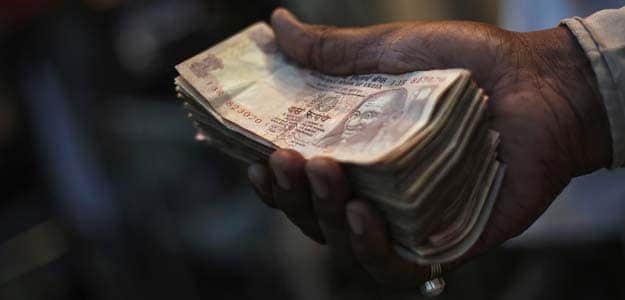
The Indian rupee weakened past 60 per dollar for the first time in over one month on Monday amid rising crude prices, which jumped to near nine-month high above $113 per barrel.
Oil prices have risen over 4 per cent over the last week on account of a sudden eruption of violence in Iraq. Oil prices can jump sharply if the conflict threatens oil refineries south of Baghdad, analysts say.
India imports nearly two-thirds of its oil needs, leaving its currency especially vulnerable to price swings. Surging crude oil prices threaten to push up domestic inflation pressures and aggravate India's currency account deficit, which was the single-biggest reason for the sharp decline in rupee last year.
The rupee fell to 60.23 to a dollar, a level last seen on May 6, as demand for dollars from oil companies weighed. Traders were also seen buying the greenback as they looked to square off their short dollar positions. (Read full story here)
"As long as the Iraq crisis continues, this should be the trend for the time being. And, if RBI doesn't intervene, and the Iraq crisis continues, it will definitely remain below 60 to the dollar," said Ashtosh Raina, head of forex trading at HDFC Bank.
Currency expert AV Rajwade told NDTV that the rupee could slip to 65 per dollar over the next three-six months though the currency's movement will also depend on what strategy the Reserve Bank adopts.
"In terms of competitiveness, the rupee should be somewhere around 65 but I am sure policy makers will take into account inflation, subsidy and therefore fiscal deficit before taking a decision," he added.
Mr Rajwade said he prefers an undervalued currency because that will ensure economic and employment growth.
"India needs cheaper rupee, costlier dollar for a competitive economy because our trade sector is uncompetitive. We had a trade deficit of $150 billion last year and I think that deficit means that much lost output and employment," he added.
The rupee had slipped to a record low of 68.85 per dollar in August last year, triggering a crisis-like situation. RBI Governor Raghuram Rajan, who joined in September, unleashed a number of steps to bring the rupee down.
Mr Rajwade says the rupee was overvalued by 17-18 per cent in 2013-14, which impacted India's export sector.
"Over the last 60-70 years, every fast growing economy has done so on the basis of undervalued exchange rate and a rapid grow in manufacturing... Our manufacturing sector, as a percentage of GDP, has been constant at 14-15 per cent," he added.
Mr Rajwade conceded that India will have to struggle with high inflation if oil prices remain high and the rupee tumbles. Besides, exchange rate also has implication on fiscal deficit as the country subsidies petro products, he added.
(With inputs from Reuters)

-
Indians Are Travelling, But Not Every Journey Is A Holiday | The Week In Whys

Pilgrims, patients and working women are the real travellers, and the system hasn't quite caught up with them.
-
Getting To Work Costs Women More | The Reason Why
It is not just about women paying more than men. It is about women paying much more in cities than in villages.
-
AI Bias In Investing Cannot Be Eliminated, But It Can Be Governed
Framing is a particularly important example as identical financial information presented in terms of gains rather than losses can lead an LLM to reach a different assessment.
-
Joining The Dots | Dark Skies, Steady Diya: Why Hope Holds This Diwali
With war, a weak rupee and foreign outflows weighing on sentiment, policymakers at the NDTV World Summit and market veterans at NDTV Profit Ignite: Diwali Edition offered the same advice: stay invested and filter out the noise.
-
The Curious Case of Equitas Small Finance Bank And A CEO Who Quit For Stock
PN Vasudevan believes persistent investor concerns over a perceived conflict of interest had become a governance overhang on Equitas Small Finance Bank's stock, even as the lender improved profitability and asset quality.
-
Talking Points This Week: AI Cash Burn, A Tiger Comeback And An India That Still Finds Its Own Path
India is not immune to higher oil or tighter global liquidity, yet its earnings base is broader, its domestic policy levers are still available.
-
Foreign Investors Own Half Of HDFC Bank and ICICI Bank. An LTCG Cut Could Matter Most Here
Foreign portfolio investors have US$115 billion parked in HDFC Bank, ICICI Bank. If the government cuts long-term capital gains tax, Jefferies says returning foreign money could land here first.
-
'Never Seen This Level Of Negativity': Sandeep Tandon Says The Next Rally May Be Closer Than You Think
Veteran investor Sandeep Tandon says foreign selling is easing, large-caps are due a comeback and mid-caps are crowded, while he turns positive on gold, power and pharma this Diwali.
-
Indians Stay With Family, Not In Hotels | The Reason Why
India still lacks enough clean, reliable and affordable hotels for budget-conscious travellers.
-
The Economic Imperative: Analysing The Material Driving Force Behind India-Canada Strategic Reset
This economic complementarity is further reinforced by deep institutional investment ties and talent mobility, which form the bedrock of the bilateral framework.










