Rupee Ends Only A Touch Weaker At 82.37 A Dollar As RBI Intervenes To Limit Fall
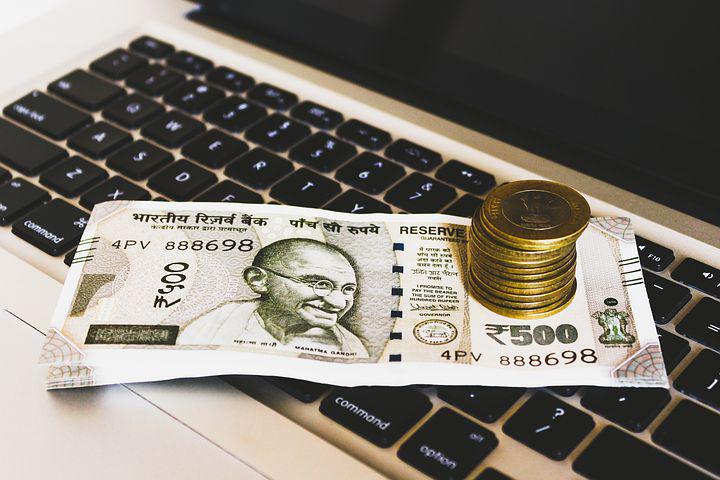
The rupee ended Tuesday only a touch weaker as the Reserve Bank of India intervened to limit any significant fall in the domestic currency even as the dollar dominated globally in the currency market as investors became uneasy over rising interest rates and geopolitical risks.
Bloomberg quoted the rupee at 82.3675 per dollar on Tuesday after opening at 82.3325, with the domestic currency trading in the 82.3225 to 82.4175 range against the greenback.
But at the interbank foreign exchange, the domestic currency pared losses to gain 6 paise to close provisionally at 82.34 against the US dollar, compared to a fresh lifetime low of 82.40 on Monday, according to PTI.
"The rupee traded in a narrow range after hitting fresh all-time lows against the US dollar. The dollar has been gaining momentum in the past few sessions following better-than-expected non farm payrolls numbers from the US," Gaurang Somaiya, Forex & Bullion Analyst, Motilal Oswal Financial Services, told PTI.
After falling to an all-time low of 82.6950 against the dollar in early trade on Monday, following a US jobs report on Friday that strengthened bets of more aggressive rate hikes, the rupee opened at a new record low for the second straight day in the previous session.
But the local currency closed almost flat at 83.32 per dollar, according to Bloomberg, helped by the RBI's intervention. Indeed, the rupee strengthened from its new record low of 82.70 to about 82.40 in the space of about ten minutes after the Indian central bank sold dollars via state-run banks on Monday.
The story was not very different on Tuesday, with a Reuters report quoting three traders showing that the RBI likely sold dollars via state-run banks and conducted buy/sell swaps to limit the rupee's losses.
The relative stability in the rupee is thanks to the RBI, traders said, with the USD/INR 1-year implied yield slipping to 2.89 per cent, against 2.96 per cent in the previous session.
The RBI was conducting buy/sell swaps, likely to sterilize its intervention in the spot market, a trader at a private sector bank told Reuters. "The RBI is probably running down its forward book further."
Globally, though, the dollar edged back towards September's multi-year highs.
The bond market meltdown is being accompanied by an increase in interest rates. The release of US inflation data on Thursday might pave the way for another significant rate hike from the Federal Reserve in November, and tensions are already fraying.
The greenback is already drifting toward the historic highs it reached last month and the outlook is giving dollar bulls another boost.
Bets on anything other than high-interest rates through 2023 have all but been shattered by strong US labour market data and the anticipation that Thursday's inflation figures will remain stubbornly high, which is pushing the dollar back near the 2002 top achieved last month.
Risk aversion was the norm due to Russia's Monday missile barrage on Ukrainian cities in retribution for a blast that destroyed the sole bridge connecting Russia to the Crimean peninsula it had annexed.
"The general narrative is a risk-off one," Francesco Pesole, FX strategist at ING, told Reuters, citing the escalation of the conflict in Ukraine and new US export controls, which included a measure to cut China off from certain semiconductors.
"There are the Fed minutes and US CPI this week that will be quite important for strengthening hawkish Fed expectations and could continue to support the dollar," added the ING's FX Strategist.
The euro was stable but still below parity with the dollar, ending four days of losses that saw the currency fall to a 20-year low of $0.9528 on September 26.
The Bank of England (BoE) stepping up bond purchases and finance minister Kwasi Kwarteng vowing to advance some budget announcements haven't exactly calmed Britain's markets, which remain on edge.
The risk-sensitive Australian dollar hit a 2-1/2 year low of $0.62475.
According to analysts at the National Australia Bank, the Australian dollar was the "whipping boy" of the market during a sell-off, and more lows could occur soon given the weak mindset, reported Reuters.
Tuesday saw a decline in Asian currencies while the dollar index edged up to 113.22, on track to post its fifth daily gain.
At 145.51 to the dollar, the Japanese yen was approaching the level that warranted official support a few weeks ago.
After the Joe Biden's administration restricted China's access to US semiconductor technology and news articles supported Beijing's Covid Zero policy, bearish wagers on the yuan gained traction.
Despite the People's Bank of China's ongoing strong midpoint fixings, the Chinese yuan weakened versus the strong dollar as a recurrence of COVID-19 cases clouded the outlook for the economy.
“Onshore dollar buying will likely deter the PBOC from aggressive intervention, but I will still be cautious if the pair rises above 7.20,” Stephen Innes, Managing Partner at SPI Asset Management, wrote in a note, according to Bloomberg. “It is too early to say the PBOC will let the spot go up from here.”

-
One El Nino, India Can Handle. Two Could Break The Granary

India's grain stocks can absorb one bad year, but a second El Nino could drain the buffer in two to three years, economists say.
-
India's Troika Of Good Luck | Joining The Dots
As Jensen Huang's exit drags Nvidia down, a cooling AI trade and resilient earnings have revived investor interest in India. A likely RBI rate hike looms.
-
Talking Points This Week: Leadership Shock At Nvidia, Earnings Strength, And The Fog Over Hormuz
The Anthropic IPO pricing and first trading day, Nvidia's upcoming earnings, and any fresh signals from Iran will set the tone for the following week.
-
Signature Play: The Classic Cocktail Is Dead. Or Is It?
Classic cocktails are disappearing from India's cocktail menus. But they're still being ordered, taught to bartenders and borrowed from. So, who's really having the last drink?
-
A New Samvat Wishlist: Inclusive Prosperity And Human Development
India has strengthened its economic foundations through infrastructure, digital access and enterprise. Its next growth chapter must deepen productivity, create better livelihoods and widen participation in prosperity.
-
Love, Sex Aur Dhokha: The Audacious Plot To Spy On Jensen Huang
A Taipei dinner, a Singapore chip buyer and a suspected Chinese asset: inside the alleged spy operation that got close to NVIDIA's Jensen Huang.
-
Ten Things I Learnt This Samvat
Patience can be a trap. Cheap stocks can stay cheap. Leverage can wipe you out. What did Samvat 2082 teach us? Niraj Shah writes on 10 lessons from the year gone by.
-
Talking Points This Week: Tech Nerves, FII Buying, And A Faraway Banking Shock
The global markets are not shining this Diwali. The exception in the large markets is, India.
-
Midterm Rally Lasted A Day. The Hard Reality Of A Divided US May Last Two Years | Opinion
Between a contested AI boom, a debt ceiling that arrives in 2027 and a president with every incentive to act alone, the next two years may prove more volatile than the first day's rally suggests.
-
Blue Wave Will Derail the AI Trade but Won't Dismantle the AI Era | Unhedged Position
The Democrats' sweep of the US Congress will see politics collide with economic forces both over the long and short term.









