Rupee Crashes To New Record Low, 81 Per Dollar In Sight
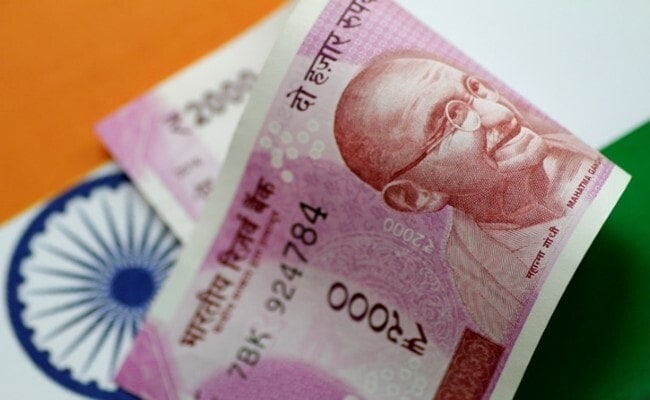
The rupee crashed to a new record low against a rampant greenback on Thursday, with 81 per dollar now just a hop, skip and jump away, driven by a deep rout in global risk assets after the Federal Reserve warned aggressive policy path even at the cost of a recession to fight elevated inflation.
The currency registered its biggest single-day fall in six months on Thursday. It was the biggest single-day fall for the local unit since February 24.
Bloomberg quoted the domestic currency last changing hands at 80.8688 per dollar, down nearly 90 paise from the previous close of 79.9788.
Reuters reported that the Indian currency dropped to a record of 80.86 to the dollar, down from 79.9750 in the previous session.
PTI said the rupee tanked 99 paise to close provisionally at a new all-time low of 80.95 against the US dollar.
Forex traders said the US Fed's rate hike and escalation of geopolitical risk in Ukraine sapped risk appetite, according to a PTI report, which also added that the strength of the American currency in the overseas market, a muted trend in domestic equities, risk-off mood and firm crude oil prices weighed on the rupee.
We believe the current downtrend in the rupee may continue for a while even after strong domestic fundamentals. The local currency will react to a stronger greenback but there could be outperformance among the regional currencies," Dilip Parmar, Research Analyst at HDFC Securities, told PTI.
He added that spot USD-INR now has resistance in the area of 81.25 to 81.40 while the previous top 80.12 would act as support.
The dollar pulled back from two-decade highs, but rising US bond yields and hawkish remarks on future rate hikes from the Fed pressured risk assets.
"While the Fed has maintained a hawkish stance, the steady pace of rate hikes and the slight improvement in the inflation situation shows that there is reduced pressure on the central bank to act aggressively," said Ravindra Rao, Head Commodity Research at Kotak Securities.
"We may see some correction in the US dollar once the central bank acknowledges improvement in inflation situation. Another challenge for the US dollar could be aggressive tightening by other central banks to control inflation as well as possible central bank interventions to support their currencies," he added.
Russia's intensified conflict with Ukraine and tensions between Beijing and Taiwan further hurt sentiment, boosting safe-haven flows and a rout in global financial markets.
Investors before today were not willing to test the Reserve Bank of India's resolve to defend the rupee from falling far below 80 per dollar, but the breach of that level suggests more pain for policymakers now.
The Indian currency is not very far from hitting 81 per dollar for the first time ever. (Reuters Graphic On The Indian Rupee's Slump)
While the rupee's fall this year has been dramatic and significant, the RBI has drawn down the country's forex reserves to defend against the kind of crash the rupee experienced on Thursday.
The Indian central bank has spent over $80 billion from the forex reserves since Russia invaded Ukraine late in February, with the domestic currency more or less standing its ground compared to its emerging market peers and some developed market currencies.
The pace of the forex reserves' erosion this year has been faster than during the Fed's taper tantrum in 2013.
Traders that Reuters spoke to, were unable to confirm whether the Reserve Bank of India intervened in the spot market during the session. Some traders told Reuters that the RBI may have stepped in to arrest the rupee's decline, but the intervention was not too aggressive.
"Given the current pro-dollar and weak equity sentiment, we expect RBI to... focus on smoothening the move towards 81 over the next few sessions," Gautam Kumar, Head of Financial Products at Kristal.AI, a Singapore-based digital private wealth management platform, told Reuters.
"We think USD/INR will just shift to trade in a higher 80-82 range over the medium term," he added.
On the other hand, Japan's first intervention since 1998 stabilised the yen's 20 per cent decline versus the dollar this year, with the currency gaining some ground.
But the Bank of Japan, in contrast to the Fed, firmly adhered to its ultra-low interest rate policy on Thursday, driving the yen lower against the US dollar.
US yields appear to be appealing and investors believe other economies to be too fragile to support rates as high as those being considered in the US are helping to push the dollar higher.
Back in Europe, Norway hiked its interest rates by 50 basis points, and the Bank of England was the next to move, with traders anticipating a 75 basis point increase there as well.
But that wasn't expected to do anything to help the regional currencies.
Indeed, the Swedish crown remained at a record low after the nation's highest rate hike in a generation this week, while the pound had touched a 37-year low of $1.1213 overnight.
The Australian dollar, down 0.4 per cent on Thursday to $0.6622, and the New Zealand dollar, down 0.4 per cent to $0.5882, were both close to their lowest levels since the middle of 2020.
The dollar's surge also sent emerging market currencies tumbling on Thursday.

-
Indians Are Travelling, But Not Every Journey Is A Holiday | The Week In Whys

Pilgrims, patients and working women are the real travellers, and the system hasn't quite caught up with them.
-
Getting To Work Costs Women More | The Reason Why
It is not just about women paying more than men. It is about women paying much more in cities than in villages.
-
AI Bias In Investing Cannot Be Eliminated, But It Can Be Governed
Framing is a particularly important example as identical financial information presented in terms of gains rather than losses can lead an LLM to reach a different assessment.
-
Joining The Dots | Dark Skies, Steady Diya: Why Hope Holds This Diwali
With war, a weak rupee and foreign outflows weighing on sentiment, policymakers at the NDTV World Summit and market veterans at NDTV Profit Ignite: Diwali Edition offered the same advice: stay invested and filter out the noise.
-
The Curious Case of Equitas Small Finance Bank And A CEO Who Quit For Stock
PN Vasudevan believes persistent investor concerns over a perceived conflict of interest had become a governance overhang on Equitas Small Finance Bank's stock, even as the lender improved profitability and asset quality.
-
Talking Points This Week: AI Cash Burn, A Tiger Comeback And An India That Still Finds Its Own Path
India is not immune to higher oil or tighter global liquidity, yet its earnings base is broader, its domestic policy levers are still available.
-
Foreign Investors Own Half Of HDFC Bank and ICICI Bank. An LTCG Cut Could Matter Most Here
Foreign portfolio investors have US$115 billion parked in HDFC Bank, ICICI Bank. If the government cuts long-term capital gains tax, Jefferies says returning foreign money could land here first.
-
'Never Seen This Level Of Negativity': Sandeep Tandon Says The Next Rally May Be Closer Than You Think
Veteran investor Sandeep Tandon says foreign selling is easing, large-caps are due a comeback and mid-caps are crowded, while he turns positive on gold, power and pharma this Diwali.
-
Indians Stay With Family, Not In Hotels | The Reason Why
India still lacks enough clean, reliable and affordable hotels for budget-conscious travellers.
-
The Economic Imperative: Analysing The Material Driving Force Behind India-Canada Strategic Reset
This economic complementarity is further reinforced by deep institutional investment ties and talent mobility, which form the bedrock of the bilateral framework.










