Rs 14.56 Lakh Crore Written Off As Bad Loans Since 2014: Finance Ministry
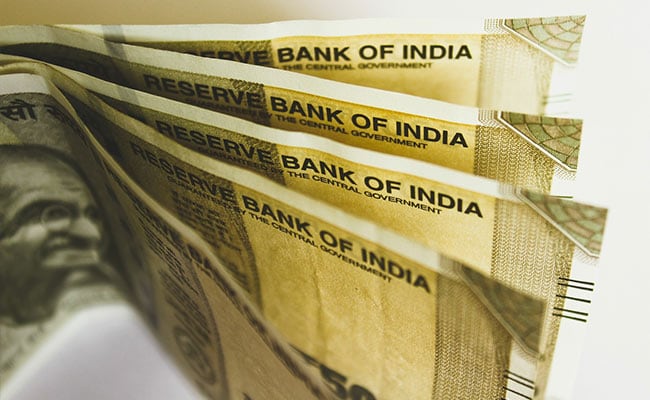
Banks have written off bad loans worth Rs 14.56 lakh crore in the last nine financial years starting 2014-15, Parliament was informed on Monday.
Out of the total Rs 14,56,226 crore, written off loans of large industries and services stood at Rs 7,40,968 crore.
Scheduled Commercial Banks (SCBs) have recovered an aggregate amount of Rs 2,04,668 crore in written-off loans, including corporate loans, since April, 2014 and up to March, 2023, Minister of State for Finance Bhagwat Karad said in a written reply to Lok Sabha.
Loans written-off during the financial year, net of recovery in written-off loans during the financial year (net write-off) in public sector banks (PSBs) was Rs 1.18 lakh crore in the financial year (FY) 2017-18, which has declined to 0.91 lakh crore in FY 2021-22 and to Rs 0.84 lakh crore (RBI provisional data) in FY 2022-23, he said in another reply.
Net write-off loans by private sector banks stood at Rs 73,803 crore (RBI provisional data) in FY 2022-23, he said.
Net write-off as percentage of opening gross loans and advances in private sector banks was 1.25 per cent and 1.57 per cent in FY 2017-18 and FY 2022-23 respectively, and it was 2 per cent and 1.12 per cent for PSBs during the same period.
Comprehensive steps have been taken by the government and RBI to recover and to bring down NPAs, enabled by which, gross NPAs of PSBs have declined to Rs 4.28 lakh crore as on March 31, 2023 from Rs 8.96 lakh crore as on March 31, 2018, he said.
Talking about various steps taken by the government, he said, the Securitisation and Reconstruction of Financial Assets and Enforcement of Security Interest Act, 2002, has been amended to make it more effective.
The pecuniary jurisdiction of debt recovery tribunals (DRTs) was increased from Rs 10 lakh to Rs 20 lakh to enable the DRTs to focus on high-value cases, resulting in higher recovery for the banks and financial institutions, the minister said.
In addition, he said, National Asset Reconstruction Company Limited (NARCL) has been set up as an asset reconstruction company with an aim to resolve stressed assets above Rs 500 crore each.
The government has also approved extending a guarantee of up to Rs 30,600 crore to back Security Receipts issued by NARCL to lending institutions for acquiring stressed loan assets, he said.
Replying to another question, Karad said the board of State Bank of India (SBI) in its meeting held on June 9, 2023 had accorded approval for raising up to an amount of Rs 50,000 crore which constitutes basel III compliant AT-1 bonds up to an amount of Rs 20,000 crore, Tier-2 bonds up to an amount of Rs 10,000 crore and infrastructure bonds up to an amount of Rs 20,000 crore by the bank during FY2023-24.
As per SBI, the purpose of raising capital bonds (AT-1 and Tier-2) is to replace the existing capital bonds which are due for call up during FY2023-24, further strengthen the capital base of the bank and support asset growth, he said.
Banks are exempted from maintaining Cash Reserve Ratio and Statutory Liquidity Ratio on long-term bonds for lending to infrastructure sector, he said, adding, the raising of long-term infrastructure bonds helps the bank in better asset liability management.
In a separate reply, he said, Pradhan Mantri Mudra Yojana (PMMY) was launched on April 8, 2015 and has been implemented across the country.
As on June 30, 2023, he said, more than 42.20 crore loans amounting to Rs 24.34 lakh crore have been sanctioned to borrowers under the scheme.
(Except for the headline, this story has not been edited by NDTV staff and is published from a syndicated feed.)

-
We May Need Another Tukaram Mundhe To Fight Air Pollution | The Reason Why

Developers may install basic measures such as sprinklers and green nets, resume work, and continue violating rules when this equipment stops working.
-
Extracting Value From Battery Scrap Could Be Challenging For India | The Reason Why
A discarded lithium-ion battery still contains valuable materials such as lithium, nickel and cobalt. These can be recovered and reused. When such batteries are crushed and shredded, they produce a dark powder called black mass.
-
One El Nino, India Can Handle. Two Could Break The Granary
India's grain stocks can absorb one bad year, but a second El Nino could drain the buffer in two to three years, economists say.
-
India's Troika Of Good Luck | Joining The Dots
As Jensen Huang's exit drags Nvidia down, a cooling AI trade and resilient earnings have revived investor interest in India. A likely RBI rate hike looms.
-
Talking Points This Week: Leadership Shock At Nvidia, Earnings Strength, And The Fog Over Hormuz
The Anthropic IPO pricing and first trading day, Nvidia's upcoming earnings, and any fresh signals from Iran will set the tone for the following week.
-
Signature Play: The Classic Cocktail Is Dead. Or Is It?
Classic cocktails are disappearing from India's cocktail menus. But they're still being ordered, taught to bartenders and borrowed from. So, who's really having the last drink?
-
A New Samvat Wishlist: Inclusive Prosperity And Human Development
India has strengthened its economic foundations through infrastructure, digital access and enterprise. Its next growth chapter must deepen productivity, create better livelihoods and widen participation in prosperity.
-
Love, Sex Aur Dhokha: The Audacious Plot To Spy On Jensen Huang
A Taipei dinner, a Singapore chip buyer and a suspected Chinese asset: inside the alleged spy operation that got close to NVIDIA's Jensen Huang.
-
Ten Things I Learnt This Samvat
Patience can be a trap. Cheap stocks can stay cheap. Leverage can wipe you out. What did Samvat 2082 teach us? Niraj Shah writes on 10 lessons from the year gone by.
-
Talking Points This Week: Tech Nerves, FII Buying, And A Faraway Banking Shock
The global markets are not shining this Diwali. The exception in the large markets is, India.









