Rising Inflation In India May Affect RBI's Interest Rates Policy
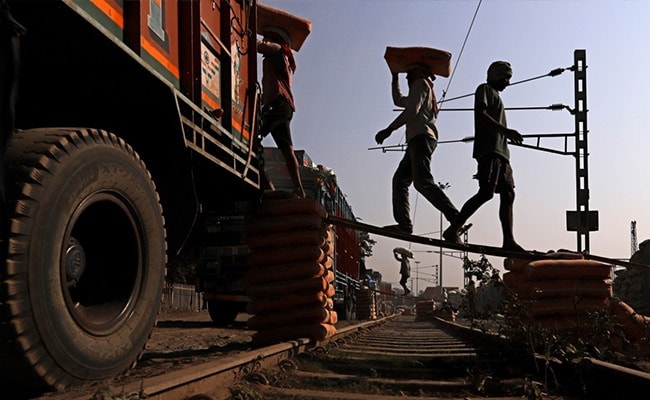
The world's worst Covid-19 outbreak in India risks fanning price pressures, threatening to limit options for the inflation-focused central bank to support the economy. State-wise curbs to stem the virus are disrupting domestic supply chains, risking higher prices for everything from essential drugs to cars. A recent weakening in the rupee is worsening the situation, boosting the local cost of imported oil and other raw materials for manufacturing.
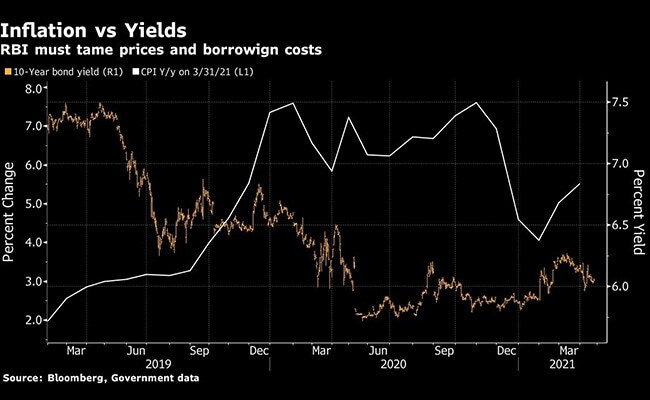
While the Reserve Bank of India's looser monetary policies last year overlooked above-target inflation, further price pressure amid an expected economic recovery later this year may limit its options. Consumer price inflation is on course to test the upper limit of its 2 per cent-6 per cent target, while recent gains in wholesale prices signal more pressure to come.
For now, the central bank's six-member interest rate panel has vowed to keep rates low for as long as needed to support the recovery. Meanwhile, as the RBI manages government borrowing, it has tried to keep a lid on yields as the pandemic fight stretches New Delhi's finances and bond markets demand higher premiums to hold the sovereign's debt.
"Given the RBI has a formal inflation target, the answer is straight forward: between yield management and inflation, keeping a lid over inflation is first and foremost," said Amol Agrawal, assistant professor of economics and public policy in Ahmedabad University. "The second wave could lead to rise in supply side inflation with the outlook rather uncertain."
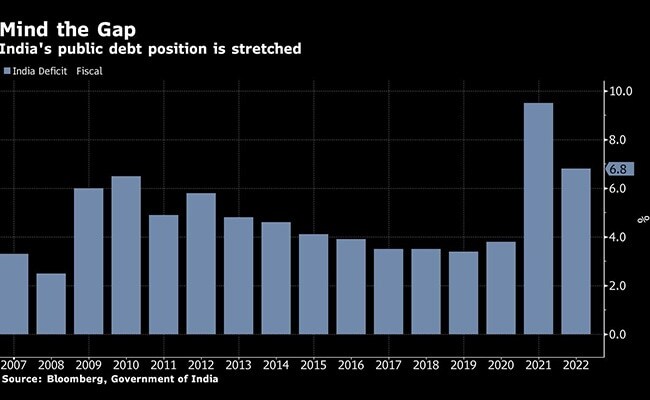
Accelerating inflation is not good news for the bond market, where investors have been clamoring for a premium, forcing the central bank to cancel a few debt auctions. Given the uptick in inflation, a wide fiscal deficit and the cloud over the government's debt consolidation plan, investors argue it's only fair they get compensated with higher yields.
The yield on the benchmark 10-year bond in March surged to the most in almost a year, well above the monetary authority's preferred 6 per cent yield level. It's up 18 basis points so far this year, even as the central bank has continued to buy government bonds through its open-market operations.
The RBI this month announced Rs 1 trillion ($13 billion) bond-buying plan for the April-June quarter, formalizing a quantitative easing program in an effort to assuage investors.
"One of the key benefits of a bond market is to impose fiscal discipline on governments, by forcing them to pay higher interest rates when government borrowing increases," Rajeswari Sengupta, assistant professor at the Indira Gandhi Institute of Development Research in Mumbai, wrote in a recent column. "Persistent intervention by the RBI would disrupt this process, increasing the risk that large fiscal deficits will persist."
Meanwhile, economists Ila Patnaik and Radhika Pandey at the National Institute of Public Finance and Policy in New Delhi argue that even though the government and businesses are better prepared than last year to handle lockdowns, the preparations are likely insufficient for the current surge in cases.
India is now the global coronavirus hotspot, with total cases nearing 18 million and rising at more than 300,000 daily. The country is also running out of vaccines due to a shortage of imported ingredients.
"It appears that no one expected a second wave of this magnitude," Ms Patnaik and Ms Pandey wrote. "These supply disruptions could in themselves cause higher prices."
Ms Sengupta at IGIDR said that if inflationary pressures persist, the RBI's problems could get tougher.
"If it fails to fulfill its commitment and prematurely ends the liquidity injection, it could lose the confidence of the bond market for a long period of time," she said. "If, on the other hand, it goes ahead with its secondary bond buying plan despite rising inflation, its credibility as an inflation-targeting central bank will be called into question."
(Except for the headline, this story has not been edited by NDTV staff and is published from a syndicated feed.)

-
Indians Are Travelling, But Not Every Journey Is A Holiday | The Week In Whys

Pilgrims, patients and working women are the real travellers, and the system hasn't quite caught up with them.
-
Getting To Work Costs Women More | The Reason Why
It is not just about women paying more than men. It is about women paying much more in cities than in villages.
-
AI Bias In Investing Cannot Be Eliminated, But It Can Be Governed
Framing is a particularly important example as identical financial information presented in terms of gains rather than losses can lead an LLM to reach a different assessment.
-
Joining The Dots | Dark Skies, Steady Diya: Why Hope Holds This Diwali
With war, a weak rupee and foreign outflows weighing on sentiment, policymakers at the NDTV World Summit and market veterans at NDTV Profit Ignite: Diwali Edition offered the same advice: stay invested and filter out the noise.
-
The Curious Case of Equitas Small Finance Bank And A CEO Who Quit For Stock
PN Vasudevan believes persistent investor concerns over a perceived conflict of interest had become a governance overhang on Equitas Small Finance Bank's stock, even as the lender improved profitability and asset quality.
-
Talking Points This Week: AI Cash Burn, A Tiger Comeback And An India That Still Finds Its Own Path
India is not immune to higher oil or tighter global liquidity, yet its earnings base is broader, its domestic policy levers are still available.
-
Foreign Investors Own Half Of HDFC Bank and ICICI Bank. An LTCG Cut Could Matter Most Here
Foreign portfolio investors have US$115 billion parked in HDFC Bank, ICICI Bank. If the government cuts long-term capital gains tax, Jefferies says returning foreign money could land here first.
-
'Never Seen This Level Of Negativity': Sandeep Tandon Says The Next Rally May Be Closer Than You Think
Veteran investor Sandeep Tandon says foreign selling is easing, large-caps are due a comeback and mid-caps are crowded, while he turns positive on gold, power and pharma this Diwali.
-
Indians Stay With Family, Not In Hotels | The Reason Why
India still lacks enough clean, reliable and affordable hotels for budget-conscious travellers.
-
The Economic Imperative: Analysing The Material Driving Force Behind India-Canada Strategic Reset
This economic complementarity is further reinforced by deep institutional investment ties and talent mobility, which form the bedrock of the bilateral framework.










