Rise In Self-Employment Disguises Pain Of Job Losses During Pandemic

Unemployment rate in India, as measured by a few private agencies, has fallen significantly from the peaks seen after the Covid-19 pandemic hit. Alongside, however, the ranks of the self-employed have risen, which many economists see as disguised unemployment.
The government's official quarterly Periodic Labour Force Survey, released earlier this month, shows that self-employed male workers rose to 42.9% as a percentage of persons working in the April-June 2020 quarter. This compares to 38.7% in the April-June 2019 period. The percentage of self-employed female workers saw a smaller rise to 34% from 33.3% in the same duration.
On aggregate, self-employed workers rose to 41% as a percentage of persons working in the April-June 2020 quarter compared to 37.7% in the same quarter last year.
While the government's data comes with a large lag, private surveys suggest the higher share of self-employed individuals continued at least until December, even though the rest of the economy was normalising.
The Centre for Sustainable Employment at the Azim Premji University, analysed data available from the Consumer Pyramids Household Survey by the Centre for Monitoring Indian Economy, and came away with the finding that the proportion of self-employed rose to 53% in September-December 2020 from 50% in September-December 2019.
While this may not seem like much, it's a large number when one thinks of it in context of the formal salaried employment restricted to 10% of the workforce, said Amit Basole, head of the Centre for Sustainable Employment. Even after the easing of restrictions in the economy, workers who had lost their jobs in the lockdown had to resort to agriculture, petty retail or trade jobs, said Basole. While they are technically employed, in reality they remain severely underemployed, he said.
The fall-back option for those moving into self-employment remained agriculture. About 18% of manufacturing workers and 18% of education sector workers who lost jobs moved into agriculture. About 20% of education sector and modern services workers and 15% of manufacturing workers went into petty retail, the report, to be released next month, shows.
The Consumer Pyramids Household Survey, on which the university's study is based, covers close to 1.7 lakh households.
The explanation behind the rise in the ranks of the self-employed is intuitive.
When people lost work in the lockdown and did not find work even after the economy opened, they could not afford to remain unemployed, said Radhicka Kapoor, fellow at the Indian Council for Research on International Economic Relations.
The PLFS categorises self-employed workers either as “own account workers” or “unpaid helpers in household enterprises”. It's likely several of those who're now self-employed fall into the latter of the two, Kapoor said. For instance, young people who lost jobs, have only just finished their education or had to drop out because of the pandemic, are likely to have been absorbed as unpaid helpers by family members. The phenomenon is recurrent across developing economies, Kapoor said.
Income Implications
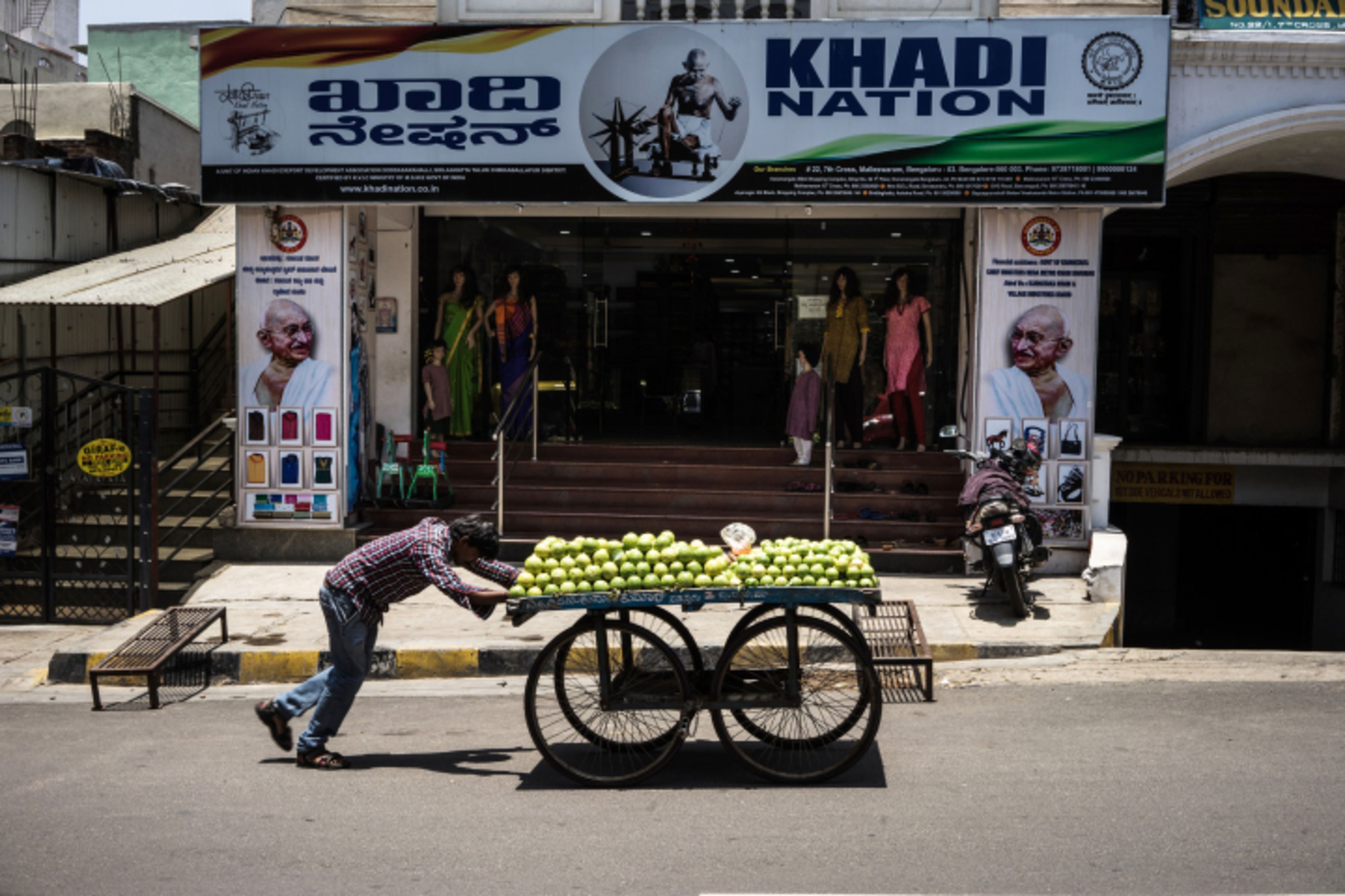
The rise in self-employment also has income implications.
Further analysis in APU's upcoming report shows that there was a overall fall in median earnings of 30% in the third quarter of FY21 compared to a year ago.
About 40% of the entire workforce who remained in self-employment experienced a 25% fall in earnings while those who were forced to move from formal salaried work to self-employed experienced a large 70% drop in earnings.State of Working India 2021: Covid Impact and Recovery
Prior to the pandemic, it is worth keeping in mind that formal salaried workers earned Rs 28,000 a month on average while self-employed workers earned Rs 10,000 a month on average, Basole added.
The trends being seen in India are not unique.
The lack of income or other means of financial support compels workers to engage in jobs that are informal, offer low pay and provide little or no access to social protection and rights at work, the International Labour Organisation said in its flagship report in 2020. This is especially the case with the 1.4 billion own-account and contributing family workers in low- and middle-income countries, who are typically employed informally, work in vulnerable conditions and earn a much lower income than people in wage and salaried employment, the report, released in January, said.
How quickly jobs, particularly formal sector employment, will rebound remains unclear. The Purchasing Managers' Index for the manufacturing sector, for instance, showed a decline in employment for the eleventh successive month.
While some old jobs are likely to have come back, with no new investments by the private sector, there is little to suggest any improvement in the labour market in the short and medium term, Kapoor said.
The rise in self-employment and lower earnings is accompanied with a shrinking labour force. Between July 2019-February 2020 in the last fiscal, the unemployment rate of 7.6% was a ratio of the 33.2 million unemployed out of a labour force of 438.5 million, Mahesh Vyas, managing director at the CMIE said in a post on the company's portal. During July 2020-February 2021, a similar unemployment rate of 7.3% is a ratio of 31.2 million unemployed out of a much smaller labour force of 426.3 million.
Each of these indicators continue to point to a stretched out recovery for the labour markets. While employment levels have recovered to around 90-95% of pre-covid values, the labour market remains affected in terms of higher informality and lower earnings, Basole said.

-
We May Need Another Tukaram Mundhe To Fight Air Pollution | The Reason Why

Developers may install basic measures such as sprinklers and green nets, resume work, and continue violating rules when this equipment stops working.
-
Extracting Value From Battery Scrap Could Be Challenging For India | The Reason Why
A discarded lithium-ion battery still contains valuable materials such as lithium, nickel and cobalt. These can be recovered and reused. When such batteries are crushed and shredded, they produce a dark powder called black mass.
-
One El Nino, India Can Handle. Two Could Break The Granary
India's grain stocks can absorb one bad year, but a second El Nino could drain the buffer in two to three years, economists say.
-
India's Troika Of Good Luck | Joining The Dots
As Jensen Huang's exit drags Nvidia down, a cooling AI trade and resilient earnings have revived investor interest in India. A likely RBI rate hike looms.
-
Talking Points This Week: Leadership Shock At Nvidia, Earnings Strength, And The Fog Over Hormuz
The Anthropic IPO pricing and first trading day, Nvidia's upcoming earnings, and any fresh signals from Iran will set the tone for the following week.
-
Signature Play: The Classic Cocktail Is Dead. Or Is It?
Classic cocktails are disappearing from India's cocktail menus. But they're still being ordered, taught to bartenders and borrowed from. So, who's really having the last drink?
-
A New Samvat Wishlist: Inclusive Prosperity And Human Development
India has strengthened its economic foundations through infrastructure, digital access and enterprise. Its next growth chapter must deepen productivity, create better livelihoods and widen participation in prosperity.
-
Love, Sex Aur Dhokha: The Audacious Plot To Spy On Jensen Huang
A Taipei dinner, a Singapore chip buyer and a suspected Chinese asset: inside the alleged spy operation that got close to NVIDIA's Jensen Huang.
-
Ten Things I Learnt This Samvat
Patience can be a trap. Cheap stocks can stay cheap. Leverage can wipe you out. What did Samvat 2082 teach us? Niraj Shah writes on 10 lessons from the year gone by.
-
Talking Points This Week: Tech Nerves, FII Buying, And A Faraway Banking Shock
The global markets are not shining this Diwali. The exception in the large markets is, India.