Rise In Corporate Lending At Fastest Pace In 8 Years Signals New Investment Cycle
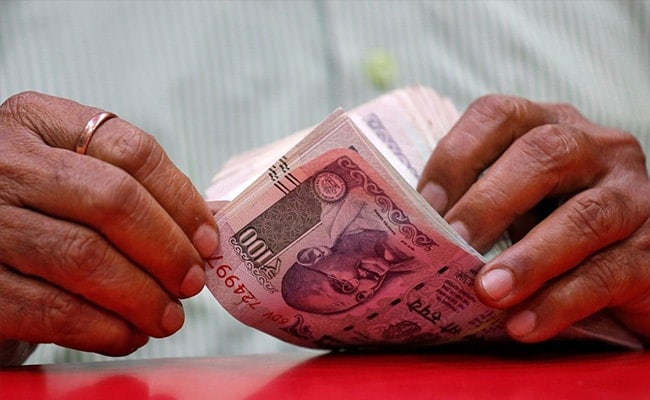
Indian lenders are expanding lending to local corporations at the fastest pace in more than eight years, a sign of a new private investment cycle starting in the world's fifth-largest economy even as growth in large developed economies and China slows.
That international slowdown will limit the strength of the new Indian cycle, economists say.
Private investment in India was constrained for years by heavy indebtedness of companies and banks and by weak demand. But over the past two years, corporations and lenders have cut costs and raised equity capital, and companies have been able to spend on new capacity as demand has strengthened.
It has strengthened so much that productive capacity and working capital are now being used more intensively. That, in turn, is driving the higher demand for credit, said Swaminathan Janakiraman, managing director at India's largest lender, State Bank of India (SBI).
"The capex that is taking place is generating financing requirements across the industry and the services sector and to a small extent there is a shift in borrowings from bonds to loans," said Swaminathan. "Corporate credit demand has been low for too long and it is time for a pick-up."
SBI expects its stock of corporate loans to rise by between 14% and 15% this year and by 12% a year on average in 2023 and 2024.
Across India's banking sector, lending has been rising steadily. In the last two weeks of October, it was up nearly 17% on a year earlier. Lending to corporations, including small, medium and large businesses, was up 12.6% in September, the highest rate of annual growth since 2014, the latest sectoral data shows.
Sectors seeing strong loan demand range from infrastructure, to real estate, iron and steel and new economy segments such as data centres and electric-vehicle makers, said M.V. Muralikrishna, chief general manager for large corporate lending at Bank of Baroda, India's second-largest state-owned lender. "Six months ago, the demand was mainly from the infrastructure sector, but it has now broadened out."
Annual capital spending for India's 15,000 largest industrial companies will be 4.5 trillion rupees ($55 billion) in the financial year to March 2023 and 5 trillion rupees in each of the following two financial years, forecasts Hetal Gandhi, director for research ay CRISIL Market Intelligence and Analytics. That spending will be about a third higher than the average in three financial years before the COVID-19 crisis.
"While the initial part of these investments were funded through internal accruals, borrowings from banks are rising and expected to grow further next year," Gandhi said.
Government Push
About a quarter of current capital expenditure is linked to a government manufacturing-subsidy scheme launched in 2021 called Production-Linked Investment (PLI), CRISIL estimates.
Dixon Technologies, an electronics manufacturer with annual revenue of about 150 billion rupees ($1.85 billion), will receive incentives under the scheme for setting up facilities in five sectors, including electronics.
The company expects to invest up to 6 billion rupees ($74 million) and is partly funding the expansion through bank debt, said Saurabh Gupta, its chief financial officer. "The borrowing environment is conducive and banks are willing to lend, particularly to companies under the PLI scheme," he said.
The government also plans to spend a record 7.5 trillion rupees ($92 billion) on infrastructure in 2022-23, adding to demand for commodities such as steel and cement.
That has prompted Birla Corp to plan a $1 billion expansion of its annual cement manufacturing capacity to 30 million tonnes from 20 million tonnes. The company is partly funding that with debt but is wary of rising interest rates, said Harsh Lodha, chairman of its parent, MP Birla Group.
"Capex appears to show recovery, led by incipient signs of pickup in private capex and sustained support from public capex," Morgan Stanley economists Upasana Chachara and Bani Gambhir said in a Nov. 14 report.
The economy was benefiting from post-COVID reopening, policy measures to reinvigorate capital expenditure, and stronger balance sheets in the private sector, they said.
Risk
A slowdown in global growth due to rising interest rates and pandemic restrictions in China presents a risk - or at least limitation - to this investment pick-up, however.
Already, October exports were lower than a year earlier, and Nomura economists cautioned in a note this week that India's investment cycles were closely linked to its export cycles. So the current investment phase was not likely to be strong.
"October marks the first contraction in exports in the post-pandemic phase," they wrote. "The last time exports contracted was back in February 2021 – attesting to the increasingly challenging global environment, and India's sensitivity to this global slump."
Credit Suisse economists noted that the weakness was broad. Only the electronics sector had seen higher exports in October.

-
AI Bias In Investing Cannot Be Eliminated, But It Can Be Governed

Framing is a particularly important example as identical financial information presented in terms of gains rather than losses can lead an LLM to reach a different assessment.
-
Joining The Dots | Dark Skies, Steady Diya: Why Hope Holds This Diwali
With war, a weak rupee and foreign outflows weighing on sentiment, policymakers at the NDTV World Summit and market veterans at NDTV Profit Ignite: Diwali Edition offered the same advice: stay invested and filter out the noise.
-
The Curious Case of Equitas Small Finance Bank And A CEO Who Quit For Stock
PN Vasudevan believes persistent investor concerns over a perceived conflict of interest had become a governance overhang on Equitas Small Finance Bank's stock, even as the lender improved profitability and asset quality.
-
Talking Points This Week: AI Cash Burn, A Tiger Comeback And An India That Still Finds Its Own Path
India is not immune to higher oil or tighter global liquidity, yet its earnings base is broader, its domestic policy levers are still available.
-
Foreign Investors Own Half Of HDFC Bank and ICICI Bank. An LTCG Cut Could Matter Most Here
Foreign portfolio investors have US$115 billion parked in HDFC Bank, ICICI Bank. If the government cuts long-term capital gains tax, Jefferies says returning foreign money could land here first.
-
'Never Seen This Level Of Negativity': Sandeep Tandon Says The Next Rally May Be Closer Than You Think
Veteran investor Sandeep Tandon says foreign selling is easing, large-caps are due a comeback and mid-caps are crowded, while he turns positive on gold, power and pharma this Diwali.
-
Indians Stay With Family, Not In Hotels | The Reason Why
India still lacks enough clean, reliable and affordable hotels for budget-conscious travellers.
-
The Economic Imperative: Analysing The Material Driving Force Behind India-Canada Strategic Reset
This economic complementarity is further reinforced by deep institutional investment ties and talent mobility, which form the bedrock of the bilateral framework.
-
Medicine Pricing: Where Must Profit Stop?
India must confront excessive margins, hidden incentives and regulatory gaps that threaten the integrity of medicine.
-
Why Amazon And Flipkart Are Struggling To Beat Meesho In India's Smaller Cities
With 274 million users and lowest-cost logistics, Meesho is defending its value commerce crown against giants like Amazon and Flipkart.










