Riding on Modinomics Hopes, India's Indebted Companies Rush to Lock in Funds
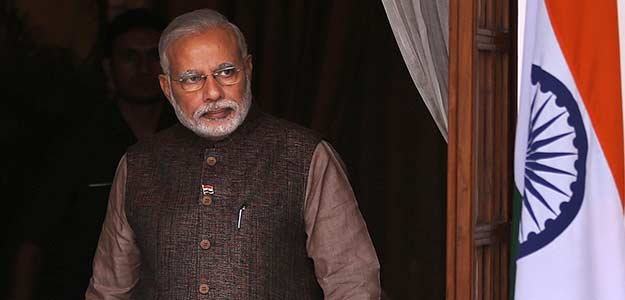
Several private Indian firms want to pay off debts by raising up to $5 billion (Rs 29,500 crore) this year through share sales, emboldened by a surge in the stock market and an anticipated economic recovery after Narendera Modi was elected as prime minister.
Leading the equity issuances in the private sector are highly leveraged firms such as GVK Power & Infrastructure Ltd, Adani Enterprises Ltd and others in capital intensive industries such as infrastructure, metals and telecommunications, bankers say.
These companies borrowed heavily in the past few years, when India's economy was one of the fastest growing in the world, but were squeezed by the slowdown in growth last year and the slide in the rupee to record lows.
In most cases, banks stopped giving fresh loans to these indebted companies, whose loans often exceeds their equity several times over, leaving them with few options but to tap the equity market to raise money to reduce their debt.
"There will be an stampede of Indian companies going to the markets and trying to reduce leverage to take advantage of this some kind of Modinomics," said Eric Mookherjee, a Paris-based fund manager at Shanti India, which manages Indian stocks.
"The access to capital is much easier now, and you need to clean up your balance sheet before you get into the investment mode again. So, the engine has now been started."
Bankers say 2014 is poised to become the best year for equity offerings in India since 2010, which saw some $24 billion (Rs 141,600 crore) raised by state-run and private companies.
In 2014, state-run firms are expected to raise up to $6 billion (Rs 35,400 crore) via share sales, which, in addition to the $5.4 billion (Rs 31,860 crore) already raised in the first-half of the year and the anticipated issuances by the private sector, would bring the total amount to around $16 billion (Rs 94,400 crore) for the year, according to investment bankers' estimates and Thomson Reuters data.
The rush to raise capital could gather speed if the federal budget on July 10 paves the way for a revival of the economy after the longest spell of growth below 5 per cent in a quarter of a century, bankers say.
Finding Funding
Business-friendly Modi was elected by a resounding majority in May and since then, the benchmark stock market index has risen nearly 9 per cent to touch record highs, lifted by his pledges to boost growth and create jobs.
Some bankers, however, cautioned that "Modinomics" may not provide an instant revival, meaning indebted firms, whose fortunes are linked to the domestic economy, may see a delay in the pick-up in earnings growth.
"Everybody is getting very euphoric but not sure if all these expectations would be met in the near future," said a senior investment banker at a large US bank who declined to be named as he was not authorised to speak to the media.
For now, companies are pressing ahead with raising funds. In a sign of the times, Jaiprakash Associates Ltd and GMR Infrastructure Ltd, two of the most indebted mid-sized Indian companies, on Thursday raised $250 million each by selling shares. The companies will use the funds to repay some debt, bankers involved in the deals said.
Jaiprakash has a total debt of $10 billion, giving it a debt to equity ratio of 5.9 times compared to an industry average of 0.69, while GMR with debt of $6.5 billion has a debt to equity ratio of 5.1 times, according to Thomson Reuters data.
The share offerings by the two companies came a week after mobile phone operator Reliance Communications Ltd raised $800 million in what was India's biggest share sale since the Modi government assumed office in May.
A sluggish economy and stalled bureaucratic decision-making for the past two years thwarted capital investment and dented earnings, making it tough for the companies to raise funds.
At the end of 2013, some 37 per cent of Indian corporate debt was owed by companies whose earnings were not enough to cover interest payments, up from 34 per cent in July-September, according to Credit Suisse.
The rupee's weakening also substantially increased the rupee-value of outstanding dollar debt and the amount of rupees needed to fulfil interest payments - factors that weighed on the balance sheet of several companies.
Since the Modi government took office, however, the outlook for the economy and corporate earnings growth has improved.
The average revenue of 24 companies in the infrastructure sub-index, which includes highly indebted firms including Reliance Communications and Jaiprakash, should rise 10.3 per cent in this fiscal year to March from 8 per cent last year, according to Thomson Reuters data.
"The worst is over. The companies' operating performance has bottomed out," said Deep Mukherjee, senior director, corporate ratings, at India Ratings & Research, a Fitch unit.
($1 = Rs 59)
Copyright: Thomson Reuters 2014

-
Getting To Work Costs Women More | The Reason Why

It is not just about women paying more than men. It is about women paying much more in cities than in villages.
-
AI Bias In Investing Cannot Be Eliminated, But It Can Be Governed
Framing is a particularly important example as identical financial information presented in terms of gains rather than losses can lead an LLM to reach a different assessment.
-
Joining The Dots | Dark Skies, Steady Diya: Why Hope Holds This Diwali
With war, a weak rupee and foreign outflows weighing on sentiment, policymakers at the NDTV World Summit and market veterans at NDTV Profit Ignite: Diwali Edition offered the same advice: stay invested and filter out the noise.
-
The Curious Case of Equitas Small Finance Bank And A CEO Who Quit For Stock
PN Vasudevan believes persistent investor concerns over a perceived conflict of interest had become a governance overhang on Equitas Small Finance Bank's stock, even as the lender improved profitability and asset quality.
-
Talking Points This Week: AI Cash Burn, A Tiger Comeback And An India That Still Finds Its Own Path
India is not immune to higher oil or tighter global liquidity, yet its earnings base is broader, its domestic policy levers are still available.
-
Foreign Investors Own Half Of HDFC Bank and ICICI Bank. An LTCG Cut Could Matter Most Here
Foreign portfolio investors have US$115 billion parked in HDFC Bank, ICICI Bank. If the government cuts long-term capital gains tax, Jefferies says returning foreign money could land here first.
-
'Never Seen This Level Of Negativity': Sandeep Tandon Says The Next Rally May Be Closer Than You Think
Veteran investor Sandeep Tandon says foreign selling is easing, large-caps are due a comeback and mid-caps are crowded, while he turns positive on gold, power and pharma this Diwali.
-
Indians Stay With Family, Not In Hotels | The Reason Why
India still lacks enough clean, reliable and affordable hotels for budget-conscious travellers.
-
The Economic Imperative: Analysing The Material Driving Force Behind India-Canada Strategic Reset
This economic complementarity is further reinforced by deep institutional investment ties and talent mobility, which form the bedrock of the bilateral framework.
-
Medicine Pricing: Where Must Profit Stop?
India must confront excessive margins, hidden incentives and regulatory gaps that threaten the integrity of medicine.










