Return Of Covid Curbs: Mobility Moves Into Slow Lane As Cities Clamp Down
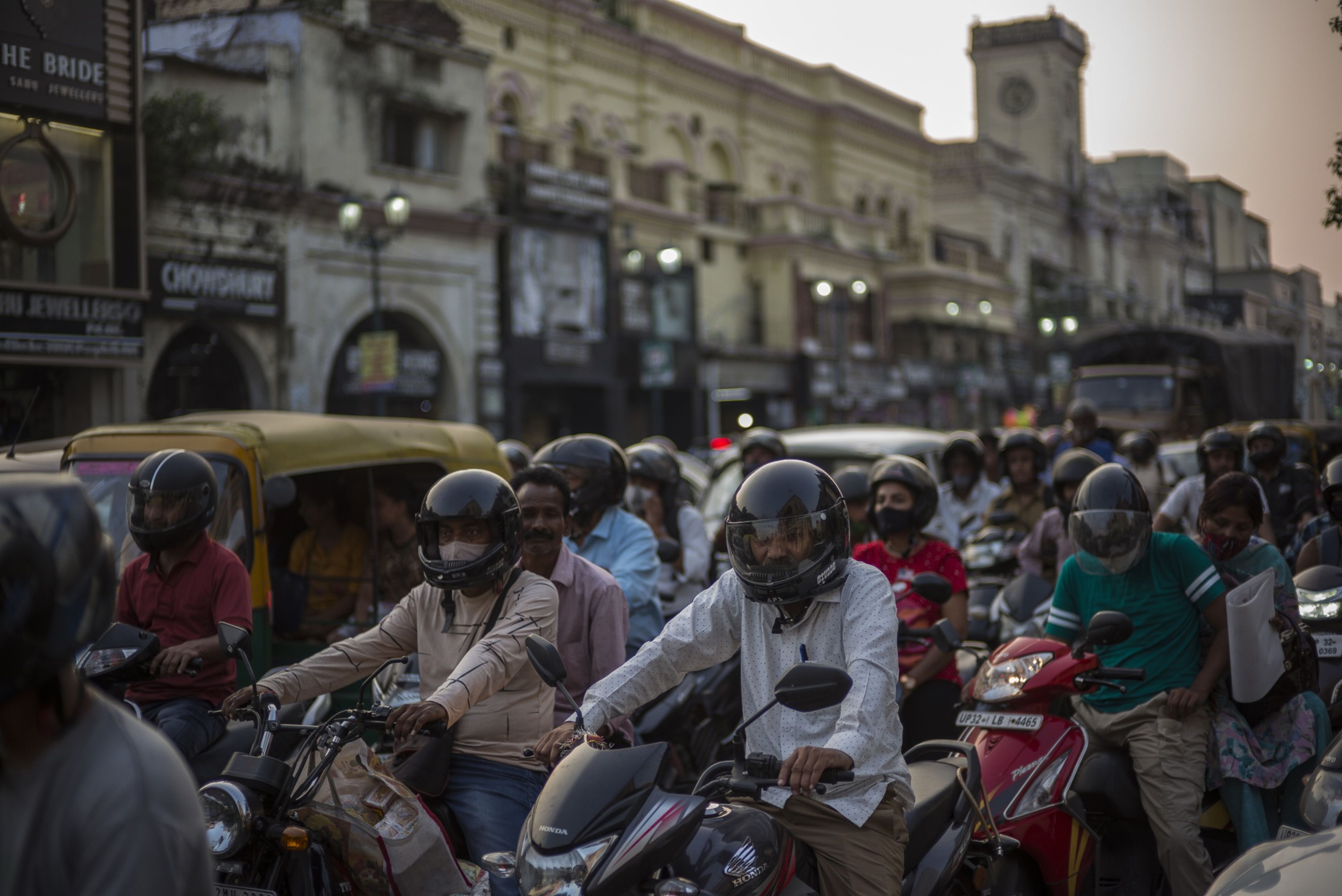
If traffic congestion and mobility trends are anything to go by, 2022 started on a slow note. Not only was the New Year's Eve a non-event for those of us living in India's metros (unless you run online food ordering platforms), but outings for work and recreation may start to see curbs as the Omicron variant of the Covid-19 virus spreads.
Mobility data is already starting to show a dip.
For instance, traffic jams, which peak on Dec. 31 as people party-hop, dropped across most cities—some more than others—shows the TomTom Traffic Index, which measures congestion across India's metropolitans through time spent on commute.
Mumbai Followed The Rules, Delhi Did Not
Curbs on gatherings in Mumbai saw average congestion in the peak evening hours of Dec. 31 fall to 55%. Traffic congestion at this time last year was at 92%.
A 55% congestion level in a city, for example, means that a 30-minute trip will take 55% more time than it would during baseline uncongested conditions.
While Mumbai saw the least traffic congestion, New Delhi saw the most.
In New Delhi, traffic congestion, on an aggregate, was higher at 72% in the evening peak hours. This was also closer to the 78% congestion at this time last year.
Bengaluru—ranked as the most congested city in the world pre-pandemic by TomTom—saw traffic congestion ease to 67% in the evening peak hours, 13 percentage points less than in 2020.
In Pune, traffic congestion was on an aggregate at 58% in the evening peak hours. This was compared to 71% at this time last year.
We Know Where You Went Instead!
A destination that's likely to have seen a surge in congestion is Goa! While TomTom does not provide data for Goa, Google Mobility Trends up to Dec. 31 showed a sharp surge in mobility places of retail and recreation in the state.
The seven-day moving average for Goa rose to 21.1% as on Dec. 31 after having lingered close to baseline levels until mid-December.
Mobility Slows, Contact-Intensive Services Hit
Across India, on aggregate, mobility to places such as restaurants, cafés, shopping centres, theme parks, museums, libraries and cinemas dropped. The seven-day moving average is now 2.4% above pre-pandemic levels compared with 3.5% just a week earlier.
However, mobility to places of retail and recreation in Bengaluru, New Delhi and Mumbai slipped more sharply and remained below pre-pandemic levels.
While the broader economic link between mobility and economic activity has weakened, contact-intensive services and offline retail are again bracing for a hit.
Metros can account for anywhere between 20% and 80% of consumption depending on the type of business, said Kumar Rajagopalan, chief executive officer of the Retailers Association of India. They are after all India's key consumption centres, he said. The extent of the impact will only be clear in the coming days, he said.
Praveen Khandelwal, national secretary general of the Confederation of All India Traders, said the ensuing wedding season from mid-January was scheduled to see approximately 30 lakh marriages across the country up to March 2022. This will be greatly disturbed with rising Covid cases in the country and imposition of restrictions by states on weddings and other events, he said.
The recent spurt in the number of cases witnessed in some of the states is adding to concerns about renewal of various forms of restrictions, said Arun Singh, global chief economist at Dun & Bradstreet. A demand downturn or fading optimism levels could be more painful, he said. "We expect the pace of growth to slow down in the first half of 2022 and growth should pick up momentum thereafter."

-
India's Troika Of Good Luck | Joining The Dots

A weaker Trump, a cooling AI trade and resilient earnings have put Indian markets back in favour. Rising inflation could spoil the party.
-
Talking Points This Week: Leadership Shock At Nvidia, Earnings Strength, And The Fog Over Hormuz
The Anthropic IPO pricing and first trading day, Nvidia's upcoming earnings, and any fresh signals from Iran will set the tone for the following week.
-
Signature Play: The Classic Cocktail Is Dead. Or Is It?
Classic cocktails are disappearing from India's cocktail menus. But they're still being ordered, taught to bartenders and borrowed from. So, who's really having the last drink?
-
A New Samvat Wishlist: Inclusive Prosperity And Human Development
India has strengthened its economic foundations through infrastructure, digital access and enterprise. Its next growth chapter must deepen productivity, create better livelihoods and widen participation in prosperity.
-
Love, Sex Aur Dhokha: The Audacious Plot To Spy On Jensen Huang
A Taipei dinner, a Singapore chip buyer and a suspected Chinese asset: inside the alleged spy operation that got close to NVIDIA's Jensen Huang.
-
Ten Things I Learnt This Samvat
Patience can be a trap. Cheap stocks can stay cheap. Leverage can wipe you out. What did Samvat 2082 teach us? Niraj Shah writes on 10 lessons from the year gone by.
-
Talking Points This Week: Tech Nerves, FII Buying, And A Faraway Banking Shock
The global markets are not shining this Diwali. The exception in the large markets is, India.
-
Midterm Rally Lasted A Day. The Hard Reality Of A Divided US May Last Two Years | Opinion
Between a contested AI boom, a debt ceiling that arrives in 2027 and a president with every incentive to act alone, the next two years may prove more volatile than the first day's rally suggests.
-
Blue Wave Will Derail the AI Trade but Won't Dismantle the AI Era | Unhedged Position
The Democrats' sweep of the US Congress will see politics collide with economic forces both over the long and short term.
-
It's Time To Take The GST Council's Bet On Trust Global
Payment records can prove India's services exports, and clear, proportionate rules can bring foreign digital sellers into the tax net.









