Retail Loan Securitisation Surges To A Record In FY19
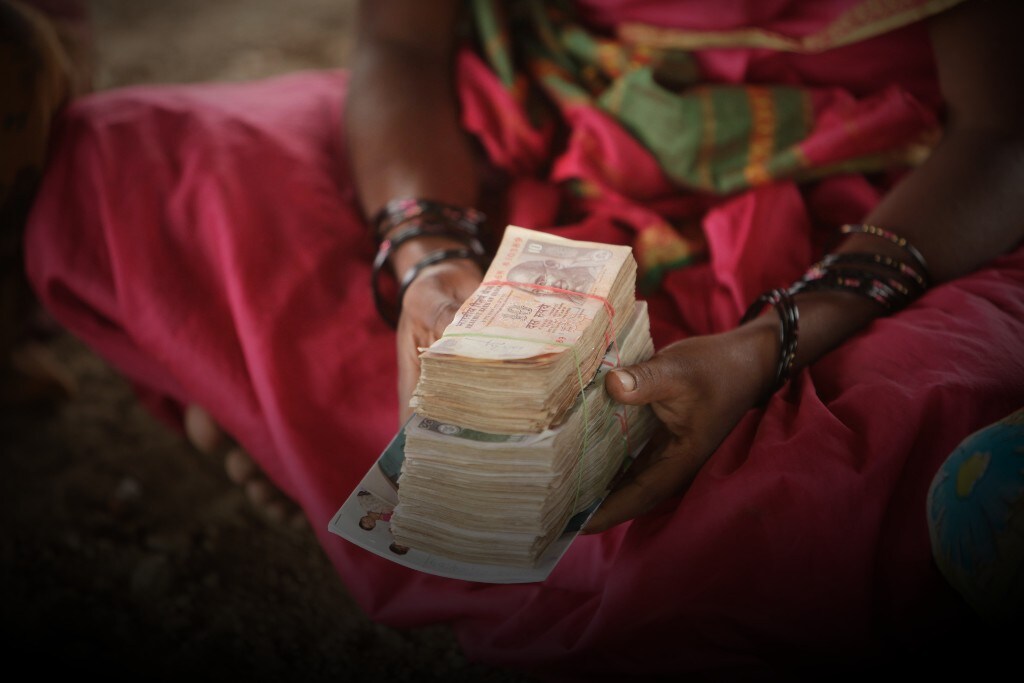
Securitisation of retail loans doubled to a record in the last financial year as several large non-bank and mortgage lenders rushed to sell loans amid a liquidity crunch.
About Rs 1.9 lakh crore worth of retail loans were securitised in the year ended March, according to a report by Crisil. That compares with Rs 85,000 crore worth of loans sold a year earlier.
Availability of assets that can be securitised increased after the RBI reduced by half the minimum holding period before which housing finance companies and non-bank lenders can sell loans, according to Crisil Ratings. The central bank in November brought down the duration to six months from one year to ease liquidity shortage following defaults by IL&FS group.
The immediate fallout of the crisis at Infrastructure Leasing and Financial Services Ltd. was that money-market borrowing rates rose between September and November 2018. Housing finance companies were pushed to lower their disbursements and meet a sizable portion of their fund requirement by selling loan portfolio, said Supree Nijar, vice president at ICRA Ltd.
Rohit Inamdar, senior director at Crisil Ratings, said the spotlight shone on asset-liability maturity management by the recent liquidity crunch should result in non-banks reducing their dependence on short-term funding. “The RBI constituting a committee to enable development of housing finance securitisation also augurs well for the market.”
Most-Securitised Loans
Mortgages, vehicle loans and microfinance loans constituted about 84 percent of the securitisation volume, Krishnan Sitaraman, senior director at Crisil Ratings, said in the report. “While growing investor comfort with these asset classes and steady asset quality metrics supported growth, we also saw relatively newer asset classes such as gold loans, small and medium enterprises loans and personal loans also getting securitised, underscoring a potential broad-basing of the market.”
Loans are securitised in two ways. A direct assignment transaction and a pass-through certificates route.
In a direct assignment, the loan portfolio moves from the non-banking or housing finance company's balance sheet to the bank's, while the non-bank lender continues to service the loan. In a pass-through transaction, the interest earned on the loan is passed to the holders or investors (banks) in the form of a fixed income, while the loan is transferred to a common trustee or a special purpose vehicle. The investor doesn't own the loan portfolio in this case, unlike a direct assignment transaction. In both cases, the non-bank lender receives funds upfront.
Of the Rs 1.9 lakh-crore retail loans sold in FY19, around 64 percent was securitised through the direct assignment route while the remaining Rs 69,000 crore worth of loans were securitised through the pass-through certificates route, Crisil said. That compares with 58 percent and 42 percent, respectively, in FY18.
About 92 percent of all the mortgages that were securitised by non-banks last year were sold directly to public sector banks, Crisil said.
A Mortgage Securitisation Market
The Reserve Bank of India, in its April 4 statement on developmental and regulatory policies, said it would set up a committee to look at standardising asset securitisation practices and propose measures for creating a housing finance securitisation market in the country.
“Globally, residential and commercial mortgages are supported by well-lubricated securitisation markets whereby mortgage originators package portfolios of mortgages and resell them in capital markets as mortgage-backed securities or covered bonds,” the RBI said. Such markets “enable better management of credit and liquidity risks” for banks and non-banks.
But the 2008 global financial crisis was caused by over-indulgence in securitisation by top investment banks and mortgage originators in the U.S. A regular loan was first securitised into a mortgage-backed security, and then several such contracts were re-packaged into a new security called a collaterised debt or loan obligation.
The pace and comfort with which the financial system in the U.S. packaged and traded these securities is something that the RBI will want to avoid.

-
Foreign Investors Own Half Of HDFC Bank and ICICI Bank. An LTCG Cut Could Matter Most Here

Foreign portfolio investors have US$115 billion parked in HDFC Bank, ICICI Bank. If the government cuts long-term capital gains tax, Jefferies says returning foreign money could land here first.
-
'Never Seen This Level Of Negativity': Sandeep Tandon Says The Next Rally May Be Closer Than You Think
Veteran investor Sandeep Tandon says foreign selling is easing, large-caps are due a comeback and mid-caps are crowded, while he turns positive on gold, power and pharma this Diwali.
-
Indians Stay With Family, Not In Hotels | The Reason Why
India still lacks enough clean, reliable and affordable hotels for budget-conscious travellers.
-
The Economic Imperative: Analysing The Material Driving Force Behind India-Canada Strategic Reset
This economic complementarity is further reinforced by deep institutional investment ties and talent mobility, which form the bedrock of the bilateral framework.
-
Medicine Pricing: Where Must Profit Stop?
India must confront excessive margins, hidden incentives and regulatory gaps that threaten the integrity of medicine.
-
Why Amazon And Flipkart Are Struggling To Beat Meesho In India's Smaller Cities
With 274 million users and lowest-cost logistics, Meesho is defending its value commerce crown against giants like Amazon and Flipkart.
-
High US Salaries, No Green Card Certainty: The Financial Calculation Facing Indian H-1B Families
The suspension of PERM processing at eight technology employers does not cancel existing H-1B visas. What it does is force a question many Indian families have been avoiding: is the US salary worth tying your career and family plans to one employer?
-
Swiggy vs Eternal: Food Delivery's Two Rivals Are No Longer In The Same Race
Eternal is building a private AI assistant, dark.ai. Swiggy is still working out how to make Instamart pay, with an operating loss of Rs 895 crore in the July-September quarter while Blinkit stayed profitable.
-
Where You Live Shapes How You Get To Work | The Reason Why
Two-wheelers are the most popular way to get to work in India, accounting for nearly 43% of workplace commutes.
-
Unhedged Position: Can India See An Indonesia-Style Time Correction?
The Nifty is trading below levels it first clocked in 2024. Is there, then, as I have suggested in the headline, potential that the current time correction drags on painfully for the next three-five, even ten years?










