For Personal Loans, RBI Issues New Norms With 2 Key Changes. See Details
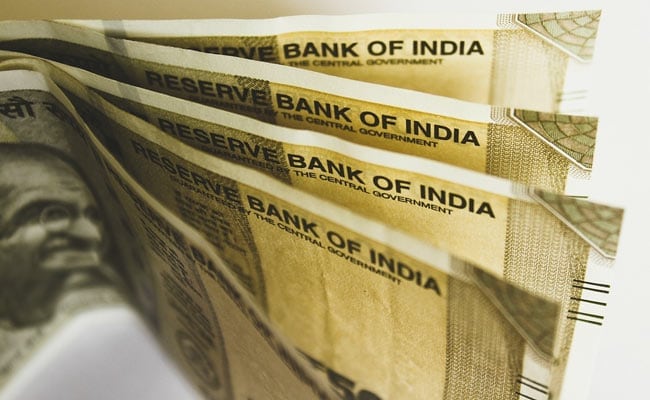
The Reserve Bank on Friday asked banks to provide fixed interest rate option to individual borrowers and directed the lenders to levy only reasonable penalty charges in case of default in EMI payments.
The two decisions are expected to provide a relief to the borrowers amid rising interest rates and most of the retail loans being on floating rates now.
In a directive to banks and NBFCs, including housing finance companies, the Reserve Bank of India (RBI) said that several consumer grievances have been received in relation to elongation of loan tenor or increase in EMI amount with regard to EMI-based floating rate personal loans, without proper communication or consent of the borrowers.
Interest rates have risen since May last year as the central bank hiked the repo rate to tame high inflation.
As a result of 250 basis points increase in the repo rate from May 2022 till February this year, a large number of borrowers are facing negative amortisation, wherein the Equated Monthly Instalment (EMI) works out to be less than the interest obligation, resulting in persistent increase of the principal amount.
"At the time of reset of interest rates, REs (Regulated Entities) shall provide the option to the borrowers to switch over to a fixed rate as per their board approved policy," as per the notification on 'Reset of Floating Interest Rate on EMI based Personal Loans'.
The policy, inter alia, should also specify the number of times a borrower will be allowed to switch the interest rate system during the tenor of the loan, the RBI said.
At the time of sanction, the central bank said REs should clearly communicate to the borrowers about the possible impact of change in benchmark interest rate on the loan leading to changes in EMI and/or tenor or both.
"Subsequently, any increase in the EMI/ tenor or both on account of the above shall be communicated to the borrower immediately through appropriate channels," the RBI said.
Banks and NBFCs have been asked to ensure compliance of the instructions for the existing as well as new loans by December 31, 2023.
In a notification on 'Fair Lending Practice - Penal Charges in Loan Accounts', the RBI said it has been observed that many REs use penal rates of interest, over and above the applicable interest rates, in case of defaults/ non-compliance by the borrower with the terms on which credit facilities were sanctioned.
The intent of levying penal interest/charges is essentially to inculcate a sense of credit discipline and such charges are not meant to be used as a revenue enhancement tool over and above the contracted rate of interest, the central bank noted.
However, supervisory reviews have indicated divergent practices amongst the REs with regard to levy of penal interest/charges leading to customer grievances and disputes, the RBI said.
"Penalty, if charged, for non-compliance of material terms and conditions of loan contract by the borrower shall be treated as 'penal charges' and shall not be levied in the form of 'penal interest' that is added to the rate of interest charged on the advances," it said.
Also, the RBI said there should be no capitalisation of penal charges, which means that no further interest can be computed on such charges.
However, this will not affect the normal procedures for compounding of interest in the loan account.
"The quantum of penal charges shall be reasonable and commensurate with the non-compliance of material terms and conditions of loan contract without being discriminatory within a particular loan / product category," the RBI said.
The instructions on 'Fair Lending Practice - Penal Charges in Loan Accounts' will come into effect from January 1, 2024.
(Except for the headline, this story has not been edited by NDTV staff and is published from a syndicated feed.)

-
We May Need Another Tukaram Mundhe To Fight Air Pollution | The Reason Why

Developers may install basic measures such as sprinklers and green nets, resume work, and continue violating rules when this equipment stops working.
-
Extracting Value From Battery Scrap Could Be Challenging For India | The Reason Why
A discarded lithium-ion battery still contains valuable materials such as lithium, nickel and cobalt. These can be recovered and reused. When such batteries are crushed and shredded, they produce a dark powder called black mass.
-
One El Nino, India Can Handle. Two Could Break The Granary
India's grain stocks can absorb one bad year, but a second El Nino could drain the buffer in two to three years, economists say.
-
India's Troika Of Good Luck | Joining The Dots
As Jensen Huang's exit drags Nvidia down, a cooling AI trade and resilient earnings have revived investor interest in India. A likely RBI rate hike looms.
-
Talking Points This Week: Leadership Shock At Nvidia, Earnings Strength, And The Fog Over Hormuz
The Anthropic IPO pricing and first trading day, Nvidia's upcoming earnings, and any fresh signals from Iran will set the tone for the following week.
-
Signature Play: The Classic Cocktail Is Dead. Or Is It?
Classic cocktails are disappearing from India's cocktail menus. But they're still being ordered, taught to bartenders and borrowed from. So, who's really having the last drink?
-
A New Samvat Wishlist: Inclusive Prosperity And Human Development
India has strengthened its economic foundations through infrastructure, digital access and enterprise. Its next growth chapter must deepen productivity, create better livelihoods and widen participation in prosperity.
-
Love, Sex Aur Dhokha: The Audacious Plot To Spy On Jensen Huang
A Taipei dinner, a Singapore chip buyer and a suspected Chinese asset: inside the alleged spy operation that got close to NVIDIA's Jensen Huang.
-
Ten Things I Learnt This Samvat
Patience can be a trap. Cheap stocks can stay cheap. Leverage can wipe you out. What did Samvat 2082 teach us? Niraj Shah writes on 10 lessons from the year gone by.
-
Talking Points This Week: Tech Nerves, FII Buying, And A Faraway Banking Shock
The global markets are not shining this Diwali. The exception in the large markets is, India.









