Reliance Industries Goes Slow On Non-Core Investments As Net Debt Hits $9 Billion
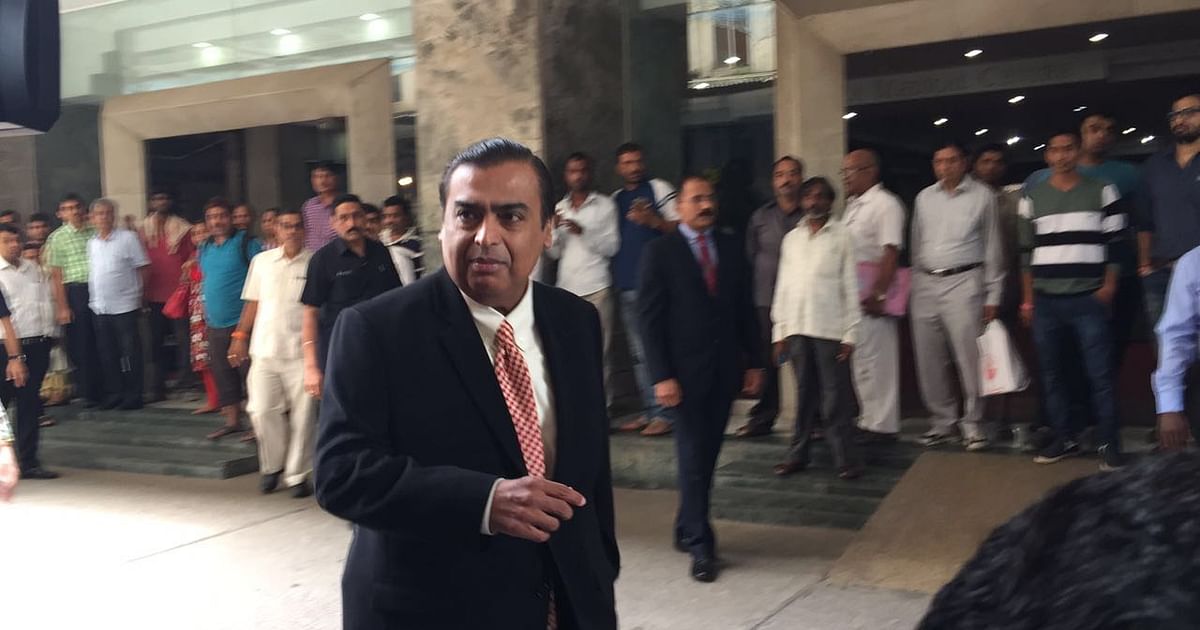
It has been a quiet year for Mukesh Ambani-owned Reliance Industries Ltd. for acquisitions and investments.
The oil-to-retail company invested close to Rs 78,033 crore across all businesses in the year ended March, according to the 2023 annual report. That includes Rs 5,029 crore on account of entities acquired or additional investments.
By comparison, Reliance Industries Ltd. had invested $9.3 billion or Rs 73,764 crore just outside its core businesses in FY22.
Ambani deleveraged during the Covid-19 pandemic by selling stakes in telecom and retail businesses to become net debt free, only to add net debt as the conglomerate embarked on setting up gigafactories under its new energy business.
Reliance's standalone gross debt rose Rs 21,260 crore in FY23 to Rs 2.15 lakh crore. Net debt rose to Rs 72,897 crore (about $ 9 billion) as of March 2023 from Rs 12,328 crore a year earlier.
Consolidated net debt stood at Rs 1,10,218 crore as of March compared with Rs 35,815 crore a year earlier. What that means is that net debt for other segments including consumer businesses, stood at Rs 37,318 crore in FY23.
The company's net-debt-to-Ebitda was less than 1 time on a consolidated basis.
Cash profit stood at Rs 1.26 lakh crore, and the company funded 98% of the capex in the last two years from cash profits, it said.
Net block or the net value of assets rose by Rs 85,000 crore during the year to Rs 7.09 lakh crore.
In addition, the company has deployed Rs 1.17 lakh crore of capital which is work in progress, and Rs 1.2 lakh crore of spectrum which is under development as part of the Rs 2-lakh-core investment planned in the 5G space.
After demerger of the financial services business, the non-current investments held for more than a year in associates declined to Rs 7,435 crore from Rs 1.05 lakh crore.
Top Investments In FY23
Among Reliance's key investments in FY23 are Rs 9,145 crore in Reliance Storage Ltd.; Rs 1,838 crore in the joint venture Sanmina- SCI India; and Rs 1,499 crore in equity and convertible debenture of Sintex Industries. It also invested Rs 193 crore in Life Insurance Corp.
Reliance made additional investments to the tune of Rs 9,145 crore during the year.
Private Equity Exposure
RIL has increased its exposure to private equity and alternate investment funds which invests in real estate, infrastructure and startups. It invested in Multiples PE Fund II LLP, Kalaari Capital Partners, Nepean Focused Investment Fund etc. Total investments into this segment stood at Rs 4,570 crore as on March 31.
Other Investments
Reliance also has among the highest current investments in government securities at Rs 21,848 crore as of March against nil a year earlier. It also increased its exposure to Treasury bills to Rs 13,157 crore. Its mark-to-market exposure to mutual funds fell to Rs 6,315 crore from Rs 20,944 crore.
Reliance's other income decline during the year, mainly as gains from debt instruments fell to Rs 9,174 crore from Rs 12,247 crore a year earlier. It gained interest income worth Rs 1,709 crore from the bank deposits against Rs 54 crore in the previous year, suggesting the company took advantage of rising deposit rates.

-
The Curious Case of Equitas Small Finance Bank And A CEO Who Quit For Stock

PN Vasudevan believes persistent investor concerns over a perceived conflict of interest had become a governance overhang on Equitas Small Finance Bank's stock, even as the lender improved profitability and asset quality.
-
Talking Points This Week: AI Cash Burn, A Tiger Comeback And An India That Still Finds Its Own Path
India is not immune to higher oil or tighter global liquidity, yet its earnings base is broader, its domestic policy levers are still available.
-
Foreign Investors Own Half Of HDFC Bank and ICICI Bank. An LTCG Cut Could Matter Most Here
Foreign portfolio investors have US$115 billion parked in HDFC Bank, ICICI Bank. If the government cuts long-term capital gains tax, Jefferies says returning foreign money could land here first.
-
'Never Seen This Level Of Negativity': Sandeep Tandon Says The Next Rally May Be Closer Than You Think
Veteran investor Sandeep Tandon says foreign selling is easing, large-caps are due a comeback and mid-caps are crowded, while he turns positive on gold, power and pharma this Diwali.
-
Indians Stay With Family, Not In Hotels | The Reason Why
India still lacks enough clean, reliable and affordable hotels for budget-conscious travellers.
-
The Economic Imperative: Analysing The Material Driving Force Behind India-Canada Strategic Reset
This economic complementarity is further reinforced by deep institutional investment ties and talent mobility, which form the bedrock of the bilateral framework.
-
Medicine Pricing: Where Must Profit Stop?
India must confront excessive margins, hidden incentives and regulatory gaps that threaten the integrity of medicine.
-
Why Amazon And Flipkart Are Struggling To Beat Meesho In India's Smaller Cities
With 274 million users and lowest-cost logistics, Meesho is defending its value commerce crown against giants like Amazon and Flipkart.
-
High US Salaries, No Green Card Certainty: The Financial Calculation Facing Indian H-1B Families
The suspension of PERM processing at eight technology employers does not cancel existing H-1B visas. What it does is force a question many Indian families have been avoiding: is the US salary worth tying your career and family plans to one employer?
-
Swiggy vs Eternal: Food Delivery's Two Rivals Are No Longer In The Same Race
Eternal is building a private AI assistant, dark.ai. Swiggy is still working out how to make Instamart pay, with an operating loss of Rs 895 crore in the July-September quarter while Blinkit stayed profitable.










