Johnson & Johnson Says It Gave Powder Samples To Regulators Over Carcinogen Concerns
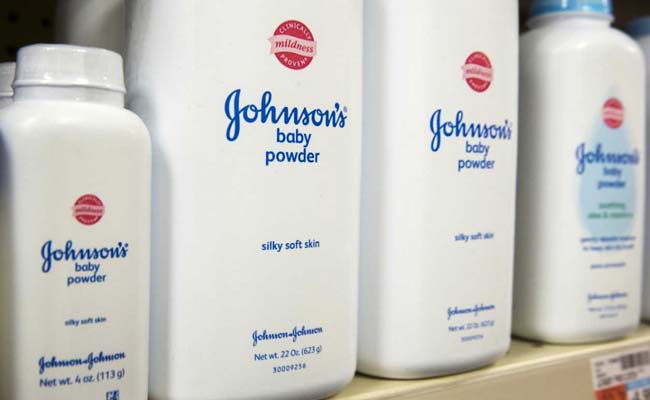
Drug authorities visited some of Johnson & Johnson's facilities on Wednesday and took "tests and samples" of its talcum powder, the company said in a statement. The visits came as regulators launched an investigation into J&J's Baby Powder following a Reuters report last Friday that the firm knew for decades that cancer-causing asbestos could be found in the product.
The company told Reuters in a statement that the facilities were visited by the Central Drugs Standard Control Organization (CDSCO) and some state-based food and drug administrations (FDAs).
"Today, a few of our facilities were visited by the CDSCO and local FDA authorities and we are fully co-operating with them by providing tests and samples," the J&J statement said.
"The characterization of these visits as 'raids' or 'seizures' is incorrect as has been reported in some instances," it said. "The tests have been conducted in the regular way that the FDA collects samples."
J&J added that the safety of its cosmetic talc was based on a long history of safe use and decades of research and clinical evidence by independent researchers and scientific review boards across the world.
It also said Indian FDAs and the CDSCO have in the past confirmed that its products "comply with Indian standards and are free of asbestos".
Quoting an industry source with knowledge of the matter, Reuters reported earlier in the day that drug inspectors had taken samples of Baby Powder from its Baddi factory in Himachal Pradesh.
A source at the CDSCO said its officials lifted samples for testing from nine Indian cities - Mumbai, Chennai, Kolkata, Ahmedabad, Hyderabad, Bengaluru, Indore, Chandigarh and Ghaziabad.
J&J did not immediately specify how many manufacturing plants the company has in India.
A CDSCO spokeswoman did not respond to a request for comment.
Surendranath Sai, a regional drug officer in Telangana, on Wednesday said he would instruct inspectors to collect samples there.
"On the basis of the news report, we are alerting staff to pick up samples. We will test them in a drug control lab here," said Sai. "We will take action accordingly. Certainly we are worried because millions of babies may be affected."
Earlier, the Times of India quoted an official source as saying 100 drug inspectors had been assigned to examine different manufacturing facilities, wholesalers and distributors linked to J&J India, starting early on Wednesday.
A health ministry spokeswoman declined to comment when contacted by Reuters. However, a senior official at the ministry said the report was worrying.
"We are concerned about it and will take action," the official told Reuters, declining to be identified due to the matter's sensitivity. The official did not elaborate on what kind of action the ministry could take.
A Reuters examination of company memos, internal reports and other confidential documents, as well as deposition and trial testimony, showed that from at least 1971 to the early 2000s, J&J's raw talc and finished powders sometimes tested positive for small amounts of asbestos.
It also showed that company executives, mine managers, scientists, doctors and lawyers fretted over how to address the problem while failing to disclose it to regulators or the public.
The documents also depicted successful efforts to influence U.S. regulators' plans regarding limiting asbestos in cosmetic talc products and scientific research on talc's health effects.
J&J said on Monday it planned to buy back up to $5 billion of its stock, after $40 billion was wiped from its market value following the Reuters report.

-
Getting To Work Costs Women More | The Reason Why

It is not just about women paying more than men. It is about women paying much more in cities than in villages.
-
AI Bias In Investing Cannot Be Eliminated, But It Can Be Governed
Framing is a particularly important example as identical financial information presented in terms of gains rather than losses can lead an LLM to reach a different assessment.
-
Joining The Dots | Dark Skies, Steady Diya: Why Hope Holds This Diwali
With war, a weak rupee and foreign outflows weighing on sentiment, policymakers at the NDTV World Summit and market veterans at NDTV Profit Ignite: Diwali Edition offered the same advice: stay invested and filter out the noise.
-
The Curious Case of Equitas Small Finance Bank And A CEO Who Quit For Stock
PN Vasudevan believes persistent investor concerns over a perceived conflict of interest had become a governance overhang on Equitas Small Finance Bank's stock, even as the lender improved profitability and asset quality.
-
Talking Points This Week: AI Cash Burn, A Tiger Comeback And An India That Still Finds Its Own Path
India is not immune to higher oil or tighter global liquidity, yet its earnings base is broader, its domestic policy levers are still available.
-
Foreign Investors Own Half Of HDFC Bank and ICICI Bank. An LTCG Cut Could Matter Most Here
Foreign portfolio investors have US$115 billion parked in HDFC Bank, ICICI Bank. If the government cuts long-term capital gains tax, Jefferies says returning foreign money could land here first.
-
'Never Seen This Level Of Negativity': Sandeep Tandon Says The Next Rally May Be Closer Than You Think
Veteran investor Sandeep Tandon says foreign selling is easing, large-caps are due a comeback and mid-caps are crowded, while he turns positive on gold, power and pharma this Diwali.
-
Indians Stay With Family, Not In Hotels | The Reason Why
India still lacks enough clean, reliable and affordable hotels for budget-conscious travellers.
-
The Economic Imperative: Analysing The Material Driving Force Behind India-Canada Strategic Reset
This economic complementarity is further reinforced by deep institutional investment ties and talent mobility, which form the bedrock of the bilateral framework.
-
Medicine Pricing: Where Must Profit Stop?
India must confront excessive margins, hidden incentives and regulatory gaps that threaten the integrity of medicine.










