Reducing Government Stake In Banks: The Steps PM Modi Is Reviewing
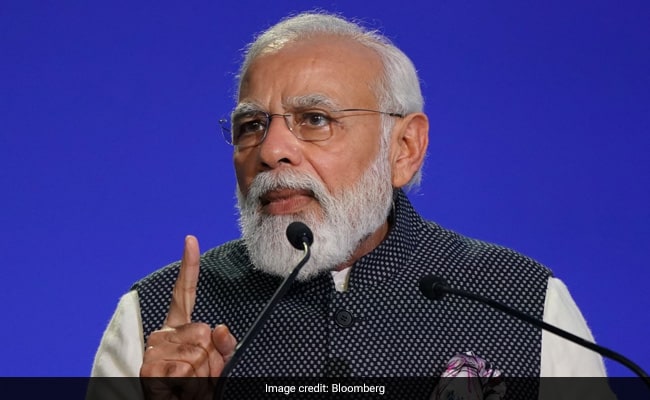
New Delhi: The government is considering changes that would make it easier to lower its stake in state-run banks, a key step in Prime Minister Narendra Modi's plan to unclog credit flow to the economy.
The proposals -- if approved -- would allow the government to gradually lower its holding in state-run lenders to 26% from 51% without diluting its grip on management appointments, the people said, asking not to be identified as the deliberations are private.
They would also simplify privatization of certain identified lenders and permit foreign investors to purchase bigger stakes in others without seeking parliament approval.
With the proposed amendments, PM Modi is seeking to reduce state-run banks' reliance on frequent injections of government capital while still maintaining their quasi-sovereign status that depositors favor.
The move would dilute some of the policies India enacted in 1969 when the country swept in to nationalise its lenders, creating a swathe of banks that even today control two-thirds of the sector's assets and the bulk of its bad debts.
Key Proposals:
* Insert an enabling provision to speed up the process toward parliament approval for privatizations after details have been agreed with the Reserve Bank of India (RBI).
* Government stake reduced to minimum 26% from 51%; regulation wouldn't move to the Companies Act that governs private sector lenders.
* Foreign stakeholdings can be allowed to breach the 20% cap.
* Single shareholder's voting rights will no longer be capped at 10%.
Early talks are still on and the details could change, the people said. The proposals would need to be studied and cleared by the cabinet before being placed before parliament, they added.
A spokesperson for the Finance Ministry couldn't be reached for comment.
Bank privatizations can be fraught affairs in India, where unions still hold sway, albeit not as powerfully as they did decades ago.
Thousand of employees belonging to state-run lenders continued their strike for a second day on Friday, protesting against the proposed privatization of banks by the government, the Press Trust of India reported.
However, PM Modi is fresh off the success of the privatization of Air India Ltd., the nation's flag carrier, and is heading toward listing state insurer LIC, which is being compared with the Saudi Aramco IPO in its ambition, scope and scale.
The government could be betting that investor appetite for state-run banks will improve once a recently set up bad bank buys the worst of the soured assets on lenders' books.
The sector's bad-loan ratio is forecast to rise to 9.8% by March 2022 from 7.48% a year ago, hampering the disbursal of fresh loans to businesses.

-
Why Swapping Your Old Gold Can Trigger A Rs 5 Lakh Tax Bill, And How You Can Avoid It Legally

Swapping old gold for new is taxed as a sale and a fresh purchase. Getting your own gold remade can cut most of that bill, though it has its own costs.
-
The AI Trade is Done. The Real Opportunity for Investors Starts in 2027 | Unhedged Position
As pureplay AI stocks plunge and circular, capex-led financing unwinds, 2027 is set to be a year of reckoning for AI companies. Yet the bust clears the way for a better opportunity for investors in 2027 -- shifting the spotlight from AI builders to the companies using AI.
-
Leadership As Mission: Why The Age Of AI Demands More Human Leadership
Debjani Ghosh examines how AI is changing leadership, arguing that its success must be measured by its impact on people and the accountability of those guiding its use.
-
We May Need Another Tukaram Mundhe To Fight Air Pollution | The Reason Why
Developers may install basic measures such as sprinklers and green nets, resume work, and continue violating rules when this equipment stops working.
-
Extracting Value From Battery Scrap Could Be Challenging For India | The Reason Why
A discarded lithium-ion battery still contains valuable materials such as lithium, nickel and cobalt. These can be recovered and reused. When such batteries are crushed and shredded, they produce a dark powder called black mass.
-
One El Nino, India Can Handle. Two Could Break The Granary
India's grain stocks can absorb one bad year, but a second El Nino could drain the buffer in two to three years, economists say.
-
India's Troika Of Good Luck | Joining The Dots
As Jensen Huang's exit drags Nvidia down, a cooling AI trade and resilient earnings have revived investor interest in India. A likely RBI rate hike looms.
-
Talking Points This Week: Leadership Shock At Nvidia, Earnings Strength, And The Fog Over Hormuz
The Anthropic IPO pricing and first trading day, Nvidia's upcoming earnings, and any fresh signals from Iran will set the tone for the following week.
-
Signature Play: The Classic Cocktail Is Dead. Or Is It?
Classic cocktails are disappearing from India's cocktail menus. But they're still being ordered, taught to bartenders and borrowed from. So, who's really having the last drink?
-
A New Samvat Wishlist: Inclusive Prosperity And Human Development
India has strengthened its economic foundations through infrastructure, digital access and enterprise. Its next growth chapter must deepen productivity, create better livelihoods and widen participation in prosperity.









