Record High Food Grain Output: What It Means For The Indian Economy?
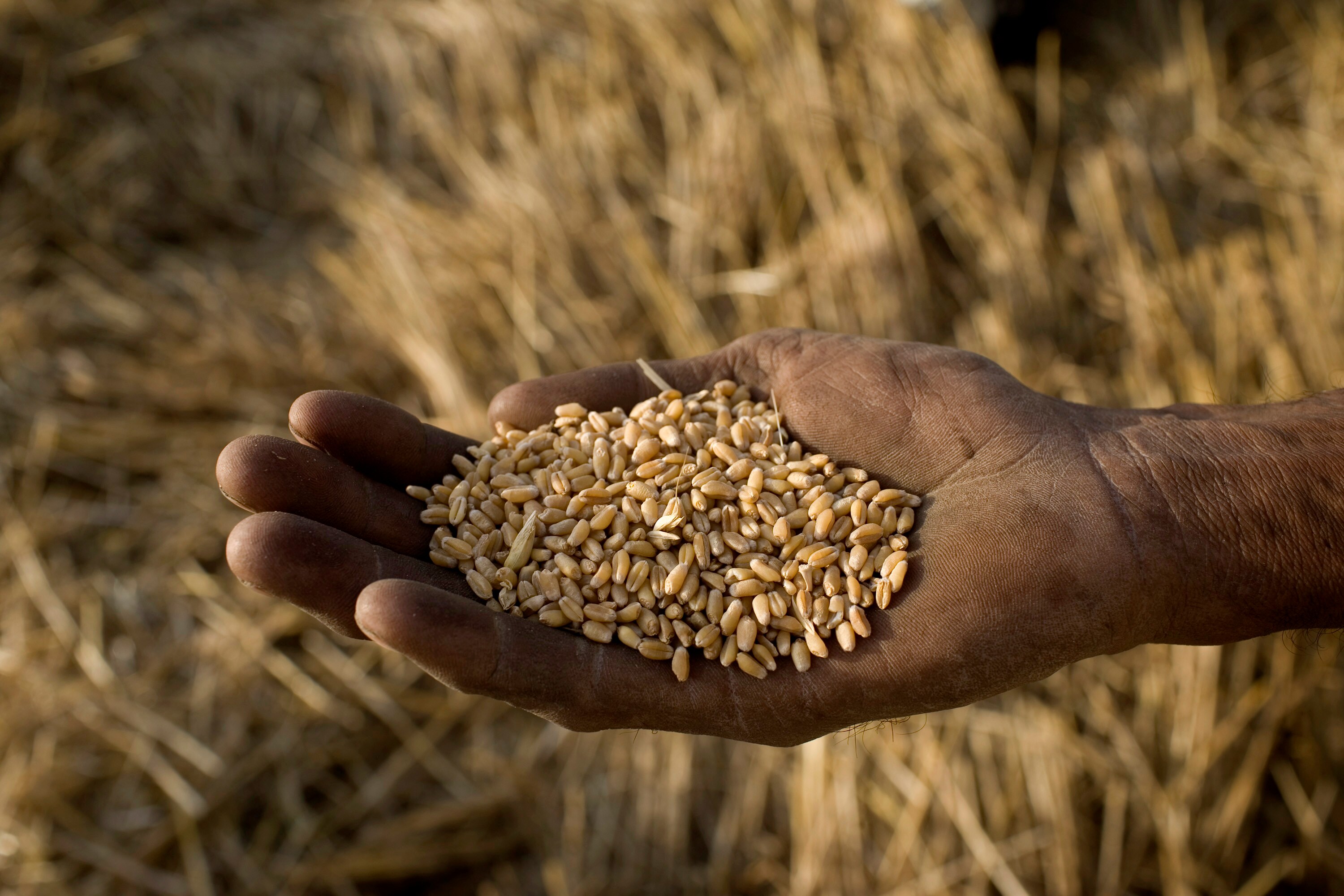
Production of several major agricultural crops is expected to rise to a record high in the ongoing fiscal, just like it did last year. While the higher output helps in ensuring food security for India and pushing up exports of some commodities, it might not necessarily help farmers make more money.
Food grain production is estimated at 316.1 million tonnes in FY22 compared with 308.7 million tonnes, according to data published by the Ministry of Agriculture and Farmers' Welfare. This covers rice, wheat, maize and pulses.
Production of sugarcane is also estimated at a record high of 414.1 million tonnes, compared with 373.5 million tonnes last fiscal.
Oilseeds production is estimated at 37.2 million tonnes in FY22 , a modest uptick from 36.1 million tonnes last fiscal.
Impact On Farmer Incomes
An increase in volumes is an indication that the agricultural sector is doing well, not necessarily the farmers, Sukhpal Singh, professor and chairperson at the Centre for Management in Agriculture at IIM-A, said. An increase in value of output would mean that farmers are better off, Singh said.
In 2018, the government had announced that the minimum support price for key crops will be at least 1.5 times the cost of production. This was intended to ensure that farmers get a more steady return from their crop, relative to input costs.
Agricultural analyst Devinder Sharma argued that the formula had flaws to begin with. Even with the current structure, crops are often sold at market prices that can be almost 30% less than the MSP, varying by the crop and the region.
Market prices of some agricultural crops such as pulses and oil seeds rose in the current fiscal, while prices of others such as jowar and bajra fell, Sharma said.
MSP is a tool that the government can use to intervene to bring up prices even if it just procures 20-30% of the market produce when prices dip, said Singh. “That is enough to make market prices come up." But usually the government intervention is too late and the damage is done, he said.
For the farmers, price is key, Sharma said. That, according to him, continues to dictate sowing decisions, creating a glut in some crops, even as others remain in short supply. For instance, last year, the MSP announced for mustard was Rs 4,650 per quintal. This enthused farmers so much that the targets for mustard production for FY25 were met in FY22, he said.
Supply > Demand, But Not For All
Consecutive years of high output has meant that supply has been greater than demand in key crops.
Demand for food grains was pegged at 280 million tonnes for FY22, according to a 2021 working group report on demand and supply projections by NITI Aayog. The report had projected supply for food grains at 304 million tonnes —12 million tonnes lower than the government's latest estimate.
In the case of pulses, too, supply has caught up with demand. The demand for pulses was estimated at 26.7 million tonnes in FY22, while the government now pegs supply at 27 million tonnes.
For oilseeds, however, supply remains well short of expected demand. The demand for oilseeds was estimated at 61.5 million tonnes in FY22, while the government now pegs supply at 37 million tonnes.
The supply-demand dynamics show up in inflation trends. Inflation in key food grains like wheat and rice has ranged between -6% and 8% over the past two years, partly due to supply disruptions during the pandemic. For pulses, inflation has dropped significantly from over 18% in October 2020 to 3% now. In contrast, inflation in oils and fats saw a spike to 34.8% in June 2021 and remains elevated at over 18%.
The production of pulses is rising with higher MSP and sufficient incentives, Singh said. But structural challenges for production of oilseeds persist. Indian varieties are low yielding and can't compete with palm oil plantations from countries such as Indonesia and Malaysia in price terms, he added.
Food Security Vs Food Glut
Despite shortfalls in some crops, India's overall food security has strengthened due to years of strong output even as several countries globally face food insecurity, Sharma said.
Stocks of wheat and rice rose to 718 lakh metric tonnes in 2021-22 on an average, compared with 643 lakh metric tonnes in 2020-21, according to data from the Food Corporation of India. These stocks helped the government distribute additional free food rations to the vulnerable parts of the population amid the pandemic.
To be sure, the rising stocks, while helpful in times of stress, are also a symptom of flawed agricultural support system.
A vicious cycle of higher production of wheat and rice, increased procurement by the government, and limited demand for excess stock in the open market has meant that the FCI often struggles with high procurement costs and adequate storage capacity.
Singh pointed to a bigger dichotomy.
Despite the rise in production and procurement, India's ranking on the hunger index remains poor, with a large percentage of the population still having to go to bed hungry, said Singh, while arguing for better access and distribution of rice, wheat and pulses. "While there is food security at the national level, we are still food insecure at the household level."
Potential For Exports
In some cases, the higher production does open up room for exports of agricultural commodities which have been rising.
Exports of agriculture and allied products rose 19.7% to $26.7 billion between April and December 2021, according to data published by the Ministry of Commerce and Industry. It was 39.7% higher than in the same duration in 2019 and made up for 8.7% of India's overall exports.
Rice constitutes about a fourth of these exports, while sugar makes up for about a tenth.
India's agricultural exports are led by rice and other commodities and are not high in value, said Singh. Moreover, these exports are not sustainable because of the amount of water that cultivation of rice requires. "Are we exporting rice or water?" Singh asked.
Sugarcane, too, is a highly subsidised crop, he said. Now, with saturation levels in domestic consumption, there are discussions over increasing use of sugarcane for production of ethanol. But, use of the crop for fuel, not food, is debatable, he said.

-
Getting To Work Costs Women More | The Reason Why

It is not just about women paying more than men. It is about women paying much more in cities than in villages.
-
AI Bias In Investing Cannot Be Eliminated, But It Can Be Governed
Framing is a particularly important example as identical financial information presented in terms of gains rather than losses can lead an LLM to reach a different assessment.
-
Joining The Dots | Dark Skies, Steady Diya: Why Hope Holds This Diwali
With war, a weak rupee and foreign outflows weighing on sentiment, policymakers at the NDTV World Summit and market veterans at NDTV Profit Ignite: Diwali Edition offered the same advice: stay invested and filter out the noise.
-
The Curious Case of Equitas Small Finance Bank And A CEO Who Quit For Stock
PN Vasudevan believes persistent investor concerns over a perceived conflict of interest had become a governance overhang on Equitas Small Finance Bank's stock, even as the lender improved profitability and asset quality.
-
Talking Points This Week: AI Cash Burn, A Tiger Comeback And An India That Still Finds Its Own Path
India is not immune to higher oil or tighter global liquidity, yet its earnings base is broader, its domestic policy levers are still available.
-
Foreign Investors Own Half Of HDFC Bank and ICICI Bank. An LTCG Cut Could Matter Most Here
Foreign portfolio investors have US$115 billion parked in HDFC Bank, ICICI Bank. If the government cuts long-term capital gains tax, Jefferies says returning foreign money could land here first.
-
'Never Seen This Level Of Negativity': Sandeep Tandon Says The Next Rally May Be Closer Than You Think
Veteran investor Sandeep Tandon says foreign selling is easing, large-caps are due a comeback and mid-caps are crowded, while he turns positive on gold, power and pharma this Diwali.
-
Indians Stay With Family, Not In Hotels | The Reason Why
India still lacks enough clean, reliable and affordable hotels for budget-conscious travellers.
-
The Economic Imperative: Analysing The Material Driving Force Behind India-Canada Strategic Reset
This economic complementarity is further reinforced by deep institutional investment ties and talent mobility, which form the bedrock of the bilateral framework.
-
Medicine Pricing: Where Must Profit Stop?
India must confront excessive margins, hidden incentives and regulatory gaps that threaten the integrity of medicine.










