Indian Equities Could Face Rough Weather in 2023 As Global Uncertainties Persist
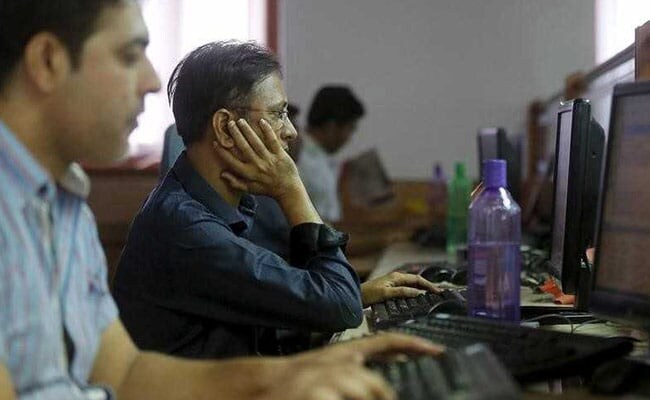
Indian equity market is likely to be "choppy" in 2023 and the returns might be moderate or even negative as a raft of factors, including geopolitical uncertainties, recession fears and interest rate trajectory, will weigh on investor sentiments.
Market experts opined that the Indian market will be influenced by a combination of domestic and global factors, including the coronavirus situation and policy initiatives in the Union Budget next year.
Despite strong global headwinds roiling financial markets worldwide this year, the domestic equity market stood strong as a stellar performance of bluechips saw the 30-share Sensex soaring nearly 13,000 points to its all-time high of 63,583.07 on December 1, in less than six months after touching its 52-week low of 50,921.22 points on June 17.
The strong showing this year came even as Foreign Portfolio Investors (FPIs) dumped Indian equities and concerns over high inflation persisted.
Global factors like recession fears, geopolitical risks and rising coronavirus cases in China could keep equity markets volatile.
The US Fed policy actions in 2023 along with RBI's would hold importance where any moderation might encourage markets to pick up momentum, Siddharth Khemka, Head - Retail Research at Motilal Oswal Financial Services Ltd, said.
"Also, next year is the last year before elections due in 2024 which could result in many policy-led initiative announcements in the upcoming Union Budget in February," he added.
Mayank Mehraa, smallcase manager and Principal Partner at financial consultancy Craving Alpha, said the government's economic policies and reforms, performance of major economies and foreign capital inflows will also influence the domestic equities.
Sensex has climbed 2,656.46 points or 4.56 per cent till December 28 this year.
Suman Bannerjee, CIO of US-based hedge fund Hedonova, said, "we'll see negative returns in 2023", adding that the Indian market is very overvalued compared to global counterparts.
"Once the US Fed pivots and starts reducing rates, we'll see bear markets in the USA spillover to India," he noted.
Trends in the equity market next year will also continue to be guided by movement of the rupee and the US dollar, as well as international oil benchmark Brent Crude.
Markets are likely to remain choppy in 2023 too, V K Vijayakumar, Chief Investment Strategist at Geojit Financial Services, said, adding that global growth is slowing down and interest rates are rising.
"This is not a favourable environment for equity, at least in H1 of 2023. Expect only moderate returns from equity in 2023," he said.
Market analysts said 2022 was a volatile and turbulent year for global equities, marred by varied global headwinds, including Russia-Ukraine war, high inflation, fears of global economic slowdown and re-emergence of coronavirus.
"In this backdrop, Indian equities have delivered a stellar and sharp outperformance for the year with the Nifty-50 and Sensex clocking all-time highs during early part of December," Sanjeev Hota, Head of Research at Sharekhan by BNP Paribas, said.
"The multiple macro-economic headwinds of the 2022 global economic slowdown, rising inflation, liquidity tightening, geopolitical tensions and re-emergence of COVID-19 scare will continue to weigh on global equity markets," Hota said in a report on market outlook 2023.
According to him, there will also be ample attractive opportunities for long-term investments.
This year, aggressive rate hikes by central banks globally to tackle inflation, rising commodity prices and the Russia-Ukraine conflict led to an exodus of foreign money.
Till December 28, Foreign Portfolio Investors (FPIs) made a net withdrawal of Rs 1.21 lakh crore (nearly USD 16.5 billion) from the Indian equity market and pulled out a net amount of around Rs 16,600 crore (USD 2 billion) from the debt market, as per data available with the depositories.
Retail/DIIs (Domestic Institutional Investors) absorbed all the selling by FPIs and supported the market, Vijayakumar said.
"India so far stood out like an oasis in the desert, where the rest of the world is facing multiple challenges. The resilience has been led by strong corporate earnings growth which is expected to continue its momentum going ahead as well," Khemka said.
He noted that the driving force behind India's outperformance has been the pick up in capex by the central government which revived the Indian economy from Covid-led slump and strong consumption demand which reflected in the buoyant domestic macro data points.
In a note, Religare Broking said 2022 was the year of returning to normalcy, be it economy at large or life in general.
"What was not normal was supply bottlenecks caused due to geopolitical issues. Though rising interest rates was not the only solution to ease this supply side inflation, it had to be done. India managed its economy well and it is the only economy which has returned to pre-pandemic growth rate. Accordingly stock markets outperformed," it said.
(Except for the headline, this story has not been edited by NDTV staff and is published from a syndicated feed.)

-
Gold Is Rs 22,000 Cheaper Than A Month Ago. Should You Buy Amid The Wedding Season?

Gold's potential slide to $3,500 could save around Rs 4,700 per 10 grams, but a soft inflation print could just as easily push prices back up. One way to split the risk is to buy in parts, some now and the rest after the Fed's Dec. 9 decision.
-
AI Agents Are Gaining Power. Who Governs Them?
Artificial intelligence agents promise to transform productivity by moving machines from assisting decisions to executing them. But as organisations delegate greater authority to these AI-agents, they must first establish who controls that authority and who remains accountable when things go wrong.
-
Why Swapping Your Old Gold Can Trigger A Rs 5 Lakh Tax Bill, And How You Can Avoid It Legally
Swapping old gold for new is taxed as a sale and a fresh purchase. Getting your own gold remade can cut most of that bill, though it has its own costs.
-
The AI Trade is Done. The Real Opportunity for Investors Starts in 2027 | Unhedged Position
As pureplay AI stocks plunge and circular, capex-led financing unwinds, 2027 is set to be a year of reckoning for AI companies. Yet the bust clears the way for a better opportunity for investors in 2027 -- shifting the spotlight from AI builders to the companies using AI.
-
Leadership As Mission: Why The Age Of AI Demands More Human Leadership
Debjani Ghosh examines how AI is changing leadership, arguing that its success must be measured by its impact on people and the accountability of those guiding its use.
-
We May Need Another Tukaram Mundhe To Fight Air Pollution | The Reason Why
Developers may install basic measures such as sprinklers and green nets, resume work, and continue violating rules when this equipment stops working.
-
Extracting Value From Battery Scrap Could Be Challenging For India | The Reason Why
A discarded lithium-ion battery still contains valuable materials such as lithium, nickel and cobalt. These can be recovered and reused. When such batteries are crushed and shredded, they produce a dark powder called black mass.
-
One El Nino, India Can Handle. Two Could Break The Granary
India's grain stocks can absorb one bad year, but a second El Nino could drain the buffer in two to three years, economists say.
-
India's Troika Of Good Luck | Joining The Dots
As Jensen Huang's exit drags Nvidia down, a cooling AI trade and resilient earnings have revived investor interest in India. A likely RBI rate hike looms.
-
Talking Points This Week: Leadership Shock At Nvidia, Earnings Strength, And The Fog Over Hormuz
The Anthropic IPO pricing and first trading day, Nvidia's upcoming earnings, and any fresh signals from Iran will set the tone for the following week.









