Realty Sector Yet To Reflect Impact Of Government's Measures: Report
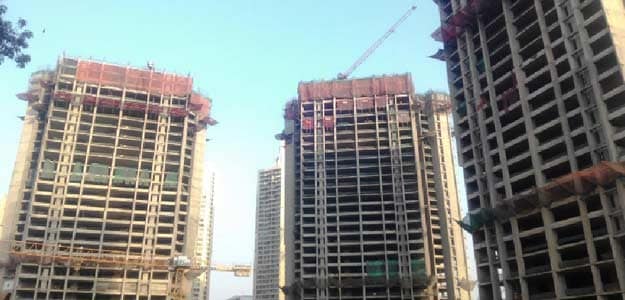
The real estate sector continued to reel under pressure in 2019 due to a prolonged liquidity crisis in the non-banking finance company (NBFC) segment. The government came up with a slew of stimulus measures during the year to infuse liquidity and boost demand, but these have not made any noticeable impact as sales declined in the second half of the year.
According to a report by Anarock Property Consultants, a total of 2.61 lakh units were sold during the year, a year-on-year growth of 5 per cent. Out of the overall sales across seven major cities in the country during the year, around 1.47 lakh flats were sold in the January-June period, and the remaining 1.14 lakh have been sold so far in the second half.
Despite the steps announced by the government, mostly in the second half of the year, sales during July-December declined by 22 per cent compared to the first half.
"The unrelenting liquidity crisis, lower-than-expected buyer sentiments and faltering GDP growth eventually put brakes on the overall housing growth in the second half of 2019," said Anuj Puri, Chairman of Anarock Property Consultants.
Among other liquidity infusing measures, in a much-awaited relief for distressed home buyers awaiting possession of their flats, the Finance Ministry last month committed up to Rs 10,000 crore for completing housing projects stuck for years.
Thereafter, the Union cabinet cleared a proposal to set up a 'Special Window' in the form of an Alternative Investment Fund (AIF) to provide priority debt financing for the completion of stalled housing projects that are in the affordable and middle-income housing sector.
The corpus size of the AIF would be scaled up to Rs 25,000 crore after SBI and LIC pumps in funds. It would grow further in the coming days with the addition of sovereign wealth funds and pension funds, the government said. The fund, however, is a work in progress right now.
"The year 2019 turned out to be a rather challenging one. Despite various measures announced by the government as well as the RBI, the going was tough for the industry. The sluggish economic growth during the first two quarters of the current fiscal added to the misery of the sector," Manoj Gaur, MD Gaurs Group and Chairman of CREDAI Affordable Housing Committee.
Deepak Kapoor, Director, Gulshan Homz said that although multiple policy measures were announced, "something was left wanting and it is this gap that has be plugged in the new year."
He hoped that 2020 would be more fruitful in terms of funding for real estate and finance options for the buyers.
Further, in a major boost for the flow of liquidity, the Reserve Bank of India's (RBI) Monetary Policy Committee (MPC) has reduced its repo rates in over five consecutive bi-monthly meets this year, making a cumulative reduction of 135 basis points (bps).
However, the transmission of the RBI's rate cuts to retail loans has only been 44 bps, according to the apex bank.
In its previous MPC meeting earlier this month, the central bank kept its repo rate, or short term lending rate for commercial banks, unchanged at 5.15 per cent and said that it would like to wait for the impact of the previous successive rate cuts.
Amit Wadhwani, MD of Mumbai-based realty consultancy SECCPL said: "The year 2019 saw the relentless challenge for the real estate sector with severe liquidity crisis leading to a number of bankruptcies, regular reforms and amends by government."
The year was also marked by home buyers' victories in major legal tussles with the builders. In a landmark judgement in the Amrapali case, the Supreme Court in July directed the public sector enterprise NBCC (India) to take over the stalled Amrapali projects and complete them. However, work on the projects is yet to gain momentum and the Supreme Court earlier in the month directed SBICAP Ventures Ltd to decide on financing the uncompleted projects of the defunct Amrapali Group.
Besides, the resolution process for Jaypee Infratech, where over 20,000 home buyers are yet to get their flats after a delay of around a decade, has also neared completion. Earlier this month, NBCC's resolution plan got the majority votes from the firm's Committee of Creditors (CoC) and is set to acquire Jaypee Infratech and its stalled projects.
Next, the NBCC plan has to receive the approval of Allahabad bench of National Company Law Tribunal (NCLT).
Dhruv Agarwala, Group CEO of Elara Technologies, said that along with the Rs 25,000 crore fund to salvage stalled projects, the progress made in resolutions for Jaypee and Amrapali group will go a long way in reviving sentiment in the market during 2020 and coming years.
Although residential real estate remained subdued and tepid, commercial realty witnessed a positive run during the year.
According to a JLL report, India's office market has set a new benchmark and recorded a historic high, both in net absorption and new completions. While 4.65 million square feet of space got absorbed, nearly 52 million square feet of Grade-A office space was completed in 2019.
Along with the conventional commercial and office spaces segment, co-working, co-living spaces and student housing also gained in demand during the year.
Speaking on student housing, Anindya Dutta, MD and Co-founder Stanza Living said, "The industry is beginning to garner investor attention. Also, rental yield improvement and professional asset management have created growing interest from landlords, property owners, educational institutes and developers for partnership."
"We believe the student housing industry is still nascent and has the potential to grow at least '4x' over the next decade," he added.
On the outlook for 2020, market players are optimistic that the demand scenario would improve across segments and government's measures would result in positive impact on the long-subdued sector.
"We hope the coming year is the last year of the storm that has engulfed residential realty," said Samir Jasuja, Founder and MD at PropEquity.

-
Gold Is Rs 22,000 Cheaper Than A Month Ago. Should You Buy Amid The Wedding Season?

Gold's potential slide to $3,500 could save around Rs 4,700 per 10 grams, but a soft inflation print could just as easily push prices back up. One way to split the risk is to buy in parts, some now and the rest after the Fed's Dec. 9 decision.
-
AI Agents Are Gaining Power. Who Governs Them?
Artificial intelligence agents promise to transform productivity by moving machines from assisting decisions to executing them. But as organisations delegate greater authority to these AI-agents, they must first establish who controls that authority and who remains accountable when things go wrong.
-
Why Swapping Your Old Gold Can Trigger A Rs 5 Lakh Tax Bill, And How You Can Avoid It Legally
Swapping old gold for new is taxed as a sale and a fresh purchase. Getting your own gold remade can cut most of that bill, though it has its own costs.
-
The AI Trade is Done. The Real Opportunity for Investors Starts in 2027 | Unhedged Position
As pureplay AI stocks plunge and circular, capex-led financing unwinds, 2027 is set to be a year of reckoning for AI companies. Yet the bust clears the way for a better opportunity for investors in 2027 -- shifting the spotlight from AI builders to the companies using AI.
-
Leadership As Mission: Why The Age Of AI Demands More Human Leadership
Debjani Ghosh examines how AI is changing leadership, arguing that its success must be measured by its impact on people and the accountability of those guiding its use.
-
We May Need Another Tukaram Mundhe To Fight Air Pollution | The Reason Why
Developers may install basic measures such as sprinklers and green nets, resume work, and continue violating rules when this equipment stops working.
-
Extracting Value From Battery Scrap Could Be Challenging For India | The Reason Why
A discarded lithium-ion battery still contains valuable materials such as lithium, nickel and cobalt. These can be recovered and reused. When such batteries are crushed and shredded, they produce a dark powder called black mass.
-
One El Nino, India Can Handle. Two Could Break The Granary
India's grain stocks can absorb one bad year, but a second El Nino could drain the buffer in two to three years, economists say.
-
India's Troika Of Good Luck | Joining The Dots
As Jensen Huang's exit drags Nvidia down, a cooling AI trade and resilient earnings have revived investor interest in India. A likely RBI rate hike looms.
-
Talking Points This Week: Leadership Shock At Nvidia, Earnings Strength, And The Fog Over Hormuz
The Anthropic IPO pricing and first trading day, Nvidia's upcoming earnings, and any fresh signals from Iran will set the tone for the following week.









