Ready For Rate Cuts To Shield Economy From Coronavirus: RBI Chief
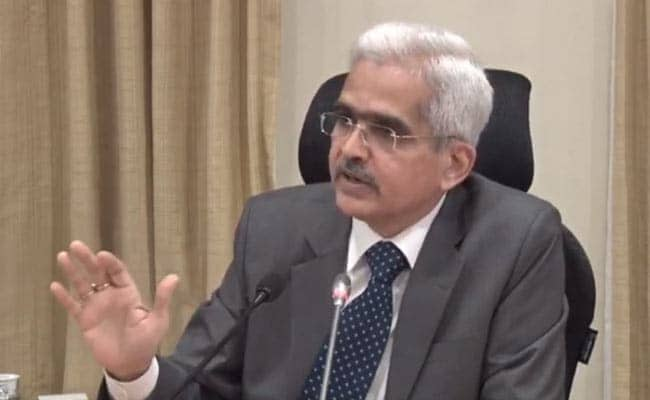
Reserve Bank of India (RBI) governor has said he is ready to act to shield the economy from the coronavirus and reiterated there's room to cut interest rates if needed. Speaking in an interview with Bloomberg News in Mumbai hours before the Federal Reserve slashed interest rates by half a percentage point in an emergency move, Shaktikanta Das said “there is a strong reason for coordinated policy action.” For India, options include a rate cut and supporting the market through liquidity measures, he said.
Inflation, which had kept the central bank from easing since December, is expected to moderate, he said in an interview at the RBI's headquarters on Tuesday. He argued the bank's flexible inflation-targeting framework allows the central bank to look through recent price pressures and loosen policy.
“We're ready for a response should the situation warrant,” Das said in a meeting room decorated with framed portraits of his predecessors. “And going forward, in the near future, I do expect some discussion through video conference or telephone conference among the central banks of the large economies, including India.”
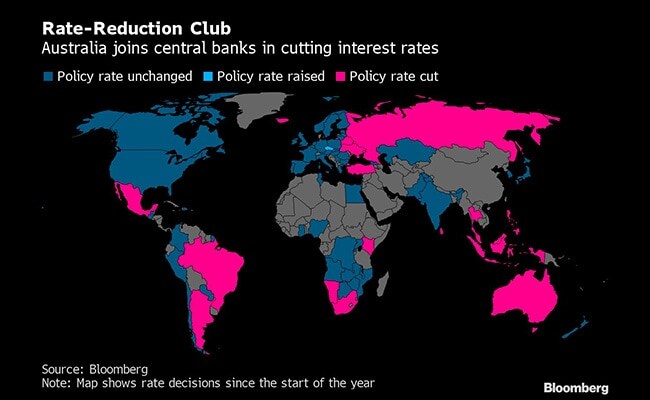
The Fed's action and the governor's comments boost the case for deeper rate cuts, said Indranil Sen Gupta and Aastha Gudwani, economists at Bank of America Securities. “We grow more confident of our call of 50 basis points of RBI rate cuts in 2020,” they wrote in a note.
Australia and Malaysia also lowered interest rates on Tuesday, while Indonesia said it is working on a second stimulus package. Monetary authorities in Japan and the UK pledged action to stabilize markets -- a throwback to the coordinated action in the aftermath of the global financial crisis more than a decade ago.
“We, G-7 Finance Ministers and Central Bank Governors, are closely monitoring the spread of the coronavirus disease 2019 (COVID-19) and its impact on markets and economic conditions,” the G-7's finance ministers and central bankers said Tuesday in a statement published after Das spoke with Bloomberg News.
“There is definitely a strong reason for coordinated policy action, because coronavirus has now turned out to be a global problem,” Das said. “So when the problem is global, naturally the response and the need for coordinated action is so much more.”
Situation Improved
Das Tuesday addressed lingering concerns about the nation's shadow banks, saying only about four firms required active monitoring now and the sector no longer posed a risk to financial stability.
These non-bank finance companies have less “interconnectivity with other entities” such as banks and mutual funds, Das said. “Bank funding to the NBFC sector has shown very good improvement. The liquidity situation has improved.”
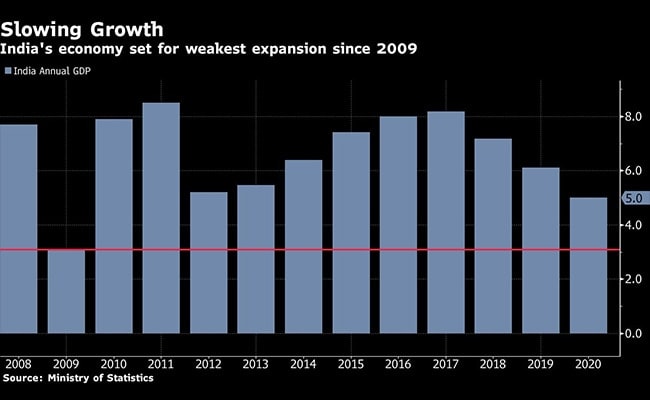
The RBI cut interest rates five times in 2019 to support an economy headed for its weakest expansion in 11 years, but has been on pause since December following a spike in inflation, which accelerated again to 7.6 per cent in January -- well above the central bank's 2 per cent - 6 per cent target. Data on Friday showed growth decelerated to 4.7 per cent in the three months through December from a year ago, the third straight quarterly slowdown.
Despite the RBI lowering borrowing costs, loan growth has slowed to a more than two-year low in February. That's partly because banks have been cautious about lending as they grapple with the world's steepest bad-loan ratio, and in part due to companies holding back investments amid waning consumer demand in an economy that's set for its weakest expansion in 11 years.
Das said the virus's impact on India will come through two channels: trade with China and weaker global growth. The RBI would be able to quantify the hit to growth at its next policy meeting in April, he said.
Indian businesses aren't currently facing any problem in securing supplies of raw materials, but there may be issues if the shutdowns in China continue for longer, Finance Minister Nirmala Sitharaman said last week. The government is ready to respond with measures, she had said separately.
“Everyone likes a rate cut,” Das said when asked if a coordinated response from global peers would lead to market pressure on him to also move. “We will do what we think is right.”

-
Getting To Work Costs Women More | The Reason Why

It is not just about women paying more than men. It is about women paying much more in cities than in villages.
-
AI Bias In Investing Cannot Be Eliminated, But It Can Be Governed
Framing is a particularly important example as identical financial information presented in terms of gains rather than losses can lead an LLM to reach a different assessment.
-
Joining The Dots | Dark Skies, Steady Diya: Why Hope Holds This Diwali
With war, a weak rupee and foreign outflows weighing on sentiment, policymakers at the NDTV World Summit and market veterans at NDTV Profit Ignite: Diwali Edition offered the same advice: stay invested and filter out the noise.
-
The Curious Case of Equitas Small Finance Bank And A CEO Who Quit For Stock
PN Vasudevan believes persistent investor concerns over a perceived conflict of interest had become a governance overhang on Equitas Small Finance Bank's stock, even as the lender improved profitability and asset quality.
-
Talking Points This Week: AI Cash Burn, A Tiger Comeback And An India That Still Finds Its Own Path
India is not immune to higher oil or tighter global liquidity, yet its earnings base is broader, its domestic policy levers are still available.
-
Foreign Investors Own Half Of HDFC Bank and ICICI Bank. An LTCG Cut Could Matter Most Here
Foreign portfolio investors have US$115 billion parked in HDFC Bank, ICICI Bank. If the government cuts long-term capital gains tax, Jefferies says returning foreign money could land here first.
-
'Never Seen This Level Of Negativity': Sandeep Tandon Says The Next Rally May Be Closer Than You Think
Veteran investor Sandeep Tandon says foreign selling is easing, large-caps are due a comeback and mid-caps are crowded, while he turns positive on gold, power and pharma this Diwali.
-
Indians Stay With Family, Not In Hotels | The Reason Why
India still lacks enough clean, reliable and affordable hotels for budget-conscious travellers.
-
The Economic Imperative: Analysing The Material Driving Force Behind India-Canada Strategic Reset
This economic complementarity is further reinforced by deep institutional investment ties and talent mobility, which form the bedrock of the bilateral framework.
-
Medicine Pricing: Where Must Profit Stop?
India must confront excessive margins, hidden incentives and regulatory gaps that threaten the integrity of medicine.










