RBI’s Restructuring Scheme: Tighter Rules Will Prevent A Return To The Past
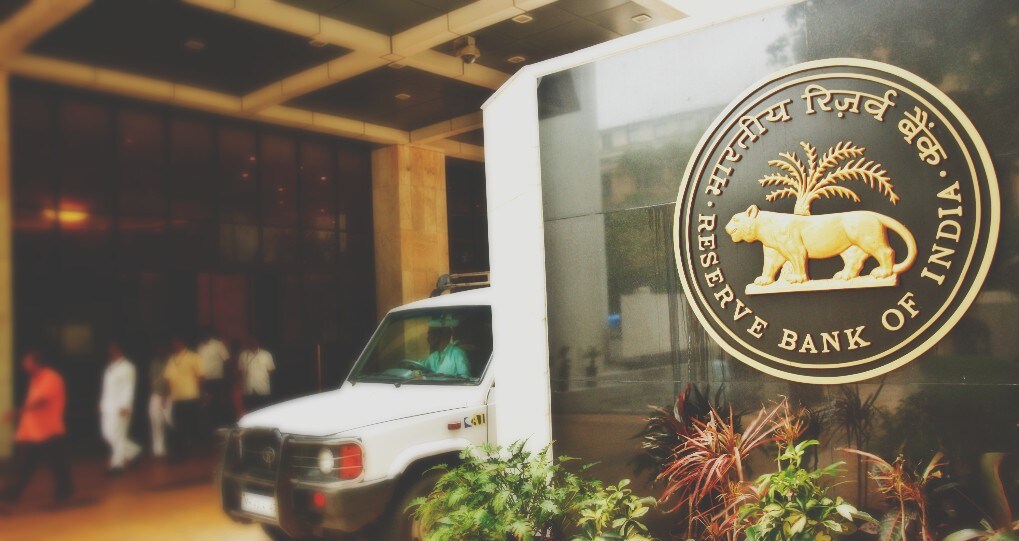
The Reserve Bank of India's latest restructuring scheme for companies facing stress because of the Covid-19 pandemic has found support among bankers, consultants and lawyers alike, who say it has adequate checks to prevent misuse for hiding bad loans. With the regulator having clarified that the restructuring plan can only apply to borrowers impacted by the pandemic and the national lockdown, bankers say chances of misuse are reduced greatly.
For an account to be eligible for debt restructuring under the new scheme, the borrower must not be in default for more than 30 days as of March 1, according to RBI guidelines. A restructured account will retain the standard asset classification, which is different from the June 2019 circular that said that accounts must be downgraded after debt recast.
Rajnish Kumar, chairman of India's largest lender State Bank of India; and Deepak Parekh, chairman at Housing Development Finance Corporation Ltd., the nation's largest mortgage lender, were among those who had urged the regulator to consider a one-time restructuring scheme rather than extending the moratorium on loan repayments beyond Aug. 31. Veteran banker and CII president Uday Kotak had also reiterated the demand.
A Narrow Window
The scheme announced by the RBI is close to what the Indian Banks' Association had sought in April, said Rajkiran Rai, managing director and chief executive officer at Union Bank of India. “It is necessary for Covid-affected companies to get asset classification benefit, since most of them are not regular defaulters and are probably facing temporary financial issues due to the pandemic.”
Cyril Shroff, managing partner, Cyril Amarchand Mangaldas, said by permitting restructuring of loan accounts which were standard on March 1, RBI has restricted the relief to those viable businesses stressed on account of Covid-19 and, therefore, obviated any moral hazard concerns.
Judging the amount of loans which will come up for restructuring under this scheme is difficult. One indicator will be loans that remained under moratorium. According to Rajiv Anand, executive director, Axis Bank, the main pool of accounts to consider will be those which opted for the first moratorium announced by the RBI in March and then continued to take benefit of the moratorium in June. “This would likely be the rule as far as accounts which may need restructuring is concerned. There might be others who might have not taken the moratorium and would see benefit in the restructuring scheme, but that would be the exception,” Anand said.
Not everyone agrees that such a cut-off was necessary though. According to Abizer Diwanji, partner and head-financial services at EY, the regulator could have done away with such a strict eligibility criteria. “There are many accounts which are NPAs but have been stuck in the pandemic without a resolution plan. This scheme could have benefited such accounts," he said. "Now they will continue to remain NPAs, without any clarity on how to resolve them.”
Another material change in the current restructuring scheme over previous schemes is that lenders can only extend the repayment period by two years.
According to Diwanji of EY, this would ensure that unlike the last round of restructuring, where an account was restructured over multiple years, lenders will now have a clear deadline. “This two-year period is also where the bankers are being told that they need to figure out another structure to refinance the debt, else they will have to make full provisions against the account, which seems fair,” Diwanji said.
Tighter Approvals & Disclosures
According to the RBI guidelines, a committee headed by former ICICI Bank CEO KV Kamath will suggest sectoral benchmarks to the regulator and the banking industry, which can be used to implement resolution plans.
This could prove to be a major positive for debt restructuring since it would ensure that only companies which meet the financial criteria end up with forbearance, said Diwanji. The Kamath committee will also validate resolution plans for companies with aggregate debt of Rs 1,500 crore and above. “This could prove to be a bottleneck if the committee does not have adequate number of people to look at plans across all sectors,” Diwanji said. Anand, too, felt that seeking an external committee approval for each account could stretch out the process.
Still, there are worries that the scheme may help banks hide the full impact of the Covid-19 disruption on their asset quality.
It could become an opportunity for public sector banks to restructure their stressed loans and not disclose the true asset quality impact of the pandemic for 18-24 months, Suresh Ganapathy, analyst, Macquarie Research, said in a report. “We had expected RBI to give restructuring window only for specific sectors, while RBI has extended it to almost all sectors except NBFCs.”
Macquarie Research also said the RBI allowing a one-time restructuring for retail loans, which includes unsecured loans, is a cause of worry. The guidelines issued by the regulator allow a lender to restructure loans advanced to individuals by extending the repayment period by up to two years and by capitalising interest and converting it into another credit facility.
Additional Provisions
The RBI has asked banks to set aside 10% additional provisions against the restructured accounts.
The banking industry doesn't this as too taxing. According to Anand of Axis Bank Ltd., private banks tend to always provide higher than the regulatory requirement to protect their book against any potential losses. Ganapathy of Macquarie said that the additional provisioning requirement of 10- 20% is not adequate.
Under the June 2019 circular, a bank has to provide 15% against an account classified as a non-performing asset after restructuring.
Experts also see penal provisions introduced by the RBI bringing down any delays in getting the resolution process going. According to the guidelines issued by the regulator, lenders must sign an inter-creditor agreement within 30 days of invoking the resolution process. In case a lender does not sign the pact within the stipulated timeline, it would be forced to maintain 20% provisions against the account.
Shroff of Cyril Amarchand Mangaldas sees this as the regulator incentivising a collective effort among lenders.

-
The Economic Imperative: Analysing The Material Driving Force Behind India-Canada Strategic Reset

This economic complementarity is further reinforced by deep institutional investment ties and talent mobility, which form the bedrock of the bilateral framework.
-
Medicine Pricing: Where Must Profit Stop?
India must confront excessive margins, hidden incentives and regulatory gaps that threaten the integrity of medicine.
-
Why Amazon And Flipkart Are Struggling To Beat Meesho In India's Smaller Cities
With 274 million users and lowest-cost logistics, Meesho is defending its value commerce crown against giants like Amazon and Flipkart.
-
High US Salaries, No Green Card Certainty: The Financial Calculation Facing Indian H-1B Families
The suspension of PERM processing at eight technology employers does not cancel existing H-1B visas. What it does is force a question many Indian families have been avoiding: is the US salary worth tying your career and family plans to one employer?
-
Swiggy vs Eternal: Food Delivery's Two Rivals Are No Longer In The Same Race
Eternal is building a private AI assistant, dark.ai. Swiggy is still working out how to make Instamart pay, with an operating loss of Rs 895 crore in the July-September quarter while Blinkit stayed profitable.
-
Where You Live Shapes How You Get To Work | The Reason Why
Two-wheelers are the most popular way to get to work in India, accounting for nearly 43% of workplace commutes.
-
Unhedged Position: Can India See An Indonesia-Style Time Correction?
The Nifty is trading below levels it first clocked in 2024. Is there, then, as I have suggested in the headline, potential that the current time correction drags on painfully for the next three-five, even ten years?
-
Navigating Friction And Energy Realities: An Analysis Of Marco Rubio's October Visit To India
Occurring at a critical juncture marked by stalled trade negotiations and escalating geopolitical pressures over global energy supplies, the visit offers a profound window into modern US-India relations.
-
India Exports Capital. Why Not Export Trusteeship?
The big question, then, is whether India can build an institution that global borrowers, investors, banks, and lawyers can trust, even without an Indian connection.
-
France's Economy & Politics Are In Crisis | The Reason Why
Let's look at how the French economy and politics evolved under Nicolas Sarkozy, Franois Hollande and Emmanuel Macron.










