RBI's '007' Rajan Faces Pro-Growth Boss in Modi
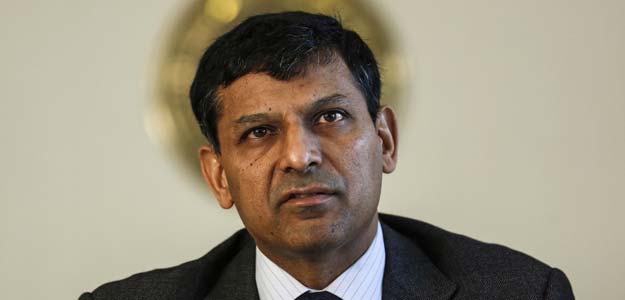
Hailed as a troubleshooting "James Bond" of central bankers amid India's currency crisis last year, Raghuram Rajan was given a licence to kill inflation with higher interest rates and drive a programme of monetary policy reforms.
Now, the governor of the Reserve Bank of India (RBI) may need all the suave charm of the fictional British spy to sell that same hard-nosed agenda to a powerful new prime minister who is determined to revive economic growth and create jobs.
Mr Rajan, who calls high inflation a "dangerous disease", won plaudits after he took office in September for arresting a rupee free-fall and helping restore investor confidence that had all but evaporated under a lame-duck government led by the Congress party.
This month's decisive election win by the pro-growth Bharatiya Janata Party (BJP) shifts the power dynamics. Now, investors and voters are looking to Prime Minister Narendra Modi to stir India's economy from its prolonged torpor, putting Mr Rajan and Mr Modi on a collision course if inflation stays high.
In his first months on the job, Mr Rajan overcame push-back from within the apex bank as well as the Finance Ministry to shift the benchmark inflation measure from wholesale to consumer prices.
The consumer price index (CPI) is the global standard, but in India the higher level of CPI meant Mr Rajan was likely to keep rates tighter for longer.
High interest rates make credit more expensive and create a difficult environment to re-ignite growth.
But if, as many expect under Mr Modi, the investment climate improves and government expenses are managed better, Mr Rajan might get some relief on the inflation front.
Investors expect Mr Modi to bring down inflation by cutting subsidies, improving food distribution and promoting investment in infrastructure.
"The Modi-Rajan equation reminds us of that between Volcker and Reagan, where it was a combination of the central banker's inflation-fighting cred and the latter's charismatic image," said Philippe Jauer, chief investment officer at fund manager Amundi Singapore.
Paul Volcker was head of the Federal Reserve when Ronald Reagan was president in the 1980s.
For now, the RBI is expected to leave interest rates on hold at its policy review on Tuesday, but investors will be scouring Mr Rajan's accompanying statement for clues to whether the new government's strong electoral mandate has changed his rate outlook.
Investors expect the next policy move will be a rate cut, but perhaps not before early next year.
Ties at the top
A professor at the University of Chicago and former chief economist at the International Monetary Fund, Mr Rajan was brought back to India in 2012 to be chief adviser to then-finance minister P Chidambaram of the Congress party, which meant the two already had a working relationship when Mr Rajan took over at the RBI.
After stunning the markets with a series of bold measures on his first day, he was dubbed variously by the Indian media as "The Guv" and "a rock star banker".
The "Name's Rajan, game's Bond", a daily gushed on its front page, with a photo-edited picture of Mr Rajan in an action pose and brandishing James Bond's trademark Beretta pistol, albeit one made of rupee notes.
Mr Rajan, 51, has proven to be a pragmatic - if not swashbuckling - operator at the RBI, pushing to streamline a staid institution, deepen markets, and reform policymaking to control the country's grinding inflation.
Mr Rajan and the new Finance Minister, Arun Jaitley, 62, a prominent corporate lawyer, held a meeting in New Delhi on Tuesday, but have not previously worked together.
Mr Jaitley is not seen to be as hawkish as Mr Rajan on inflation - a dynamic that is typical between central bankers and governments around the world and often leads to tension.
One senior Finance Ministry official who worked with Mr Rajan and was part of the team that made a presentation this week to Mr Jaitley said Mr Rajan's initiative to set an inflation target based on CPI could create conflict if, as many expect, CPI rises in coming months.
"Rajan is ... making things difficult for the government by publicly speaking about RBI's stance on the CPI inflation. He would not find it easy to backtrack even if he wants to adjust with the new government," the official said.
The shift would give the central bank a clear price-stability mandate and make fighting inflation its chief objective. Previously, the RBI was charged with promoting growth and financial stability as well as controlling inflation.
Far from done
Getting the new government's support for inflation targeting is far from a done deal. Mr Rajan has done what he can to set an informal target by establishing a "glide path" to get CPI inflation down to an annual 6 per cent by January 2016 and 4 per cent, plus or minus 2 percentage points, a year later.
CPI inflation was at 8.59 per cent in April year-on-year after running near or above 10 per cent for almost two years through the end of 2013.
"Inflation targeting will require trying to convince the government, and I think it won't necessarily be a bed of roses. But I think it is a right step," said Rajeev Malik, senior economist at CLSA in Singapore.
Inflation targeting and setting up a monetary policy committee - as Mr Rajan proposes - both require legislative changes. Agreeing on the make-up of a committee, including whether the government would appoint members and who they might be, could prove contentious.
Mr Rajan recently softened his tone, noting that inflation targets are for the medium term and are flexible, and that the proposal does not aim to turn the RBI into "inflation nutters".
However, he was uncharacteristically blunt on the subject of RBI independence in other recent remarks.
"I am happy to talk to the government, I am happy to listen to the government, but ultimately the interest rate that is set is set by me," he said at an event in St Gallen, Switzerland.
"The government can fire me, but the government does not set monetary policy."
On Tuesday, after his first meeting with Mr Jaitley as finance minister, he said fighting inflation would continue to be a priority, although the RBI will also aim to strike a balance between spurring economic growth and containing prices.
"RBI has always maintained the balance between growth and inflation," he told reporters.
Copyright @ Thomson Reuters 2014

-
Signature Play: The Classic Cocktail Is Dead. Or Is It?

Classic cocktails are disappearing from India's cocktail menus. But they're still being ordered, taught to bartenders and borrowed from. So, who's really having the last drink?
-
A New Samvat Wishlist: Inclusive Prosperity And Human Development
India has strengthened its economic foundations through infrastructure, digital access and enterprise. Its next growth chapter must deepen productivity, create better livelihoods and widen participation in prosperity.
-
Love, Sex Aur Dhokha: The Audacious Plot To Spy On Jensen Huang
A Taipei dinner, a Singapore chip buyer and a suspected Chinese asset: inside the alleged spy operation that got close to NVIDIA's Jensen Huang.
-
Ten Things I Learnt This Samvat
Patience can be a trap. Cheap stocks can stay cheap. Leverage can wipe you out. What did Samvat 2082 teach us? Niraj Shah writes on 10 lessons from the year gone by.
-
Talking Points This Week: Tech Nerves, FII Buying, And A Faraway Banking Shock
The global markets are not shining this Diwali. The exception in the large markets is, India.
-
Midterm Rally Lasted A Day. The Hard Reality Of A Divided US May Last Two Years | Opinion
Between a contested AI boom, a debt ceiling that arrives in 2027 and a president with every incentive to act alone, the next two years may prove more volatile than the first day's rally suggests.
-
Blue Wave Will Derail the AI Trade but Won't Dismantle the AI Era | Unhedged Position
The Democrats' sweep of the US Congress will see politics collide with economic forces both over the long and short term.
-
It's Time To Take The GST Council's Bet On Trust Global
Payment records can prove India's services exports, and clear, proportionate rules can bring foreign digital sellers into the tax net.
-
Opinion | India at 38: From Innovation Overperformer to Innovation Powerhouse
India now has 453 VC-backed deep science startups, 18 of them late-stage, after 117 percent growth since 2020. Laurus Labs, at USD 9.3 billion, is the most valuable deep science company in any middle-income economy outside China.









