Fitch Hints At Rating Downgrade If Government Scuttles RBI Mandate
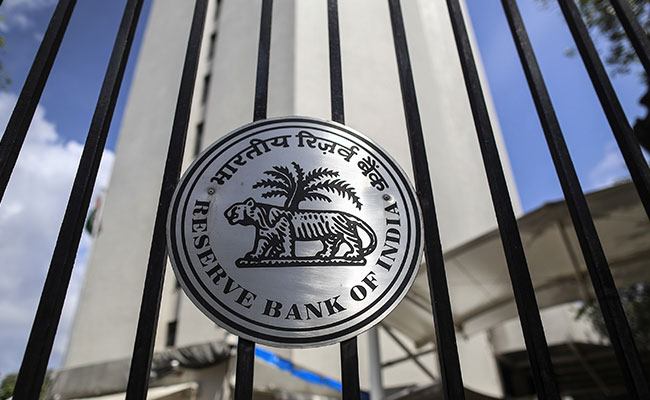
Mumbai: Reflecting foreign investor concern at the circumstances in which previous RBI Governor Urjit Patel quit office, Fitch Ratings on Wednesday said the resignation highlights the risks to the central bank's policy priorities and that its sovereign rating assessment could change if government influence pushes the RBI away from its mandate.
In a report following Patel's abrupt resignation on Monday, the US rating multinational warned that increased government influence on the Reserve Bank of India (RBI) could undermine the central bank's efforts to improve banking sector health by addressing the non-performing assets (NPA or bad loans) problems.
Citing personal reasons, Patel resigned on December 10, nine months before his three-year term was scheduled to expire. The government on Tuesday appointed former Economic Affairs Secretary Shaktikanta Das as the new RBI Governor.
"The resignation of the RBI Governor follows a period of government pressure on the central bank to spur economic growth, and highlights risks to the RBI's policy priorities," Fitch Ratings said in a statement.
According to the American agency, the RBI's efforts to address the bad loan problems have the potential to improve the banking sector's health over the long term and its commitment to inflation targeting has supported a more stable macroeconomic environment in recent years.
"Increased government influence on the central bank could undermine this progress," Fitch said.
"Patel's decision comes after months of escalating government pressure on the RBI to ease some of the strains created by its clean-up of the banking sector."
"Increased bad loan recognition has led to large credit costs -- particularly for state banks -- and weaker capitalisation in recent years," the report said.
Capital constraints have held back lending, while 11 state-run banks have been brought under the RBI's Prompt Corrective Action (PCA) framework which allows the central bank to directly restrict their lending.
Fitch said that problems in the non-bank financial sector following the recent payment default by Infrastructure Leasing & Financial Services (IL&FS) have further reduced credit availability.
"The government has unsuccessfully pushed the RBI to relax the PCA thresholds to allow some banks burdened by accumulated bad loans to step up lending. Calls to dilute provisions in a new regulatory NPL framework that has accelerated bad loan recognition this year and to provide emergency liquidity to non-bank financial institutions (NBFIs) have also been dismissed," Fitch said.
It said most public sector banks are in a poor position to step up lending, with their common equity Tier-1 ratios well below the 7.375 per cent that will apply from April 2019 under the Basel III framework. Some banks are also likely to continue reporting losses, further adding to capitalisation challenges.
"In terms of monetary policy, the establishment of a Monetary Policy Committee (MPC) in October 2016 and recent introduction of inflation targeting has underpinned our view that the RBI's macroeconomic policy framework is credible and effective. However, that assessment could change if government influence pushes the RBI away from its mandate," Fitch said.
In November, Fitch had affirmed the "BBB-" lowest investment grade sovereign rating on India, with a stable outlook.
Central to the liquidity issue, which has provoked the recent tiff, was the government's demand that the RBI hand over its surplus reserves by amending its "economic capital framework". Analysts noted that the government's demand came in the face of a huge fiscal deficit and the need to boost the economy in an election year.
According to Fitch, the general elections due by May 2019 will create a political incentive for the government to push for more supportive RBI policies.
Earlier this month, the rating agency lowered its growth forecast for the current fiscal to 7.2 per cent from 7.8 per cent, citing "weak data, higher financing cost and reduced credit availability".

-
We May Need Another Tukaram Mundhe To Fight Air Pollution | The Reason Why

Developers may install basic measures such as sprinklers and green nets, resume work, and continue violating rules when this equipment stops working.
-
Extracting Value From Battery Scrap Could Be Challenging For India | The Reason Why
A discarded lithium-ion battery still contains valuable materials such as lithium, nickel and cobalt. These can be recovered and reused. When such batteries are crushed and shredded, they produce a dark powder called black mass.
-
One El Nino, India Can Handle. Two Could Break The Granary
India's grain stocks can absorb one bad year, but a second El Nino could drain the buffer in two to three years, economists say.
-
India's Troika Of Good Luck | Joining The Dots
As Jensen Huang's exit drags Nvidia down, a cooling AI trade and resilient earnings have revived investor interest in India. A likely RBI rate hike looms.
-
Talking Points This Week: Leadership Shock At Nvidia, Earnings Strength, And The Fog Over Hormuz
The Anthropic IPO pricing and first trading day, Nvidia's upcoming earnings, and any fresh signals from Iran will set the tone for the following week.
-
Signature Play: The Classic Cocktail Is Dead. Or Is It?
Classic cocktails are disappearing from India's cocktail menus. But they're still being ordered, taught to bartenders and borrowed from. So, who's really having the last drink?
-
A New Samvat Wishlist: Inclusive Prosperity And Human Development
India has strengthened its economic foundations through infrastructure, digital access and enterprise. Its next growth chapter must deepen productivity, create better livelihoods and widen participation in prosperity.
-
Love, Sex Aur Dhokha: The Audacious Plot To Spy On Jensen Huang
A Taipei dinner, a Singapore chip buyer and a suspected Chinese asset: inside the alleged spy operation that got close to NVIDIA's Jensen Huang.
-
Ten Things I Learnt This Samvat
Patience can be a trap. Cheap stocks can stay cheap. Leverage can wipe you out. What did Samvat 2082 teach us? Niraj Shah writes on 10 lessons from the year gone by.
-
Talking Points This Week: Tech Nerves, FII Buying, And A Faraway Banking Shock
The global markets are not shining this Diwali. The exception in the large markets is, India.









