RBI to Cut Down 'Pre-emptions' to Spur Efficiency
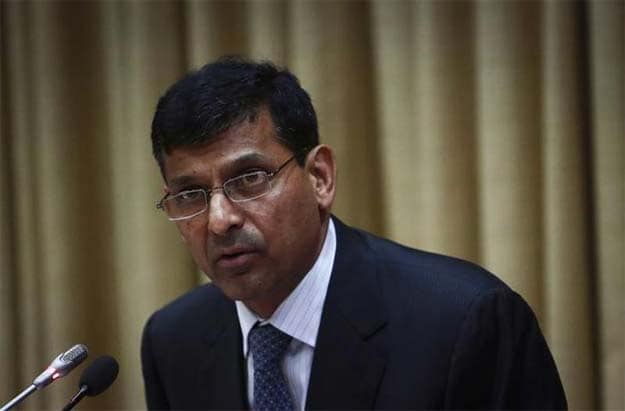
A day after he lowered SLR (Statutory Liquidity Ratio), Reserve Bank Governor Dr Raghuram Rajan today said RBI is all for reducing "pre-emptions" over a longer horizon for more efficiency in the financial system.
"The broader, longer term programme of five years is that we should reduce the amount of pre-emptions we have in the system including SLR and make a more effective priority sector lending (PSL) process," Dr Rajan said during the customary post-policy call with analysts.
Dr Rajan drew attention towards the Nachiket Mor committee on PSL and said that the RBI is trying to make the entire process more effective.
"These are necessary changes in the system and should not be seen as tied to the monetary cycles," he added.
Various stakeholders in the system, including the banks, have been expressing reservations about the pre-emptions like the SLR and CRR. In the present scenario, banks have to set invest 22 per cent of their deposits in government securities and 4 per cent gets parked as cash reserve ratio without any interest payment.
Banks carry out lending on whatever remains, and 40 per cent of the lending as well is mandated to be done to weaker sections of the society under the PSL.
Dr Rajan conceded that yesterday's 0.50 per cent cut in SLR is not going to have any real impact in the immediate future and added that banks will continue carrying excess SLR for the "foreseeable future".
The cut in the SLR holding requirement, which has the potential to release an additional Rs 40,000 crore into the system, offers banks the flexibility to manage their finances better when the credit demand will go up, he said.
"Going forward, we would investigate the conditions in the credit market as well as the bond market and make appropriate decisions at that point," Dr Rajan said, asserting that banks will continue to be present in the government securities market.
When asked about the limit for foreign institutional investors' investments in government securities, Dr Rajan said the RBI is happy with their renewed interest and also acknowledged their preference for longer maturity debt of over three years. .
After the RBI cut the hold-to-maturity (HTM) limits for banks yesterday to help tide over any liquidity troubles, Dr Rajan today said there is no predetermined path with which the central bank is working.
On the liquidity management front, he acknowledged that there has been some volatility in the recent past, saying that RBI will soon come up with some measures to reduce it.
RBI Deputy Governor H R Khan said the government has some reservations about disclosing its balances with the central bank to the public.
The Reserve Bank, he added, is in discussions with the government to get to know the balances in real time.

-
We May Need Another Tukaram Mundhe To Fight Air Pollution | The Reason Why

Developers may install basic measures such as sprinklers and green nets, resume work, and continue violating rules when this equipment stops working.
-
Extracting Value From Battery Scrap Could Be Challenging For India | The Reason Why
A discarded lithium-ion battery still contains valuable materials such as lithium, nickel and cobalt. These can be recovered and reused. When such batteries are crushed and shredded, they produce a dark powder called black mass.
-
One El Nino, India Can Handle. Two Could Break The Granary
India's grain stocks can absorb one bad year, but a second El Nino could drain the buffer in two to three years, economists say.
-
India's Troika Of Good Luck | Joining The Dots
As Jensen Huang's exit drags Nvidia down, a cooling AI trade and resilient earnings have revived investor interest in India. A likely RBI rate hike looms.
-
Talking Points This Week: Leadership Shock At Nvidia, Earnings Strength, And The Fog Over Hormuz
The Anthropic IPO pricing and first trading day, Nvidia's upcoming earnings, and any fresh signals from Iran will set the tone for the following week.
-
Signature Play: The Classic Cocktail Is Dead. Or Is It?
Classic cocktails are disappearing from India's cocktail menus. But they're still being ordered, taught to bartenders and borrowed from. So, who's really having the last drink?
-
A New Samvat Wishlist: Inclusive Prosperity And Human Development
India has strengthened its economic foundations through infrastructure, digital access and enterprise. Its next growth chapter must deepen productivity, create better livelihoods and widen participation in prosperity.
-
Love, Sex Aur Dhokha: The Audacious Plot To Spy On Jensen Huang
A Taipei dinner, a Singapore chip buyer and a suspected Chinese asset: inside the alleged spy operation that got close to NVIDIA's Jensen Huang.
-
Ten Things I Learnt This Samvat
Patience can be a trap. Cheap stocks can stay cheap. Leverage can wipe you out. What did Samvat 2082 teach us? Niraj Shah writes on 10 lessons from the year gone by.
-
Talking Points This Week: Tech Nerves, FII Buying, And A Faraway Banking Shock
The global markets are not shining this Diwali. The exception in the large markets is, India.









