RBI's New Measures To Support Financial Markets And Banks
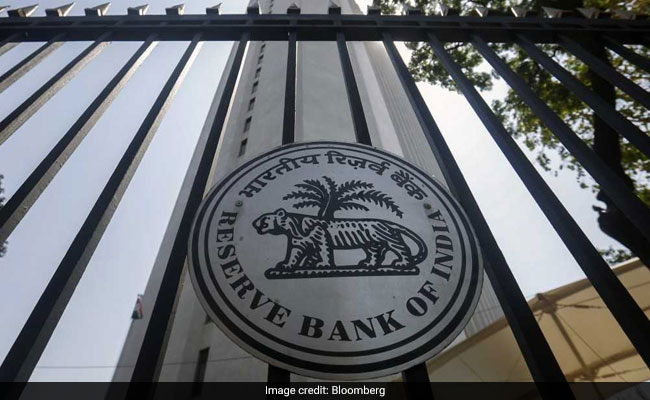
Reserve Bank of India Governor Shaktikanta Das laid the ground for more interest rate cuts as he took a number of steps to boost liquidity and support lenders amid a nationwide lockdown that's brought the economy to a virtual standstill.
Mr Das kept the benchmark repurchase rate unchanged at 4.4 per cent on Friday, but signaled that inflation will ease to below the central bank's mid-term target of 4 per cent, providing policy room to address risks. That space “needs to be used effectively and in time,” he said in a livestreamed address.
Mr Das has previously pledged to do “whatever it takes” to support the economy, which is seen heading for its first full-year contraction in four decades after a nationwide lockdown for almost all of the nation's 1.3 billion people was extended to 40 days. The government's stimulus measures have so far been limited, with growing calls from businesses for authorities to do more to support them as job losses mount.
“More rate cuts look to be on the cards, given the RBI's view that inflation is set to head below their target,” said Khoon Goh, head of Asia research at Australia & New Zealand Banking Group in Singapore. “Ultimately though, monetary policy and liquidity provisions can only do so much in the current crisis.”
Mr Das announced a series of measures to support financial markets and banks:
- Reverse repurchase rate lowered by 25 basis points to 3.75 per cent -- to discourage banks from parking cash with the RBI and instead lend to the economy
- Injection of Rs 50,000 crore ($6.5 billion) into the corporate bond market in a new round of targeted long-term repo operations. At least half of the funds made available to banks through the facility should go to lower rate firms, including shadow lenders and micro-financial institutions
- Bad-loan rules for banks eased and lenders told to freeze dividend payments
The moves weren't as strong as some market participants had expected, with bonds giving up some of their gains after Mr Das's comments.
“I don't see anything far aggressive in terms of bond purchases,” said Prakash Sakpal, an economist at ING Groep NV in Singapore. “Rs 50,000 crore together with Rs 1 lakh crore announced on March 27 works up to less than 1 per cent of GDP. So, any relief to market will likely be transitory.”
The central bank last month lowered interest rates in an emergency meeting and announced $50 billion of liquidity injections.
What Bloomberg's Economists Say
The central bank once again maintained silence on the need for it to underwrite government debt to create more fiscal room for the central and state governments, whose deficits are likely to blow out due the impact of the pandemic.
Abhishek Gupta, India economist
Inflation came in at 5.9 per cent in March and is expected to ease as the lockdown puts a lid on all non-essential consumption.
“Inflation could recede even further, barring supply disruption shocks and may even settle well below the target of 4 per cent by the second half of 2020-21,” Mr Das said Friday. “Such an outlook would make policy space available to address the intensification of risks to growth and financial stability brought on by Covid-19.”

-
Leadership As Mission: Why The Age Of AI Demands More Human Leadership

Debjani Ghosh examines how AI is changing leadership, arguing that its success must be measured by its impact on people and the accountability of those guiding its use.
-
We May Need Another Tukaram Mundhe To Fight Air Pollution | The Reason Why
Developers may install basic measures such as sprinklers and green nets, resume work, and continue violating rules when this equipment stops working.
-
Extracting Value From Battery Scrap Could Be Challenging For India | The Reason Why
A discarded lithium-ion battery still contains valuable materials such as lithium, nickel and cobalt. These can be recovered and reused. When such batteries are crushed and shredded, they produce a dark powder called black mass.
-
One El Nino, India Can Handle. Two Could Break The Granary
India's grain stocks can absorb one bad year, but a second El Nino could drain the buffer in two to three years, economists say.
-
India's Troika Of Good Luck | Joining The Dots
As Jensen Huang's exit drags Nvidia down, a cooling AI trade and resilient earnings have revived investor interest in India. A likely RBI rate hike looms.
-
Talking Points This Week: Leadership Shock At Nvidia, Earnings Strength, And The Fog Over Hormuz
The Anthropic IPO pricing and first trading day, Nvidia's upcoming earnings, and any fresh signals from Iran will set the tone for the following week.
-
Signature Play: The Classic Cocktail Is Dead. Or Is It?
Classic cocktails are disappearing from India's cocktail menus. But they're still being ordered, taught to bartenders and borrowed from. So, who's really having the last drink?
-
A New Samvat Wishlist: Inclusive Prosperity And Human Development
India has strengthened its economic foundations through infrastructure, digital access and enterprise. Its next growth chapter must deepen productivity, create better livelihoods and widen participation in prosperity.
-
Love, Sex Aur Dhokha: The Audacious Plot To Spy On Jensen Huang
A Taipei dinner, a Singapore chip buyer and a suspected Chinese asset: inside the alleged spy operation that got close to NVIDIA's Jensen Huang.
-
Ten Things I Learnt This Samvat
Patience can be a trap. Cheap stocks can stay cheap. Leverage can wipe you out. What did Samvat 2082 teach us? Niraj Shah writes on 10 lessons from the year gone by.









