RBI pressures banks to trade bond futures: report
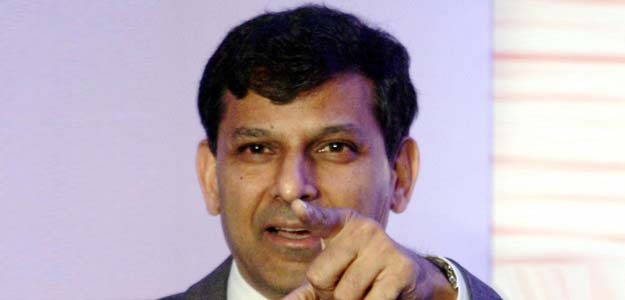
Determined to turn its third attempt at launching bond futures into a success, the Reserve Bank of India (RBI) is pressuring state-owned banks to trade the derivatives that provide hedges against the country's volatile interest rates, banking sources told Reuters.
Interest rate futures allow market participants to bet on the direction of bond yields.
Developing such a market is a key part of RBI Governor Raghuram Rajan's push to deepen markets, by providing hedging tools commonly found in more developed economies.
India has long struggled to introduce these types of derivatives because of what traders say has been poor design. That has contributed to the migration of rupee-based derivatives trading to offshore financial centres such as Singapore.
Eager for a successful launch, RBI officials are making frequent phone calls to lenders encouraging them to trade, most overtly during a meeting held before the launch, according to several senior bankers who are in touch with the central bank.
Banks were told Rajan himself would be monitoring which banks were placing orders, scrutinising information in management information systems (MIS) or trading records, the sources said.
"RBI actually called people and threatened people saying that these MIS will go to governor, and the volumes and participation," said a chief dealer with a state-owned bank.
"We have to close our eyes and ears and mouths and use this product," he added.
Bond futures started trading on the Multi Commodity Exchange of India on January 20, with the bigger National Stock Exchange launching trading a day later.
A spokeswoman said RBI was not immediately available to comment.
The pressure has so far failed to spark a rise in traded futures volumes.
Yet traders said the futures are well designed since they allow trades to be settled in cash and are pegged to benchmark 10-year yields, the two requirements traders had demanded.
National Stock Exchange data shows bond futures volumes over the previous five sessions averaged Rs 337 crore, compared with Rs 24,280 crore in government bonds and Rs 1.1 lakh crore in equity futures.
Traders said activity was slow owing to a broad decline in volumes across debt markets due to uncertainty sparked by a selloff in emerging markets and general elections due by May.
Traders also said not all banks have set up compliance systems or cleared internal approvals yet to trade bond futures.
FAILURE TO LAUNCH
RBI officials have continued to call state-run banks, asking why they are not placing orders, according to traders who have received the phone calls.
Describing one such call, a trader at a state-owned lender quoted a central bank official as saying: "It's an acceptable product, why are you not trading?"
The trader said the bank had to commit to trading in the futures market, despite being uncomfortable with the lack of depth and liquidity.
"What else can we say?" the trader told Reuters. "Who is going to say no to RBI?"
The pressure was more direct before the launch of the futures when, during a meeting of senior traders at state-owned lenders with RBI officials, banks were told that Rajan would be monitoring the trades.
According to one banker at the meeting, he was told by a central bank official that bond futures were "a pet project" for Rajan and "close to his heart."
The RBI is known for its behind-the-scenes intervention in markets, typically when defending the rupee, an example being last July when it phoned trading desks with explicit messages to cut speculative positions in the currency.
Since taking the helm of the central bank in early September, Rajan has been keen to put an end to India's poor track record at introducing new market products: its last major success was the 2008 launch of currency futures.
Failed attempts include two previous attempts at launching bond futures in 2003 and 2009, which traders say were poorly designed because of a cumbersome requirement to actually deliver government debt when settling the futures contracts.
The lack of sophisticated domestic products, along with restrictions on domestic markets and higher taxes, are the reason trading of rupee derivatives has shifted to financial centres such as London.
In equities, 65.5 per cent of total outstanding futures positions on India's NSE index are based in Singapore.
Still, analysts expect trading in bond futures will pick up eventually anyway in a country where supply-side pressures - including a poor network of roads - keep food prices high, making inflation and interest rates volatile.
Under Rajan, the RBI has stunned investors by raising the country's key lending rate, the repo rate, by three-quarters of a percentage point in five months.
Bond futures are thus expected to provide a critical hedging tool, alongside a more developed market for betting on interest rates via swaps, while also providing arbitrage opportunities for banks.
"The current version of interest rate futures is far better than the previous two and provides for a good hedging tool," said Kush Sonigara, an analyst at financial services firm MyCapital Solutions.
"Strategic investors and public sector units for now are cautious. However, as time goes by, active participation from them is likely."
Copyright Thomson Reuters 2014

-
Gold Is Rs 22,000 Cheaper Than A Month Ago. Should You Buy Amid The Wedding Season?

Gold's potential slide to $3,500 could save around Rs 4,700 per 10 grams, but a soft inflation print could just as easily push prices back up. One way to split the risk is to buy in parts, some now and the rest after the Fed's Dec. 9 decision.
-
AI Agents Are Gaining Power. Who Governs Them?
Artificial intelligence agents promise to transform productivity by moving machines from assisting decisions to executing them. But as organisations delegate greater authority to these AI-agents, they must first establish who controls that authority and who remains accountable when things go wrong.
-
Why Swapping Your Old Gold Can Trigger A Rs 5 Lakh Tax Bill, And How You Can Avoid It Legally
Swapping old gold for new is taxed as a sale and a fresh purchase. Getting your own gold remade can cut most of that bill, though it has its own costs.
-
The AI Trade is Done. The Real Opportunity for Investors Starts in 2027 | Unhedged Position
As pureplay AI stocks plunge and circular, capex-led financing unwinds, 2027 is set to be a year of reckoning for AI companies. Yet the bust clears the way for a better opportunity for investors in 2027 -- shifting the spotlight from AI builders to the companies using AI.
-
Leadership As Mission: Why The Age Of AI Demands More Human Leadership
Debjani Ghosh examines how AI is changing leadership, arguing that its success must be measured by its impact on people and the accountability of those guiding its use.
-
We May Need Another Tukaram Mundhe To Fight Air Pollution | The Reason Why
Developers may install basic measures such as sprinklers and green nets, resume work, and continue violating rules when this equipment stops working.
-
Extracting Value From Battery Scrap Could Be Challenging For India | The Reason Why
A discarded lithium-ion battery still contains valuable materials such as lithium, nickel and cobalt. These can be recovered and reused. When such batteries are crushed and shredded, they produce a dark powder called black mass.
-
One El Nino, India Can Handle. Two Could Break The Granary
India's grain stocks can absorb one bad year, but a second El Nino could drain the buffer in two to three years, economists say.
-
India's Troika Of Good Luck | Joining The Dots
As Jensen Huang's exit drags Nvidia down, a cooling AI trade and resilient earnings have revived investor interest in India. A likely RBI rate hike looms.
-
Talking Points This Week: Leadership Shock At Nvidia, Earnings Strength, And The Fog Over Hormuz
The Anthropic IPO pricing and first trading day, Nvidia's upcoming earnings, and any fresh signals from Iran will set the tone for the following week.









