RBI Monetary Policy: MPC Maintains Status Quo On Rates
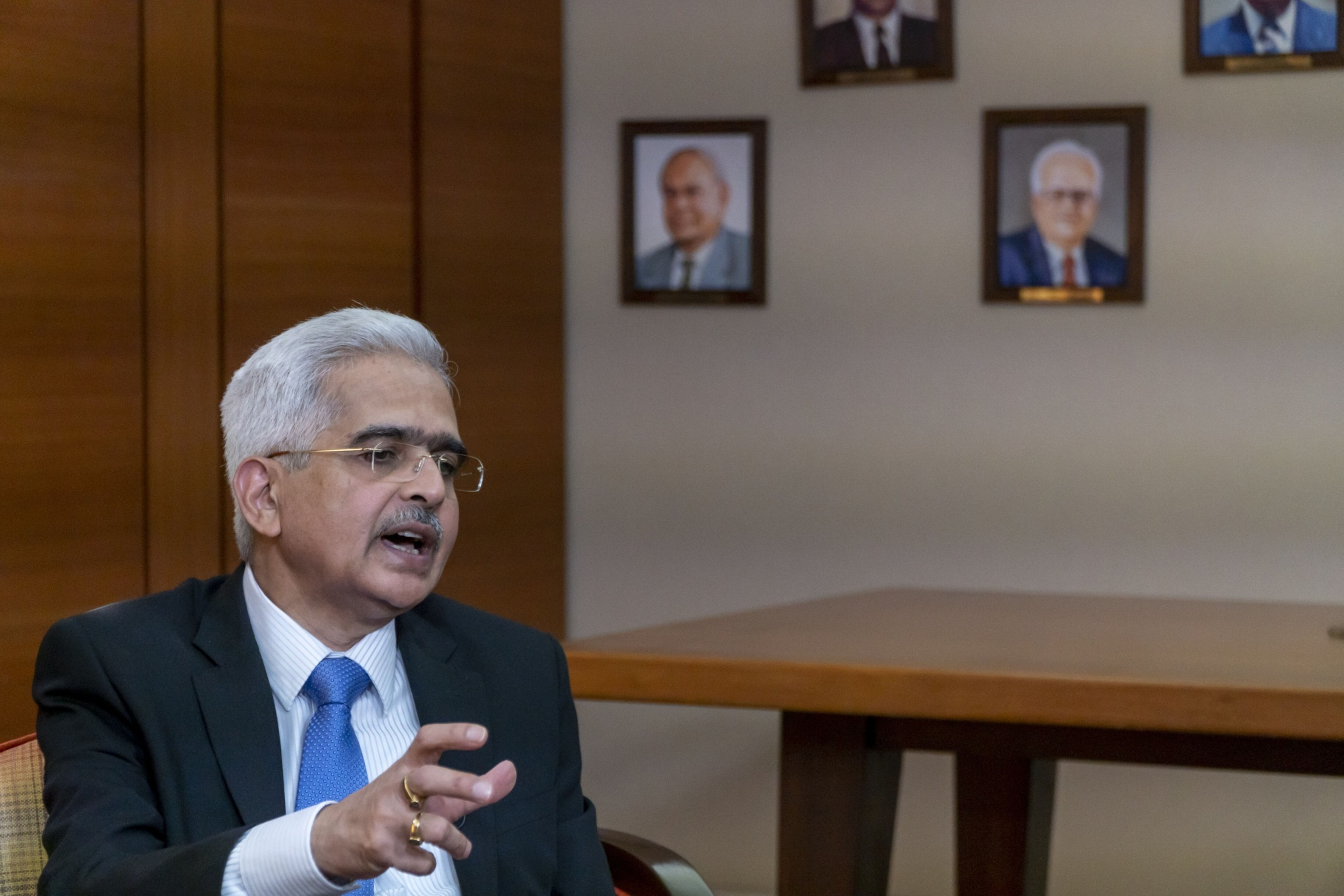
India's six-member Monetary Policy Committee kept interest rates unchanged at its second meet of the financial year, while reiterating its commitment to accommodative monetary policy as long as necessary to revive and sustain growth on a durable basis.
The central bank also extended its government bond purchase programme G-SAP into the second quarter. The RBI will buy Rs 1.2 lakh crore in bonds in Q2 FY22 after buying Rs 1 lakh crore in Q1. An auction for the remaining Rs 40,000 crore, as part of the planned purchases for Q1, will be held this month, with Rs 10,000 crore reserved for state government bonds.
Following the review, the committee voted unanimously to keep the repo rate unchanged at 4% for the sixth straight meet since May. The central bank, which controls the reverse repo rate separately, decided to keep it unchanged at 3.35%. The vote was unanimous.
30 of the 31 economists polled by Bloomberg expected the central bank to maintain a status quo on rates.
The MPC notes that the second wave of COVID-19 has altered the near-term outlook, necessitating urgent policy interventions, active monitoring and further timely measures to prevent emergence of supply chain bottlenecks and build-up of retail margins. At this juncture, policy support from all sides – fiscal, monetary and sectoral – is required to nurture recovery and expedite return to normalcy.MPC Resolution
Growth Outlook
The MPC revised its growth outlook for FY22 to 9.5% compared to a previous forecast of 10.5% in response to the second wave of Covid-19 infections.
Rural demand remains strong and the expected normal monsoon bodes well for sustaining its buoyancy, going forward.
The increased spread of COVID-19 infections in rural areas, however, poses downside risks.
Urban demand has been dented by the second wave, but adoption of new COVID-compatible occupational models by businesses may cushion the hit to economic activity.
Highly accommodative domestic monetary and financial conditions and a ramp up in vaccination process should help to normalise economic activity quickly.
Taking these factors into consideration, real GDP growth is now projected at 9.5% in FY22, consisting of 18.5% in Q1, 7.9% in Q2, 7.2% in Q3, and 6.6% in Q4.MPC Resolution
This compares to a previous forecast of 26.2% in Q1, 8.3% in Q2, 5.4% in Q3, and 6.2% in Q4.
Inflation Outlook
Headline inflation eased to 4.29% in April 2021, closer to the MPC's 4% target. Going forward, the inflation trajectory is likely to be shaped by uncertainties impinging on the upside and the downside.
The rising trajectory of international commodity prices, especially of crude, together with logistics costs, pose upside risks to the inflation outlook.
Excise duties, cess and taxes imposed by the centre and states need to be adjusted in a coordinated manner to contain input cost pressures emanating from petrol and diesel prices.
A normal south-west monsoon and recent supply side interventions are expected to ease cereals and pulses inflation.
With declining infections, restrictions and localised lockdowns across states could ease gradually and mitigate disruptions to supply chains, reducing cost pressures. Weak demand conditions may also temper the pass-through to core inflation.
Taking into consideration all these factors, CPI inflation is projected at 5.1% during FY22: 5.2% in Q1, 5.4% in Q2, 4.7% in Q3, and 5.3% in Q4, with risks broadly balanced.MPC Resolution
Other Measures
The RBI announced a series of other steps to provide relief to businesses:
A special liquidity facility of Rs 15,000 crore for contact intensive sectors. Banks who lend using this window can park an equivalent amount of liquidity at the RBI's reverse repo window at 40 basis points above the prevailing rate of 3.35%.
A special liquidity facility for will be opened for SIDBI as well for on-lending and refinancing.
The coverage of one-time restructuring scheme will be tweaked to increase the maximum exposure of MSMEs seeking debt recast to Rs 50 crore.
Regional rural banks have now been permitted to issue certificates of deposit.
Economist Reactions
“Monetary policy hand-eye coordination is getting increasingly complicated, as the second wave is impacting growth comes at a time of rising inflationary pressures”, said Aurodeep Nandi, India economist at Nomura. The RBI's policy actions today were largely on expected lines while relying on G-SAP as a tool to deliver further accommodation and to prevent any premature tightening of financial conditions, he said.
While the MPC expectedly stayed on hold, the bigger move was with regards to yield management as the RBI stressed on smooth liquidity management and orderly G-sec borrowings, with a more vocal and defined G-SAP, said Madhavi Arora, lead economist at Emkay Global Financial Services. This would further ensure lower sovereign risk premia ahead amid elevated borrowing calendar this year. “Overall, we reckon even as yields may inch up gradually and orderly, the RBI will continue to strive fixing skewed yield and maintain its preference for curve flattening”, said Arora, who estimates net OMO and G-SAP purchases to the tune of Rs 4.5-5 lakh crore in FY22.

-
One El Nino, India Can Handle. Two Could Break The Granary

India's grain stocks can absorb one bad year, but a second El Nino could drain the buffer in two to three years, economists say.
-
India's Troika Of Good Luck | Joining The Dots
As Jensen Huang's exit drags Nvidia down, a cooling AI trade and resilient earnings have revived investor interest in India. A likely RBI rate hike looms.
-
Talking Points This Week: Leadership Shock At Nvidia, Earnings Strength, And The Fog Over Hormuz
The Anthropic IPO pricing and first trading day, Nvidia's upcoming earnings, and any fresh signals from Iran will set the tone for the following week.
-
Signature Play: The Classic Cocktail Is Dead. Or Is It?
Classic cocktails are disappearing from India's cocktail menus. But they're still being ordered, taught to bartenders and borrowed from. So, who's really having the last drink?
-
A New Samvat Wishlist: Inclusive Prosperity And Human Development
India has strengthened its economic foundations through infrastructure, digital access and enterprise. Its next growth chapter must deepen productivity, create better livelihoods and widen participation in prosperity.
-
Love, Sex Aur Dhokha: The Audacious Plot To Spy On Jensen Huang
A Taipei dinner, a Singapore chip buyer and a suspected Chinese asset: inside the alleged spy operation that got close to NVIDIA's Jensen Huang.
-
Ten Things I Learnt This Samvat
Patience can be a trap. Cheap stocks can stay cheap. Leverage can wipe you out. What did Samvat 2082 teach us? Niraj Shah writes on 10 lessons from the year gone by.
-
Talking Points This Week: Tech Nerves, FII Buying, And A Faraway Banking Shock
The global markets are not shining this Diwali. The exception in the large markets is, India.
-
Midterm Rally Lasted A Day. The Hard Reality Of A Divided US May Last Two Years | Opinion
Between a contested AI boom, a debt ceiling that arrives in 2027 and a president with every incentive to act alone, the next two years may prove more volatile than the first day's rally suggests.
-
Blue Wave Will Derail the AI Trade but Won't Dismantle the AI Era | Unhedged Position
The Democrats' sweep of the US Congress will see politics collide with economic forces both over the long and short term.









