RBI Governor Says GDP Growth Expected To Remain In Negative Territory In 2020-21: Highlights
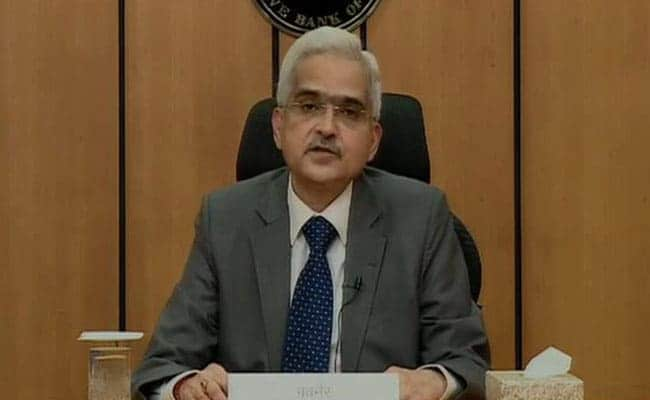
Reserve Bank of India (RBI) Governor Shaktikanta Das on Friday announced a reduction in the repo rate to 4 per cent from the existing 4.4 per cent in a surprise move to support the economy. That marked the second cut in the repo rate - or the key interest rate at which the RBI lends short-term funds to commercial banks - so far this year. The move was aimed at countering the fallout from the ongoing nationwide lockdown to contain the spread of the coronavirus pandemic, which has pushed the economy into a standstill, hurt businesses and landed thousands jobless. In a video conference, RBI Governor Shaktikanta Das said the Monetary Policy Committee (MPC) had voted to maintain its "accommodative" stance. This was the RBI chief's first address to the media after the government detailed the fiscal and monetary stimulus worth Rs 20.97 lakh crore to support the economy.
Here are highlights of what RBI Governor Shaktikanta Das said:
- Have few announcements to make
- COVID-19 macroeconomic impact turning out to be more severe than initially anticipated by Monetary Policy Committee
- COVID-19 has crippled global economy
- It has stalled economic activity across the globe
- Repo rate reduced by 40 basis points
- Now repo rate is 4%, from 4.4% earlier
- Reverse repo rate also stands reduced by 40 basis points (0.40 percentage point) to 3.35%
- Monetary Policy Committee voted 5:1 in favour of rate reduction
- RBI to maintain accommodative stance till economic growth revives
- Moratorium on term loan instalments extended by another three months
- Lending institutions to allow deferment of interest on working capital facilities till August
- Domestic economic activity impacted by lockdown; MPC judged risks to be gravest in growth outlook
- Investment demand has declined
- High frequency indicators point to collapse in demand beginning March
- Acute stress in various sectors
- Top six industrialised states accounting for about 60% of industrial output largely in red or orange zones
- Government revenue has been impacted severely
- Contraction of 27% in capital goods import in March
- Private consumption has seen biggest blow due to COVID-19
- Agriculture activities however have provided hope
- Forecast of normal monsoon offers ray of hope
- Headline inflation may firm in first half of 2020, but ease afterwards
- MPC's forward guidance directional
- Inflation to fall below 4% in Q3, Q4; inflation outlook highly uncertain
- Combination of fiscal, monetary, administrative measures to create conditions for gradual economic revival
- GDP growth in 2020-21 expected to remain in negative territory
- Uncertainties on COVID-19 remain
- ADDITIONAL MEASURES IN FOUR AREAS:
- To Improve Market
- To Support Trade
- To Ease Financial Stress
- To Ease Financial Constraints Faced By State Governments
- Extension in time given to importers for remittances from six months to 12 months, applicable to imports made before July 31
- Line of credit of Rs 15,000 crore for EXIM Bank
- Maximum permissible period of export credit increased to 15 months from 12 months

-
Gold Is Rs 22,000 Cheaper Than A Month Ago. Should You Buy Amid The Wedding Season?

Gold's potential slide to $3,500 could save around Rs 4,700 per 10 grams, but a soft inflation print could just as easily push prices back up. One way to split the risk is to buy in parts, some now and the rest after the Fed's Dec. 9 decision.
-
AI Agents Are Gaining Power. Who Governs Them?
Artificial intelligence agents promise to transform productivity by moving machines from assisting decisions to executing them. But as organisations delegate greater authority to these AI-agents, they must first establish who controls that authority and who remains accountable when things go wrong.
-
Why Swapping Your Old Gold Can Trigger A Rs 5 Lakh Tax Bill, And How You Can Avoid It Legally
Swapping old gold for new is taxed as a sale and a fresh purchase. Getting your own gold remade can cut most of that bill, though it has its own costs.
-
The AI Trade is Done. The Real Opportunity for Investors Starts in 2027 | Unhedged Position
As pureplay AI stocks plunge and circular, capex-led financing unwinds, 2027 is set to be a year of reckoning for AI companies. Yet the bust clears the way for a better opportunity for investors in 2027 -- shifting the spotlight from AI builders to the companies using AI.
-
Leadership As Mission: Why The Age Of AI Demands More Human Leadership
Debjani Ghosh examines how AI is changing leadership, arguing that its success must be measured by its impact on people and the accountability of those guiding its use.
-
We May Need Another Tukaram Mundhe To Fight Air Pollution | The Reason Why
Developers may install basic measures such as sprinklers and green nets, resume work, and continue violating rules when this equipment stops working.
-
Extracting Value From Battery Scrap Could Be Challenging For India | The Reason Why
A discarded lithium-ion battery still contains valuable materials such as lithium, nickel and cobalt. These can be recovered and reused. When such batteries are crushed and shredded, they produce a dark powder called black mass.
-
One El Nino, India Can Handle. Two Could Break The Granary
India's grain stocks can absorb one bad year, but a second El Nino could drain the buffer in two to three years, economists say.
-
India's Troika Of Good Luck | Joining The Dots
As Jensen Huang's exit drags Nvidia down, a cooling AI trade and resilient earnings have revived investor interest in India. A likely RBI rate hike looms.
-
Talking Points This Week: Leadership Shock At Nvidia, Earnings Strength, And The Fog Over Hormuz
The Anthropic IPO pricing and first trading day, Nvidia's upcoming earnings, and any fresh signals from Iran will set the tone for the following week.









