RBI Kick-Starts Process To Set Up Public Credit Registry For Capturing Details Of Borrowers
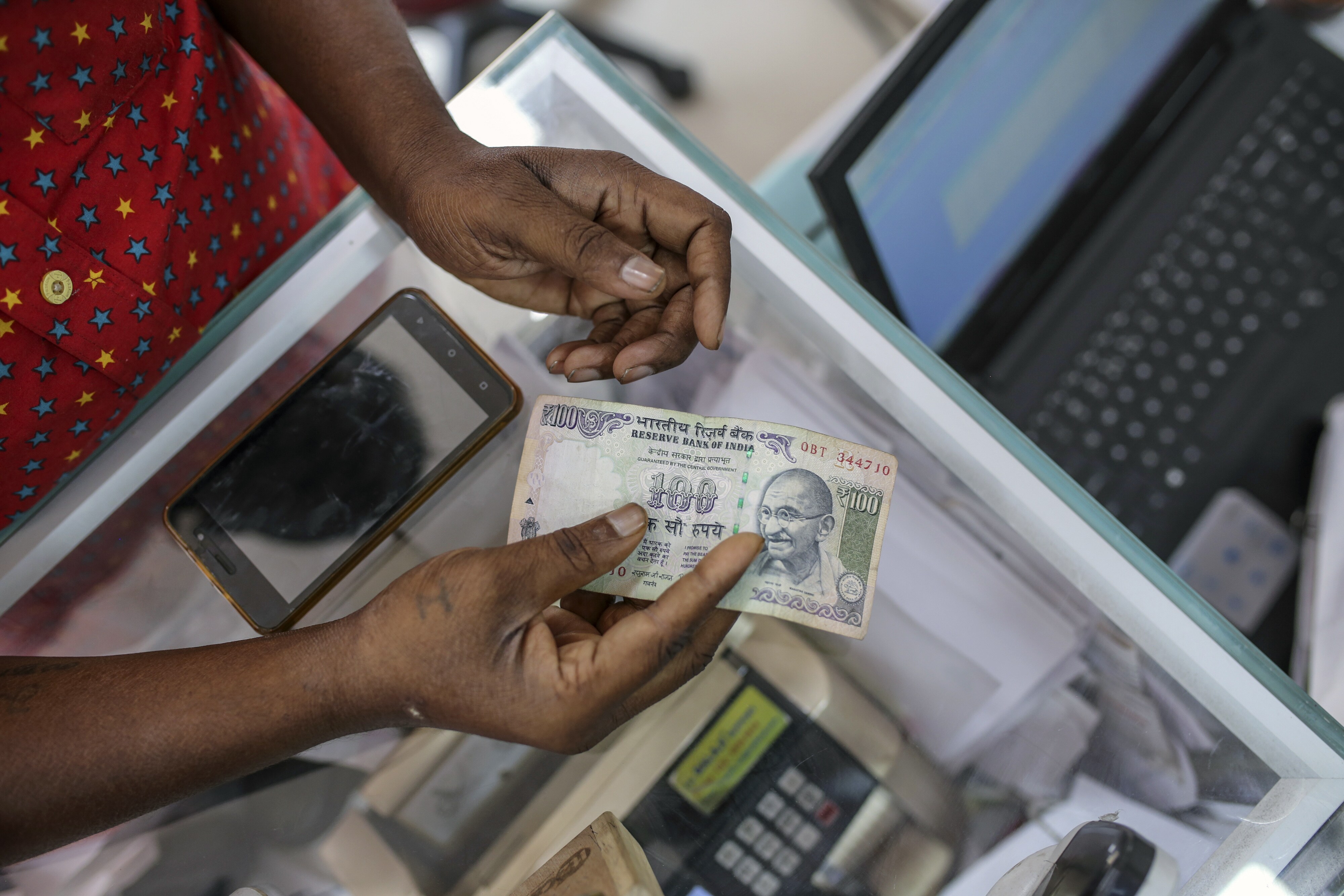
The Reserve Bank has initiated steps to set up a digital Public Credit Registry to capture details of all borrowers, including wilful defaulters and also the pending legal suits in order to check financial delinquencies.
The PCR will also include data from entities like Securities and Exchange Board of India, the corporate affairs ministry, Goods and Service Tax Network and the Insolvency and Bankruptcy Board of India to enable banks and financial institutions to get 360-degree profile of existing and prospective borrowers on a real-time basis.
The Reserve Bank has invited expression of interest for developing the registry from companies with a turnover of over Rs 100 crore in the last three years.
In June this year, the RBI had announced its intent to set up a PCR for India to address information asymmetry, foster access to credit and strengthen the credit culture in the economy.
Earlier, a high-level task force was constituted by the RBI to review the current availability of information on credit, the adequacy of the existing information utilities, and identify gaps that could be filled by a PCR.
In essence, PCR will be a digital registry of authenticated granular credit information and will work as a financial information infrastructure providing access to various stakeholders and enrich the existing credit information ecosystem.RBI's Expression Of Interest Document
The PCR would be the single point of mandatory reporting for all material events for each loan, notwithstanding any threshold in the loan amount or type of borrower.
Currently, there are multiple granular credit information repositories in India, with each having somewhat distinct objectives and coverage.
Within the RBI, Central Repository of Information on Large Credits is a borrower level supervisory dataset with a threshold in aggregate exposure of Rs 5 crore.
Also, there are four privately owned credit information companies operating in India. The RBI has mandated all its regulated entities to submit credit information individually to all four CICs.
As per the EOI, the proposed solution should allow easy integration with ancillary information sources, like the Ministry of Corporate Affairs, SEBI, GSTN, Central Registry of Securitisation Asset Reconstruction and Security Interest, utility billers, Central Fraud Registry and wilful defaulter/caution/suit filed lists.
Besides, borrowers would also be able to access their own credit information and seek corrections to the credit information reported on them.
Setting up of the PCR assumes significance amidst rising bad loans in the financial system. The non-performing assets in the banking system is about Rs 10 lakh crore.

-
The Economic Imperative: Analysing The Material Driving Force Behind India-Canada Strategic Reset

This economic complementarity is further reinforced by deep institutional investment ties and talent mobility, which form the bedrock of the bilateral framework.
-
Medicine Pricing: Where Must Profit Stop?
India must confront excessive margins, hidden incentives and regulatory gaps that threaten the integrity of medicine.
-
Why Amazon And Flipkart Are Struggling To Beat Meesho In India's Smaller Cities
With 274 million users and lowest-cost logistics, Meesho is defending its value commerce crown against giants like Amazon and Flipkart.
-
High US Salaries, No Green Card Certainty: The Financial Calculation Facing Indian H-1B Families
The suspension of PERM processing at eight technology employers does not cancel existing H-1B visas. What it does is force a question many Indian families have been avoiding: is the US salary worth tying your career and family plans to one employer?
-
Swiggy vs Eternal: Food Delivery's Two Rivals Are No Longer In The Same Race
Eternal is building a private AI assistant, dark.ai. Swiggy is still working out how to make Instamart pay, with an operating loss of Rs 895 crore in the July-September quarter while Blinkit stayed profitable.
-
Where You Live Shapes How You Get To Work | The Reason Why
Two-wheelers are the most popular way to get to work in India, accounting for nearly 43% of workplace commutes.
-
Unhedged Position: Can India See An Indonesia-Style Time Correction?
The Nifty is trading below levels it first clocked in 2024. Is there, then, as I have suggested in the headline, potential that the current time correction drags on painfully for the next three-five, even ten years?
-
Navigating Friction And Energy Realities: An Analysis Of Marco Rubio's October Visit To India
Occurring at a critical juncture marked by stalled trade negotiations and escalating geopolitical pressures over global energy supplies, the visit offers a profound window into modern US-India relations.
-
India Exports Capital. Why Not Export Trusteeship?
The big question, then, is whether India can build an institution that global borrowers, investors, banks, and lawyers can trust, even without an Indian connection.
-
France's Economy & Politics Are In Crisis | The Reason Why
Let's look at how the French economy and politics evolved under Nicolas Sarkozy, Franois Hollande and Emmanuel Macron.










