RBI Keeps Rates Unchanged, Slashes Growth Forecast
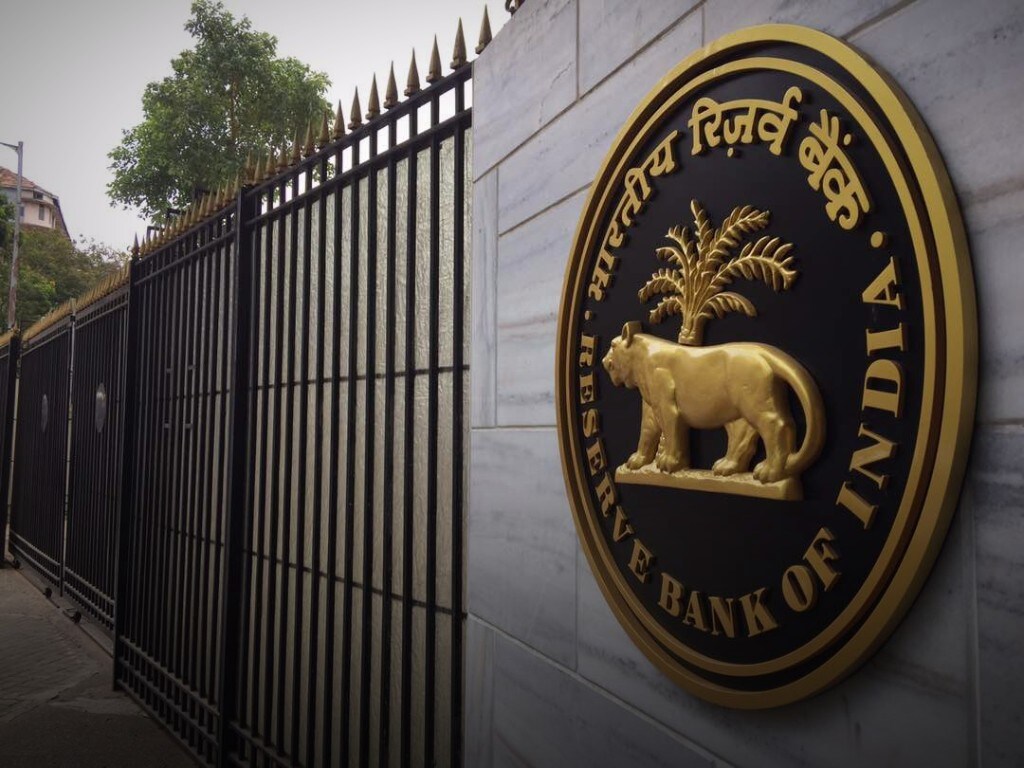
India's monetary policy committee on Wednesday voted to keep interest rates unchanged and maintained a neutral stance, suggesting that any further rate cuts are not a given. The RBI slashed its growth outlook for the current year, but raised its inflation forecast marginally.
The MPC voted to keep the repo rate unchanged at 6 percent. The reverse repo rate remains unchanged at 5.75 percent. The decision was taken by a 5-1 vote with Ravindra Dholakia voting in favour of a rate cut.
The decision of the MPC is consistent with a neutral stance of monetary policy in consonance with the objective of achieving the medium-term target for consumer price index inflation of 4 percent within a band of +/- 2 percent, while supporting growth.RBI Monetary Policy Statement
The decision to maintain status quo came despite a steep cut in the RBI's forecast for gross value added growth for the current year. The GVA growth forecast has been cut to 6.7 percent for FY18 compared to 7.3 percent earlier.
Painting a picture of the economic conditions, the RBI said that slowing consumption demand and exports have added to weak investment activity.
“Aggregate demand has been impacted by slowing consumption demand, still subdued investment and a slump in export performance in the early months of 2017-18. Manufacturing activity, which was dragged down by one-off effects of the implementation of GST, weighed heavily on aggregate supply conditions…” the RBI said in its accompanying Monetary Policy Report.
Calls for a rate cut had grown louder after GDP growth fell to 5.7 percent in the first quarter of the current fiscal. High frequency indicators, have suggested some rebound in industrial activity since then. The RBI said, it expects the services sector to provide a counterbalance to persisting weak industrial growth. For next fiscal year, the RBI has forecast GVA growth of 7.4 percent.
Inflation, meanwhile, has picked up.
The RBI now expects CPI inflation to pick up to 4.2 percent in Q3FY18 and 4.6 percent in Q4FY18, a mild upward revision from its earlier forecast of 3.5-4.5 percent inflation in the second half of the year.
Fiscal slippage could add to these concerns. A 50 basis point expansion in fiscal deficit in FY18 could push up inflation by 25 basis points above baseline scenario, the RBI noted. In the April-August period, the government has used up 96 percent of its fiscal deficit target. Speaking at the post policy press conference, RBI Governor Urjit Patel said India should be “very cautious” with fiscal actions.
Given that the general government fiscal deficit, of the state and central government accounts combined, is already in the region of 6 percent of GDP, our national stance can hardly be described as tight. We should be very cautious lest fiscal actions undercut macroeconomic stability.Urjit Patel, Governor, RBI
Drawing attention to the persistent lack of investment demand in the economy, the RBI said that it is “imperative to reinvigorate investment activity”, which in turn, would revive the demand for bank credit.
Recapitalising public sector banks adequately will ensure that credit flows to the productive sectors are not impeded and growth impulses not restrained.RBI Monetary Policy Statement
Monetary Policy Report: On Growth
- Real gross value added growth forecast at 6.7 percent in FY18 compared to 7.3 percent earlier
- Real GVA growth may rebound to 7.4 percent in FY19
- Economic activity is expected to recover with an improvement expected in the services sector
- Services sector to counterbalance persistent weakness in industrial production
- Consumer confidence dipped in the September 2017 round of RBI's survey
Monetary Policy Report: On Inflation
- CPI inflation expected to pick up to 4.2 percent in Q3FY18 and 4.6 percent in Q4FY18
- Inflation is expected to pick up from recent lows due to adverse base effect and increased house rent allowance
- Broad based rebound in various underlying measures of inflation in April-July period
- GST rate structure could have an impact of up to 10 basis points on CPI inflation
Monetary Policy Report: On Fiscal Deficit
- Upside risks to fiscal deficit from possible measures to boost domestic demand and from lower revenues
- A 50 basis point expansion in fiscal deficit in FY18 could push up inflation by 25 basis points above baseline scenario
Monetary Policy Report: On Output Gap
- Output gap has remained mostly negative over the last two years
- Subdued credit growth has contributed negatively to demand conditions

-
The Economic Imperative: Analysing The Material Driving Force Behind India-Canada Strategic Reset

This economic complementarity is further reinforced by deep institutional investment ties and talent mobility, which form the bedrock of the bilateral framework.
-
Medicine Pricing: Where Must Profit Stop?
India must confront excessive margins, hidden incentives and regulatory gaps that threaten the integrity of medicine.
-
Why Amazon And Flipkart Are Struggling To Beat Meesho In India's Smaller Cities
With 274 million users and lowest-cost logistics, Meesho is defending its value commerce crown against giants like Amazon and Flipkart.
-
High US Salaries, No Green Card Certainty: The Financial Calculation Facing Indian H-1B Families
The suspension of PERM processing at eight technology employers does not cancel existing H-1B visas. What it does is force a question many Indian families have been avoiding: is the US salary worth tying your career and family plans to one employer?
-
Swiggy vs Eternal: Food Delivery's Two Rivals Are No Longer In The Same Race
Eternal is building a private AI assistant, dark.ai. Swiggy is still working out how to make Instamart pay, with an operating loss of Rs 895 crore in the July-September quarter while Blinkit stayed profitable.
-
Where You Live Shapes How You Get To Work | The Reason Why
Two-wheelers are the most popular way to get to work in India, accounting for nearly 43% of workplace commutes.
-
Unhedged Position: Can India See An Indonesia-Style Time Correction?
The Nifty is trading below levels it first clocked in 2024. Is there, then, as I have suggested in the headline, potential that the current time correction drags on painfully for the next three-five, even ten years?
-
Navigating Friction And Energy Realities: An Analysis Of Marco Rubio's October Visit To India
Occurring at a critical juncture marked by stalled trade negotiations and escalating geopolitical pressures over global energy supplies, the visit offers a profound window into modern US-India relations.
-
India Exports Capital. Why Not Export Trusteeship?
The big question, then, is whether India can build an institution that global borrowers, investors, banks, and lawyers can trust, even without an Indian connection.
-
France's Economy & Politics Are In Crisis | The Reason Why
Let's look at how the French economy and politics evolved under Nicolas Sarkozy, Franois Hollande and Emmanuel Macron.










